

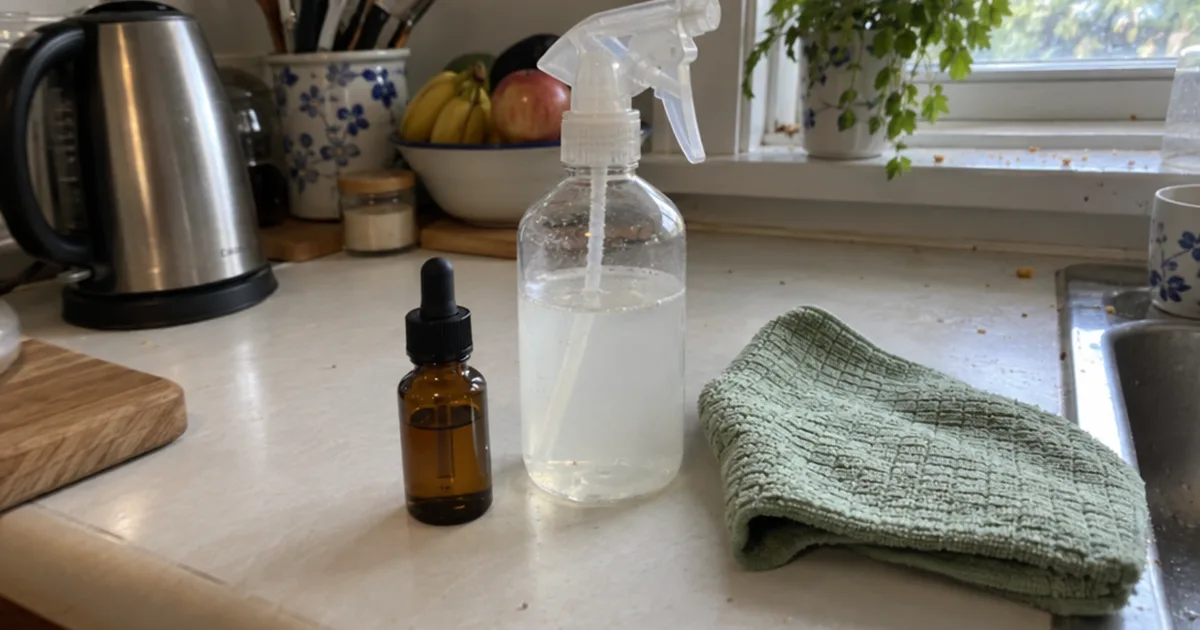
15 drops of peppermint oil can scramble a whole ant trail.
That’s the amount two pest experts shared with The Kitchn in December 2024, mixed into a cup of water with a little soap.
So yes, peppermint oil for ants does something real, but only in one specific way.
Here’s the exact spray, the wipe step most people skip, which ants shrug it off and what to do when the trail comes back.
Does Peppermint Oil Really Get Rid of Ants?
Peppermint oil gets ants out of an area but not out of your home: its strong scent covers the chemical trails ants follow, so they lose the path to your food. Peppermint oil works as an insect repellent, which means the colony itself survives.
Peppermint oil comes from peppermint, a plant that’s a natural hybrid of watermint and spearmint. Most of its punch comes from menthol, the compound behind that cold, sharp smell.
Why does a smell matter so much to ants?
Because ants find food by following scent. A scout finds your crumbs, then lays down pheromone trails that the rest of the line follows to the kitchen.
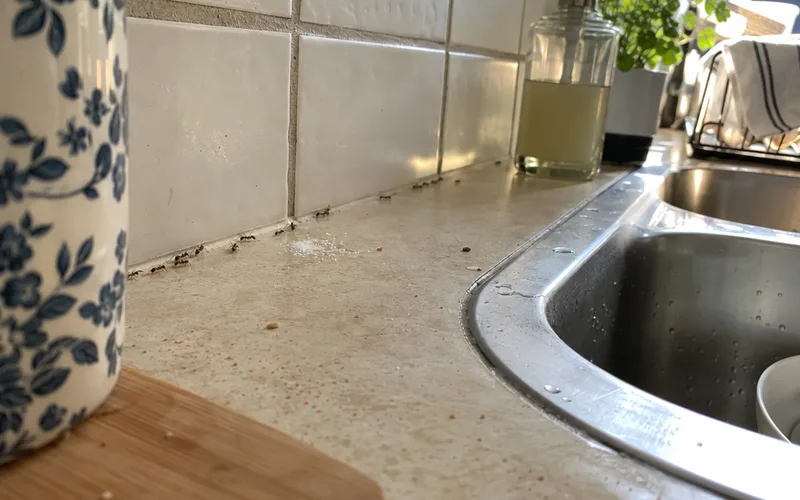
Here’s how one entomologist explained it:
“The strong scent of peppermint oil can mask the pheromones that ants use to mark trails and find food sources, which makes it difficult for them to follow each other and locate food.”
That’s Daniel Baldwin, a board-certified entomologist at Hawx Pest Control, speaking to The Kitchn in December 2024.
In other words, peppermint oil hides the map, but it doesn’t remove the ants who drew it.
Does Peppermint Oil Kill Ants or Just Repel Them?
Peppermint oil mainly repels ants. A strong spray may knock down the ants it soaks, but its real job is covering their trails so the rest stay away.
Some ants do stop moving when you drench them, which looks like a kill.
But the ants on your counter are only the foragers. The nest they came from sits somewhere your spray never reaches, so the colony keeps going.
So treat peppermint as a fence, not a pesticide.
Which Ants Peppermint Oil Works On (and Which It Doesn’t)
Peppermint oil works on common indoor ants such as odorous house ants, Argentine ants and pavement ants, say the pest control experts The Kitchn interviewed in December 2024. But those same experts called it pretty useless against carpenter ants and fire ants.
That split matters more than any recipe, because a scented floor won’t solve a carpenter ant or fire ant problem.
Note: If you suspect carpenter ants or fire ants, skip the peppermint and call a pest control company to identify them.
So before you mix anything, take a close look at the ants.
How to Make a Peppermint Oil Spray for Ants
A peppermint oil spray for ants takes 15 drops of peppermint oil, 1 cup of water and 1 teaspoon of dish soap. Entomologist Daniel Baldwin and Nicole Carpenter, president of Black Pest Prevention, both recommend that mix.
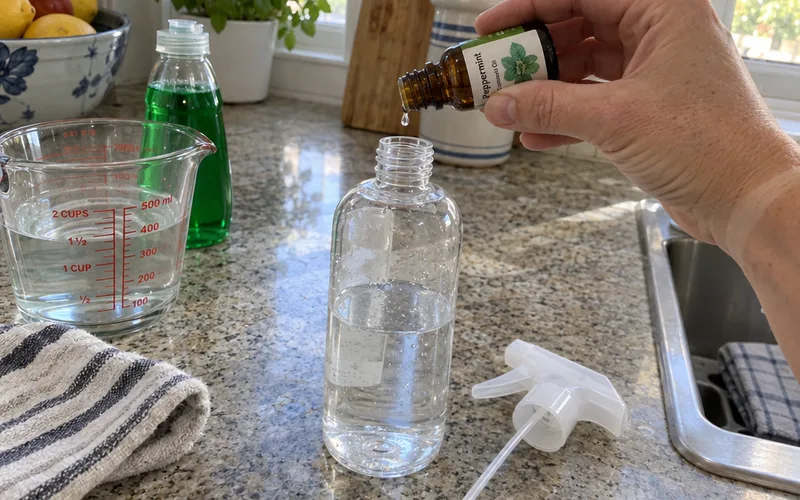
Here’s what you need:
- 15 drops of pure peppermint essential oil
- 1 cup of water
- 1 teaspoon of liquid dish soap
- A clean spray bottle that holds at least a pint
Why the soap?
Oil and water separate. The dish soap helps the oil spread through the water, so every spray carries some peppermint instead of plain water.
Shake the bottle before every use, since the mixture still drifts apart as it sits.
Keep the concentration where the experts put it. More oil makes the smell stronger for you too, and too much peppermint oil in a closed kitchen can bring on headaches.
How to Use Peppermint Oil for Ants: Spray, Wipe, Spray Again
To use peppermint oil for ants, spray the trail and the spots where ants come in, wipe it all down, then spray lightly again. Nicole Carpenter of Black Pest Prevention says the wipe is the key step, because spray alone doesn’t fully erase the pheromones.
Here’s how it works:
- Find the entry point. Follow the line back to where it starts, such as a window frame, a gap under the baseboards or a crack in the counter.
- Spray the whole trail. Cover the trail from the entry point to the food, plus the area around it.
- Wipe it down. Use a cloth to physically clear the trail, which removes the scent the ants were following.
- Spray again lightly. Leave a thin peppermint layer at the entry points so new scouts hit the smell first.
Here’s her warning in full:
“Spraying peppermint oil without wiping trails doesn’t fully erase pheromones, meaning ants might still follow the path or reestablish trails later.”
Skip step 3, and the ants can pick up the old trail again.
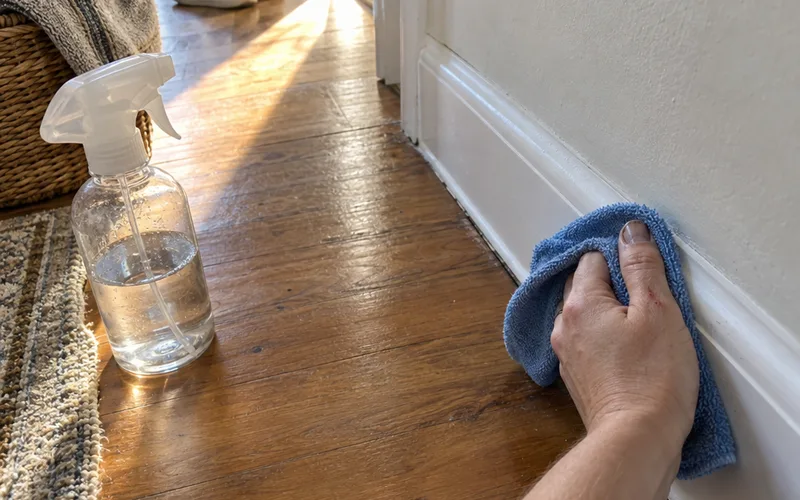
She also says not to ignore the hidden spots: the underside of cabinets and the space behind appliances.
Cotton Balls and Diffusers
A cotton ball soaked in peppermint oil works as a small, longer-lasting scent post. Tuck it into an entry gap or the back of a cabinet where ants show up, away from kids and pets.
A diffuser spreads scent through a bigger room, such as a basement or pantry. If you go that route, run a peppermint oil diffuser in short sessions so the room doesn’t get overpowering.
Both are backups to the spray and wipe, not replacements.
How Long Does Peppermint Oil Keep Ants Away?
A peppermint oil spray for ants needs a fresh coat every couple of days or after you clean, say pest control experts Nicole Carpenter and Daniel Baldwin. The scent fades as the oil evaporates, and wiping a counter removes it.
Outdoors, rain washes the oil away, so redo a sprayed doorstep or patio after it rains.
Here’s a simple routine:
- Day 1: Spray, wipe and respray the whole trail and its entry point.
- Every couple of days: Respray the entry points.
- After cleaning: Respray any surface you washed.
If ants still march in after a week of this, peppermint isn’t the answer for your house.
Why Isn’t Peppermint Oil Working on My Ants?
Peppermint oil usually fails for one of 4 reasons: the wrong ants, an unwiped trail, too long between sprays or food that keeps pulling ants back. Fix the one that fits, or switch methods.
It’s a common complaint, with one forum thread titled “The peppermint oil isn’t working and here’s why.”
Run through this checklist:
- Wrong ants. Peppermint does little against carpenter ants and fire ants.
- No wipe. The old trail is still there under the peppermint.
- Too long between sprays. The scent fades in a couple of days.
- A food source nearby. Crumbs, pet food or a sticky jar keep pulling them back.
There’s one more trap.
If you’ve set out ant bait stations, don’t spray peppermint near them. Bait only works when workers carry it home to the nest, and a repellent keeps them from ever reaching it.
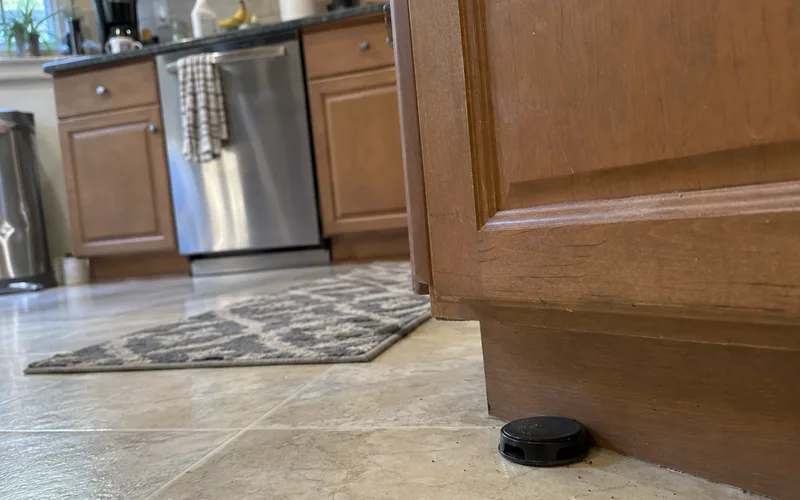
So pick one plan per area. Use peppermint to guard spots you want ant-free, and leave bait spots unscented.
Is It Safe to Spray Peppermint Oil Around the House?
Spraying diluted peppermint oil around the house is safe for most people. But entomologist Daniel Baldwin warns it may cause allergic reactions, skin irritation or headaches, so wash your hands well after handling it.
A few habits keep it that way:
- Do a patch test on your skin before you handle the oil a lot, especially if your skin reacts to fragrance.
- Open a window while you spray, since the smell builds up in small rooms.
- Wipe food prep surfaces with plain water afterward so no oil ends up in food.
- Store the bottle where children can’t reach it.
Keep pure essential oils off your skin, and tuck soaked cotton balls where a toddler can’t grab them.
Is Peppermint Oil for Ants Safe for Pets?
Peppermint oil for ants needs extra care if you have pets, because cats and dogs walk, lie and sniff exactly where you spray. Check the specific limits for peppermint and cats and for peppermint and dogs before you treat floors they use.
In the meantime, spray only where pets can’t reach, let surfaces dry before pets return and skip the soaked cotton balls entirely.
Pet safety is the one rule to settle before you open the bottle.
Does Mighty Mint Kill Ants?
Mighty Mint Peppermint Oil Ant Killer Spray claims to repel and kill ants with peppermint oil and geraniol, according to its Amazon listing. That kill claim comes from the seller, not from a lab test.
As of October 2026, the Mighty Mint Amazon listing showed 4.2 stars from 4,793 reviews, which tells you how shoppers rated it rather than how many ants it killed.
The same rules still apply. Wipe the trail, don’t spray near bait and expect it to move ants rather than end a colony.
What Smell Do Ants Hate the Most?
Peppermint is the smell most often recommended against ants, and essential oil guides also list cinnamon, citrus oils, tea tree oil, clove oil and cedarwood. None of these oils has been shown to beat peppermint in a real home.
So if menthol bothers you, try cinnamon or a citrus oil in the same spray-and-wipe routine.
If you’re comparing oils for more than ants, the broader guide to bug repellents covers which essential oils suit which insect.
And because peppermint shows up in so many natural remedies, the same bottle can pull double duty against other pests. You’ll find separate routines for peppermint against cockroaches, for keeping mice away and for a general peppermint spray for bugs.
The Bottom Line
Peppermint oil works on common kitchen ants by hiding their trails, not by killing the colony.
This week, mix 15 drops into a cup of water with a teaspoon of dish soap, then spray, wipe and spray again at the entry point.
If the trail is back within a week, or the ants are big carpenter ants, call an exterminator instead.
Frequently Asked Questions
Can you mix vinegar and peppermint oil for ants?
You can mix vinegar and peppermint oil for ants, and some essential oil sellers’ recipes do, but none of the sources here show that vinegar makes the spray work better. The recipe the experts shared uses water and dish soap, so start there.
Does fresh mint repel ants?
No source here shows that fresh mint leaves repel ants, even though they smell like peppermint. A diluted peppermint oil spray lets you coat the whole trail and its entry point, which a few leaves can’t do.
Can you use peppermint oil for ants in a car?
You can put a peppermint-soaked cotton ball in a car’s door pocket or cup holder, away from seats and dashboards that oil can stain. Remove any food or crumbs first, since the food is what pulled the ants inside.
How do I stop ants from coming inside for good?
Stopping ants for good means removing what they came for, because peppermint oil only redirects them. Wipe trails, seal food and cracks, and call a pest control company if the trail keeps returning.