

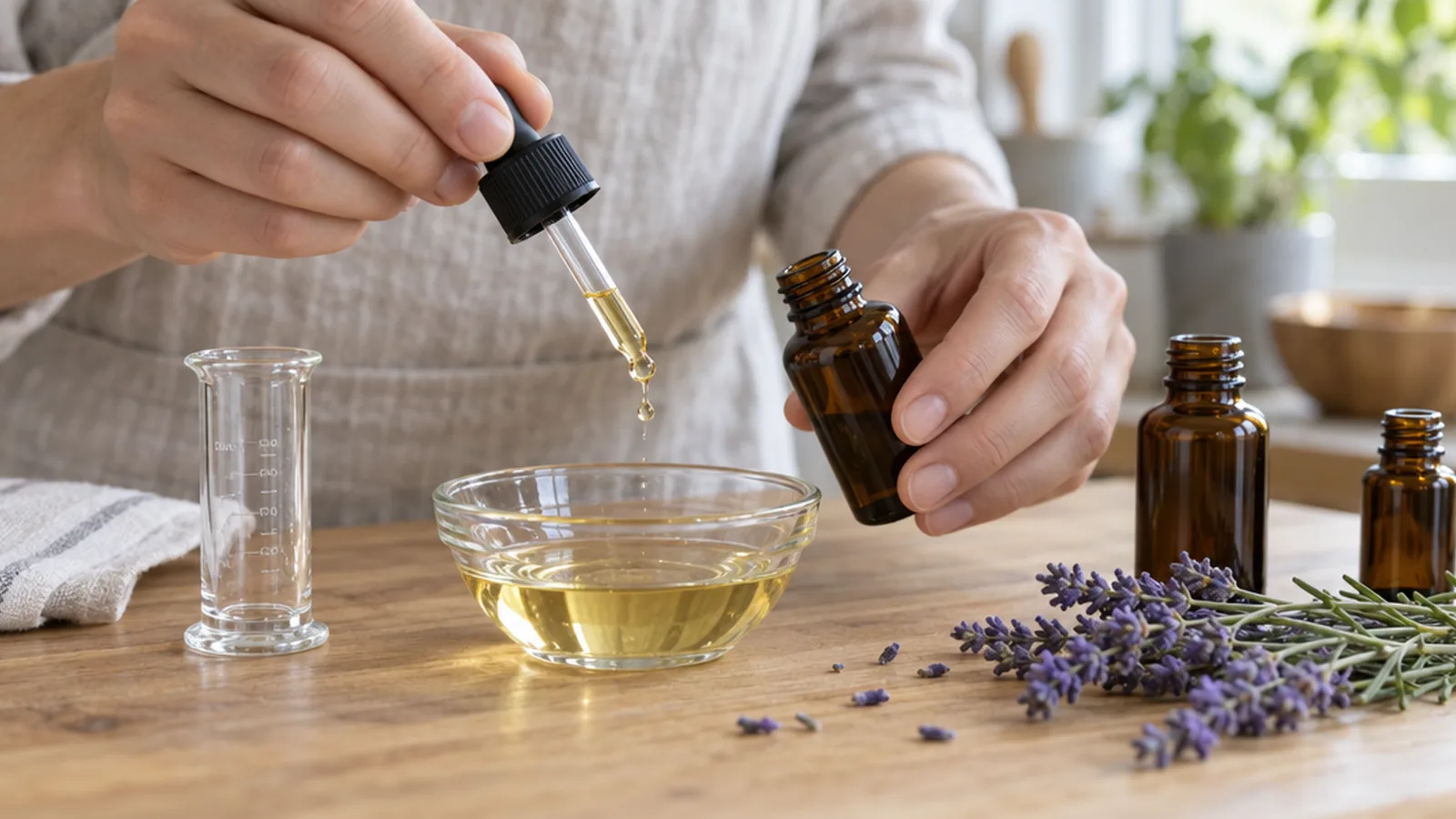
Basics is where everything on Call Me Oil starts. This section explains what essential oils are, how they are made, how to dilute them and where the safety limits sit, so the recipes and wellness guides elsewhere on the site make sense. If you only read one section before opening a bottle, make it this one.
What counts as an essential oil
An essential oil is a concentrated, volatile extract of aromatic plant material. Most are made by steam distillation, while most citrus oils are pressed from the peel. Absolutes such as jasmine and rose absolute are extracted with solvents, and fragrance oils are blends of synthetic and natural aroma chemicals, so each behaves differently on skin and in a diffuser. Because a few drops can represent a large amount of plant material, an essential oil is far more potent than the herb it comes from.
The main topics in Basics
Guides in this section are grouped into the sub-topics below, and they appear under these headings as they are published.
Oil Profiles
Single-oil profiles describe what an oil smells like, how it is traditionally used, what research does and does not support, and which cautions apply. They range from everyday oils such as lavender, tea tree, eucalyptus and frankincense to less familiar ones, along with side-by-side comparisons of oils that are easy to confuse.
Safety
The safety topic covers side effects, skin reactions and burns, oil in the eyes, swallowing essential oils, and how the risks of fragrance oils compare with essential oils. It also explains what to do right away when something goes wrong.
Essential Oils Safe For Pets
Cats, dogs and other pets process some essential oil compounds very differently from people. Cats are especially vulnerable because their livers handle many of these compounds poorly. This topic covers which oils are risky, how diffusing differs from applying, and which signs mean an immediate call to a veterinarian.
Hair Care
Hair and scalp guides explain how individual oils interact with the scalp and how to add them to shampoo or a carrier oil without irritation.
Topical Use
Topical use covers applying diluted oils to skin, how long they linger, which oils are phototoxic and how to patch test before trying something new.
Carrier Oils
Carrier oils such as jojoba, sweet almond, fractionated coconut and grapeseed are how essential oils reach skin safely. This topic explains which carrier suits which job and how to work out a dilution in drops and percentages.
Diffusers
The diffuser topic covers the main types of diffusers, how to use them, how many drops to add, how long to run them and how to scent a room without one.
Making Oils
Making Oils explains how commercial essential oils are produced, why the word essential refers to essence rather than nutrition, and what you can and cannot realistically make at home.
Dilution at a glance
These starting points assume about 20 drops per milliliter, and real dropper sizes vary.
| Dilution | Drops per 1 oz (30 mL) of carrier | Typical use |
|---|---|---|
| 0.5 to 1% | 3 to 6 | Face, sensitive skin, older adults, daily use |
| 2% | About 12 | General body use for healthy adults |
| 3 to 5% | 18 to 30 | Short-term use on a small area |
Children, pregnancy and certain oils call for lower amounts or avoiding an oil entirely, and individual guides note those exceptions.
Shelf life and storage
Essential oils do not spoil like food, but they oxidize once exposed to air, light and heat. Oxidized oils, especially citrus and pine oils, are more likely to irritate or sensitize skin. Store oils in tightly closed dark glass, away from heat and sunlight, and out of reach of children and pets.
Where to go after Basics
Once you are comfortable with dilution and safety, Wellness looks at what the evidence says about specific health uses. Blends turns these fundamentals into recipes, and Brands helps you choose oils worth buying.