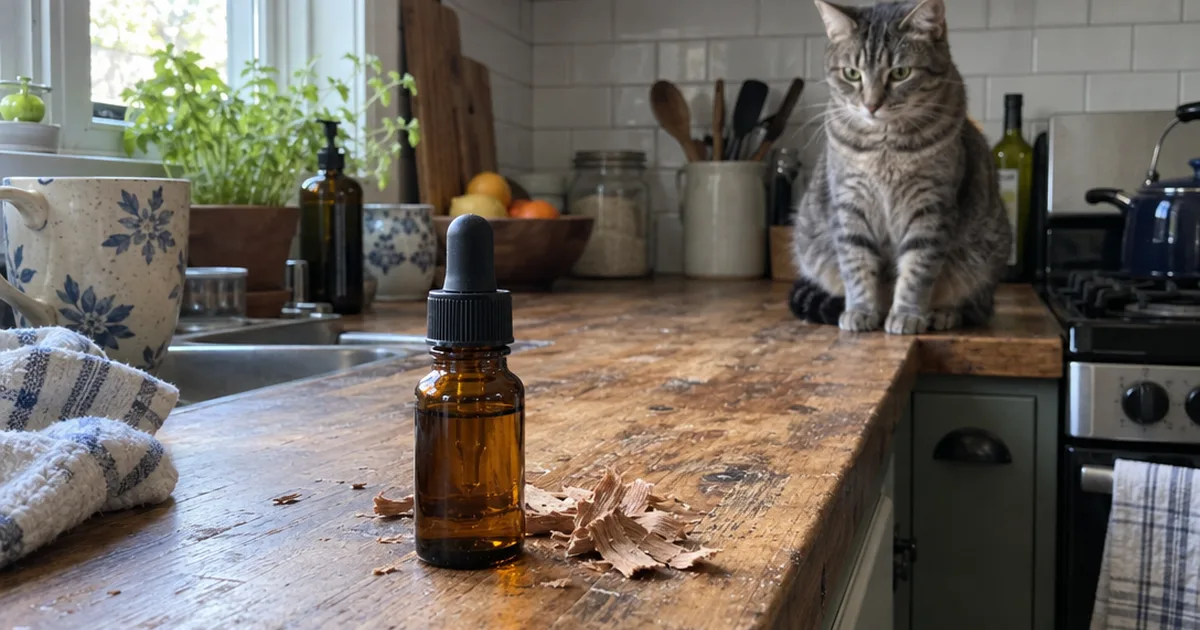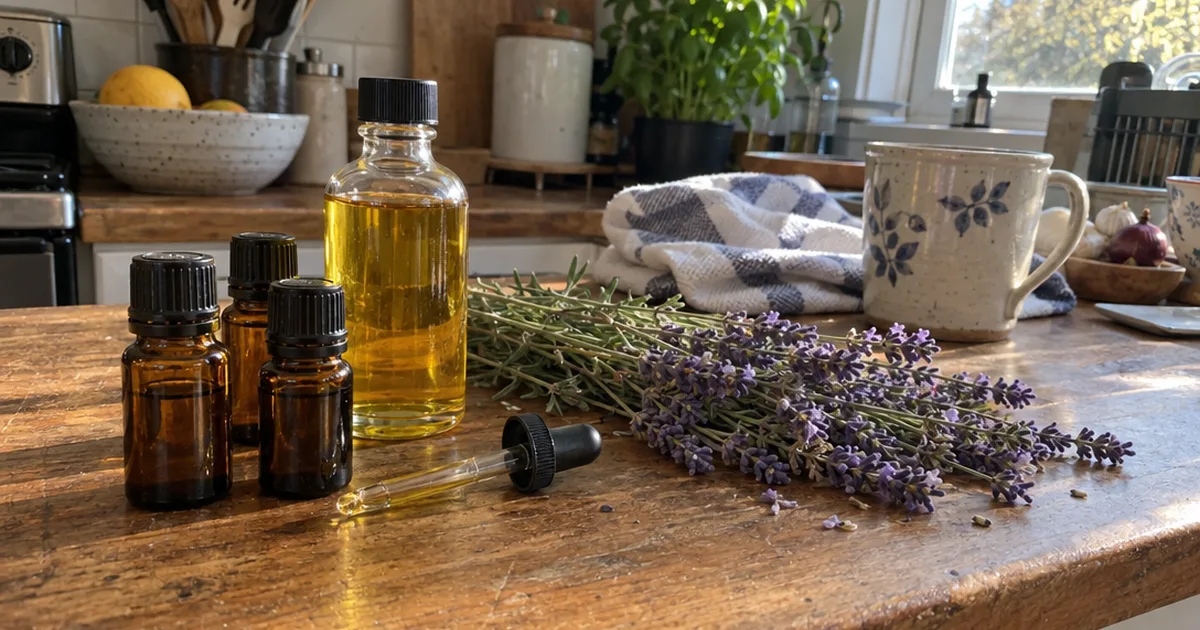

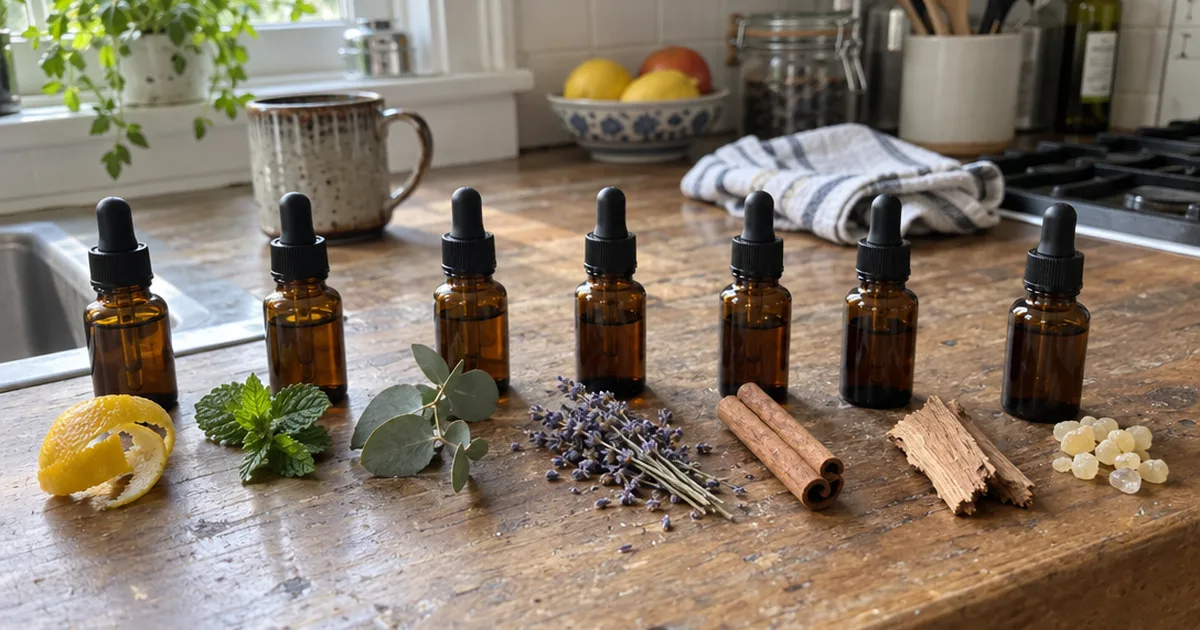
One safety reference profiles 400 different essential oils.
That count comes from Essential Oil Safety by Robert Tisserand and Rodney Young, as AromaWeb’s book notes point out.
The good news?
Learn the 7 scent families instead, because most types of essential oils fit one of them.
Each one below comes with its smell, its uses, its key safety rule and links to every oil profile on the site.
- Trouble winding down at night points to the florals in #4.
- A stuffy nose in cold season is a job for #3.
How Many Types of Essential Oils Are There?
There are hundreds of types of essential oils, with 400 profiled in the book Essential Oil Safety alone, but most fit a few scent families.
AromaWeb, an essential oil reference directory, groups well-loved oils as citrus, conifer, woody, floral, spicy, balsamic and resinous. These concentrated plant extracts are used in aromatherapy and, diluted, on skin.
This guide uses a similar 7, with mint and herbal oils as their own group. Some bottles aren’t true essential oils: AromaWeb lists jasmine as an absolute and vanilla as an absolute or CO2 extract.
Healthline also warns that knock-off and perfume oils don’t carry the same benefits, so buy pure essential oils.
The 7 Main Types of Essential Oils
The 7 main types of essential oils are citrus, mint and herbal, fresh and camphor, floral, spicy and sweet, woody, and earthy or resin oils.
1. Citrus Oils
Citrus oils come from fruit peel and smell bright, sweet and clean. Cleveland Clinic, a nonprofit medical center, lists lemon oil for nausea, bergamot for mood and orange oil as a home cleaner.

The catch: the clinic advises avoiding direct sunlight after using lemon, lime, orange, grapefruit, lemongrass or bergamot oil on skin.
- lemon oil uses, lemon’s spiritual side, lemon versus seed oils
- orange’s spiritual uses, sweet orange for skin
- bergamot oil benefits, bergamot for skin, how bergamot smells
- Lemon-scented, not citrus: lemongrass spiritual uses, citronella oil benefits, litsea oil benefits, melissa oil benefits
2. Mint and Herbal Oils
Mint and herbal oils come from leafy herbs and smell sharp and cooling. Cleveland Clinic notes peppermint is used to ease headaches and fight fatigue.
Rosemary needs more care. The clinic advises skipping it if you’re pregnant or have epilepsy or high blood pressure.
- peppermint’s spiritual uses, peppermint oil and bees
- rosemary oil benefits, rosemary’s spiritual uses, whether rosemary oil counts
- clary sage benefits, clary sage spiritual uses, clary sage versus sage, common sage benefits, sage’s spiritual uses
- oregano oil and the liver
3. Fresh and Camphor Oils
Fresh, camphor-like oils come from eucalyptus, tea tree and conifers and smell clean and medicinal. Eucalyptus opens your nasal passages in cold season, the clinic says, and most people use tea tree as an antiseptic.
Both also carry the strongest warnings for homes with kids and pets.
- eucalyptus oil benefits, eucalyptus spiritual uses, eucalyptus on your feet
- tea tree oil uses, how long tea tree smell lasts
- Trees and needles: Scotch pine benefits, birch oil basics, blue cypress benefits
4. Floral Oils
Floral oils come from petals and blossoms and smell soft and sweet. Lavender oil leads the group as a stress-relief oil, joined by rose, jasmine and ylang ylang.
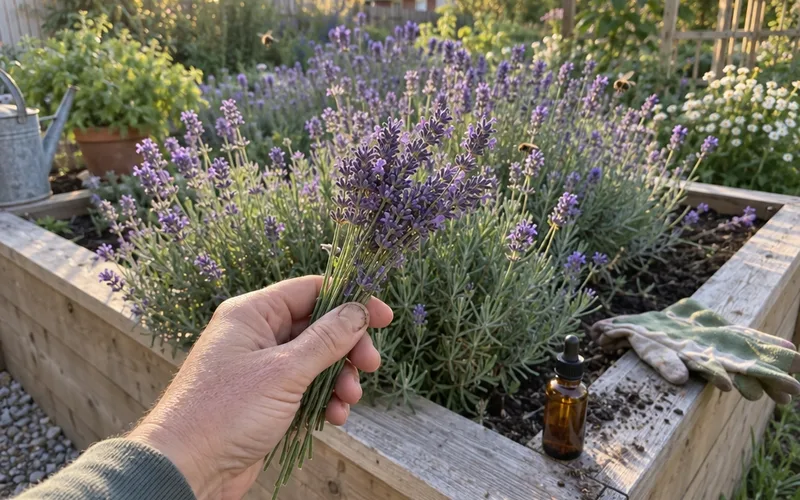
Florals also explain high prices. Cleveland Clinic reports about 250 pounds of lavender flower make 1 pound of lavender essential oil, and rose takes about 5,000 pounds of petals.
Healthline adds that anyone allergic to daisies, marigolds and ragweed should avoid Roman chamomile oil.
- lavender’s spiritual uses, rose oil benefits, rose’s spiritual meaning, rose absolute versus otto, why rose oil costs more
- jasmine oil benefits, jasmine’s spiritual uses, ylang ylang benefits, ylang ylang spiritual uses, how ylang ylang smells
- neroli oil benefits, neroli for skin, neroli versus orange blossom, neroli versus bergamot
- More florals: chamomile oil benefits, geranium for skin, palmarosa oil basics, helichrysum oil benefits, yarrow oil basics
5. Spicy and Sweet Oils
Spicy and sweet oils come from bark, roots and pods and smell warm. Cinnamon and ginger bring the spice, and vanilla adds a sweet fragrance note.
- cinnamon oil benefits, ginger oil benefits, vanilla oil benefits, vanilla’s spiritual uses
6. Woody Oils
Woody oils come from the wood of trees such as sandalwood and cedar, and they smell dry and warm. The clinic says cedarwood can help with sleep and anxiety, and its woodsy scent turns up in insect repellents and beauty products like shampoo.
- sandalwood oil benefits, sandalwood spiritual benefits, how sandalwood smells, why sandalwood costs so much, sandalwood versus cedarwood
- cedarwood oil benefits, how cedarwood smells, cedarwood and ticks
- Rare woods: amyris oil basics, ho wood benefits, agarwood oil benefits, agarwood’s spiritual uses
7. Earthy and Resin Oils
Earthy and resin oils come from roots and tree resins and smell deep and smoky. Frankincense is known as the “king of oils,” and Healthline describes vetiver as smoky and sugary.
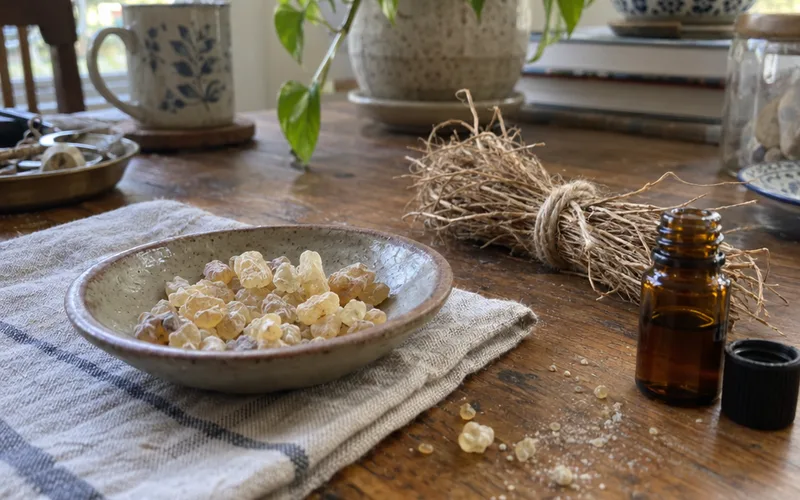
That resin also works in aromatherapy and skincare creams, and the clinic says it can help with mood and sleep.
- frankincense oil benefits, frankincense and myrrh
- vetiver’s smell, vetiver oil benefits, vetiver spiritual uses, Haitian vetiver benefits
- patchouli oil benefits, patchouli’s smell, patchouli spiritual uses, patchouli’s original uses
- copaiba oil benefits, copaiba spiritual uses, valerian oil basics
Safety Rules That Change by Oil Type
Tea tree and eucalyptus are the oil types that need the most care around kids and pets. Cleveland Clinic warns tea tree oil can be neurotoxic, so don’t diffuse it with small children or animals at home.
Three rules hold for every family. Dilute in a carrier oil, patch test first and don’t swallow oils, which the clinic’s Dr. Yufang Lin advises against without a trained herbalist.
The full limits are in the essential oil safety rules and the list of lower-risk oils for pets.
Which Type of Essential Oil Should You Start With?
Lavender is a smart first essential oil, because Cleveland Clinic physician Yufang Lin calls it gentle and her go-to oil. Next, add one oil from the family you’ll use most.
The most popular essential oils make a good shortlist for that second bottle, and the ways to use essential oils show you where to begin.
Frequently Asked Questions
What are the most popular essential oils?
The most common essential oils in Cleveland Clinic’s guide are lavender, tea tree, frankincense, peppermint, eucalyptus, lemon, lemongrass, orange, rosemary, bergamot and cedarwood. They cover every family here except spicy and sweet oils.
Which essential oil is best for sleep?
Lavender and cedarwood are two essential oils Cleveland Clinic links to sleep: lavender for stress, pain and sleep, and cedarwood for sleep and anxiety. Try one in a diffuser at bedtime.
What essential oils are not safe for pets?
Tea tree and eucalyptus are two essential oils to keep away from pets. Cleveland Clinic says tea tree can be neurotoxic and eucalyptus can have dangerous side effects on children and pets.
Final Thoughts
Learn the family before the bottle, and the rest gets easier.
This week, pick one oil from the family you’ll use most and read its profile before you buy.