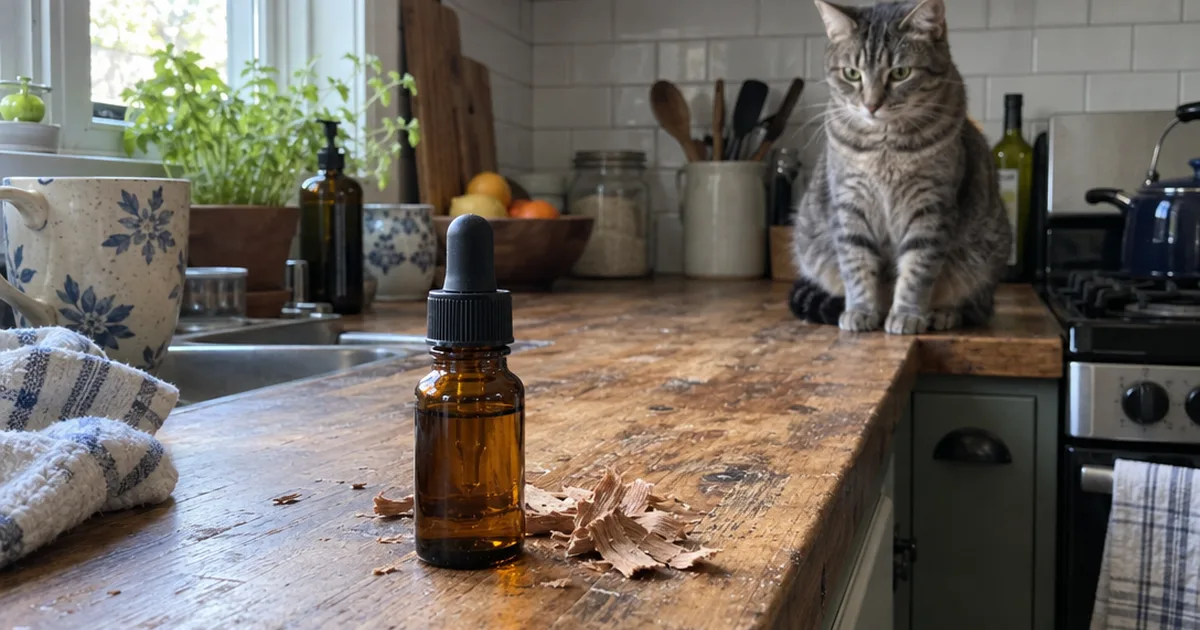

Seven or eight drops of concentrated tea tree oil can be enough to make a pet sick.
That warning comes from the ASPCA Animal Poison Control Center, and tea tree oil sits in plenty of bathroom cabinets.
So which essential oils are safe for pets depends on the oil, the dose and the animal: dog, cat or bird.
Here’s what’s lower risk, what to lock away and how to run a diffuser safely.
Which Essential Oils Are Safe for Pets?
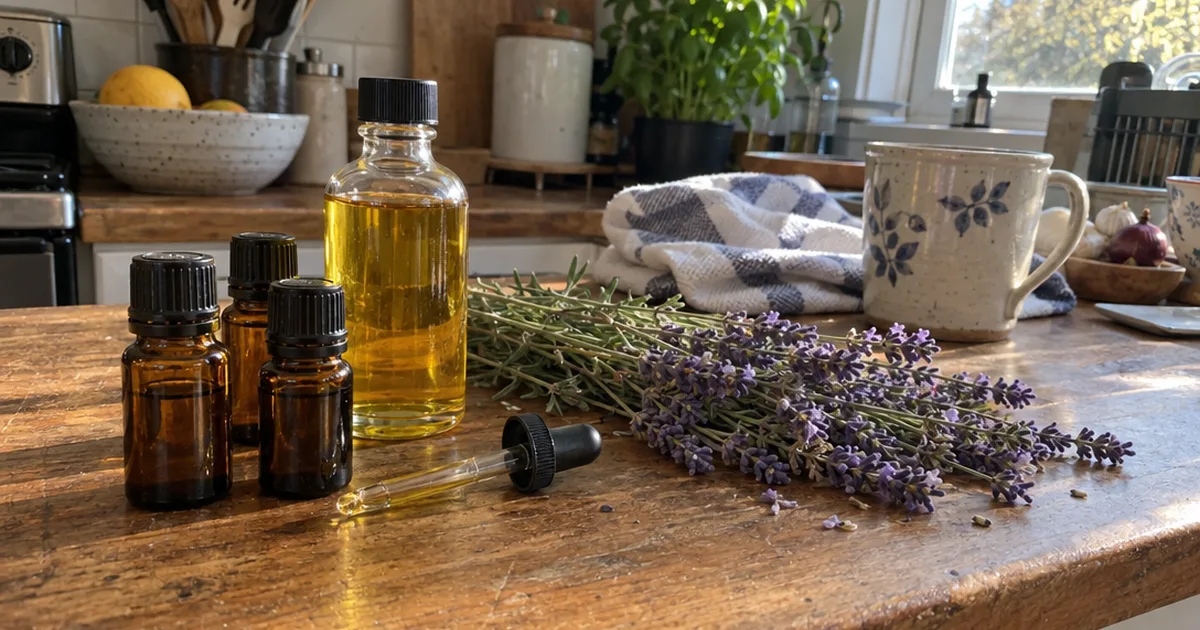
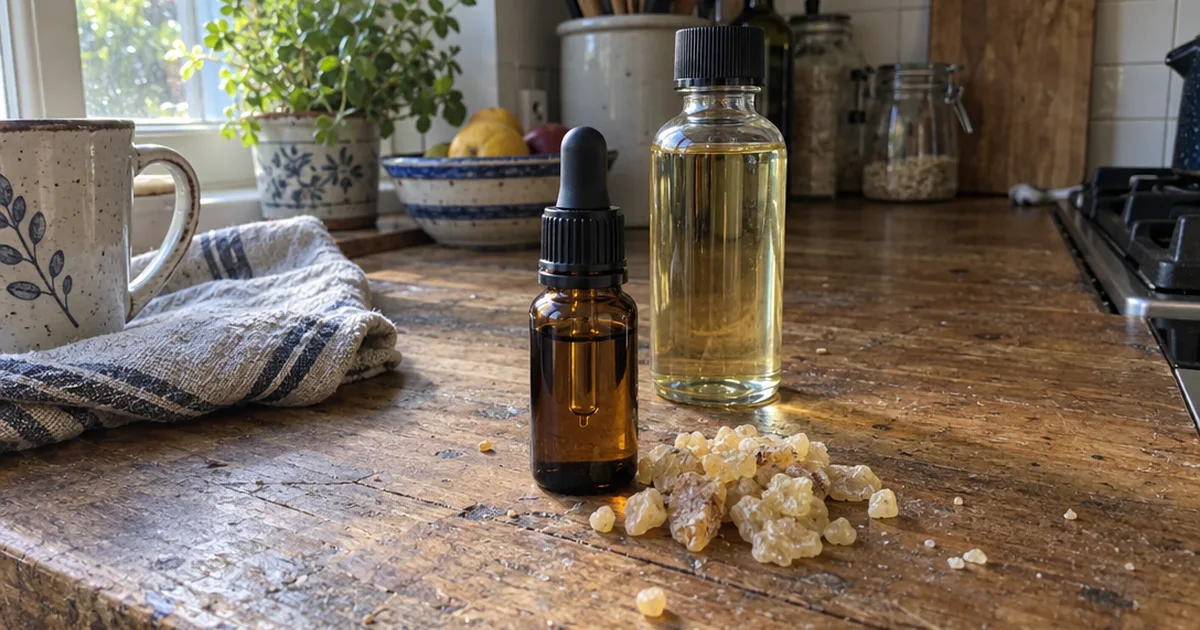
No essential oil is proven safe for every pet, but cedarwood, Roman chamomile and frankincense show up most often on lower-risk lists for both dogs and cats.
Lavender makes most lists for dogs, but not for cats. And even a lower-risk oil stays lower risk only when a little is diffused in a room your pet can leave.
Why the Safe Lists Disagree
Popular safe lists contradict each other: some suggest rosemary or eucalyptus for dogs, while others ban both.
Aromatherapy safety author Robert Tisserand says long “safe” or “toxic” lists for cats make little sense, because overall exposure matters more. The dose and the way the oil reaches your pet matter more than the name on the bottle.
Here’s how common oils compare across those lists:
| Oil | Dogs | Cats |
|---|---|---|
| Cedarwood | Lower risk | Lower risk |
| Roman chamomile | Lower risk | Lower risk |
| Frankincense | Lower risk | Lower risk |
| Lavender | Lower risk | Lists disagree |
| Eucalyptus | Lists disagree | Avoid |
| Citrus oils | Lists disagree | Avoid |
| Peppermint, wintergreen | Avoid | Avoid |
| Tea tree, pennyroyal | Avoid | Avoid |
| Cinnamon, clove, pine | Avoid | Avoid |
“Lower risk” still means a light scent in the air, never oil on fur. Dogs handle more oils than cats, so the oils dogs tolerate outnumber the oils cats tolerate.
Before you open a bottle, check the details for cedarwood around cats, chamomile around dogs or lavender around cats.
Essential Oils That Are Toxic to Dogs and Cats
Tea tree, pennyroyal, wintergreen, peppermint, pine, cinnamon, clove and citrus oils are the essential oils most often named as toxic to dogs and cats.
Tea tree oil, also sold as melaleuca oil, causes the most trouble. In a 1998 case Tisserand cites, owners put 60 mL of undiluted tea tree oil on 3 cats for fleas, and 1 cat died.
Pennyroyal, a mint long used against fleas, may be worse. The same author warns that undiluted pennyroyal oil on a cat’s fleas could kill the cat.
Most of them fall into 3 families: mint oils, spicy phenol oils such as oregano, and citrus oils such as lemon.
Some vet-written lists also warn dog owners off lemongrass oil, ylang ylang and sweet birch. A few lists allow peppermint in moderation, so check peppermint and dogs and peppermint and cats separately.
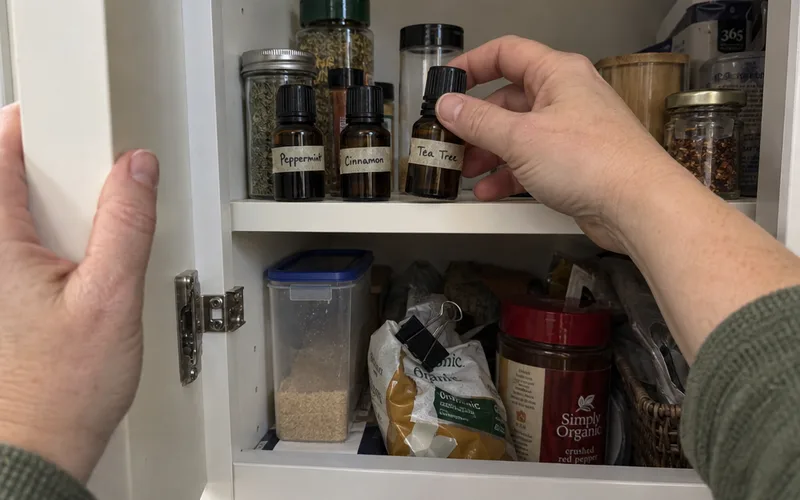
Store every oil on this list in a closed cupboard your pet can’t reach. The full toxic oil list covers the rarer ones too.
Why Cats Are More Sensitive to Essential Oils Than Dogs
Cats are more sensitive to essential oils than dogs because they almost completely lack liver enzymes that break down many oil compounds, Tisserand explains.
Those missing enzymes are UGT enzymes, which handle the liver’s metabolism of many plant compounds. He adds that the gap matters much less in dogs.
Menthol, the cooling compound in peppermint, is 3-4 times more toxic to a cat than to a rat, he reports.
Grooming adds a second risk, because any oil on a cat’s coat ends up in its mouth. So treat every oil as a bigger risk for your cat than for your dog.
Is It Safe to Diffuse Essential Oils Around Pets?
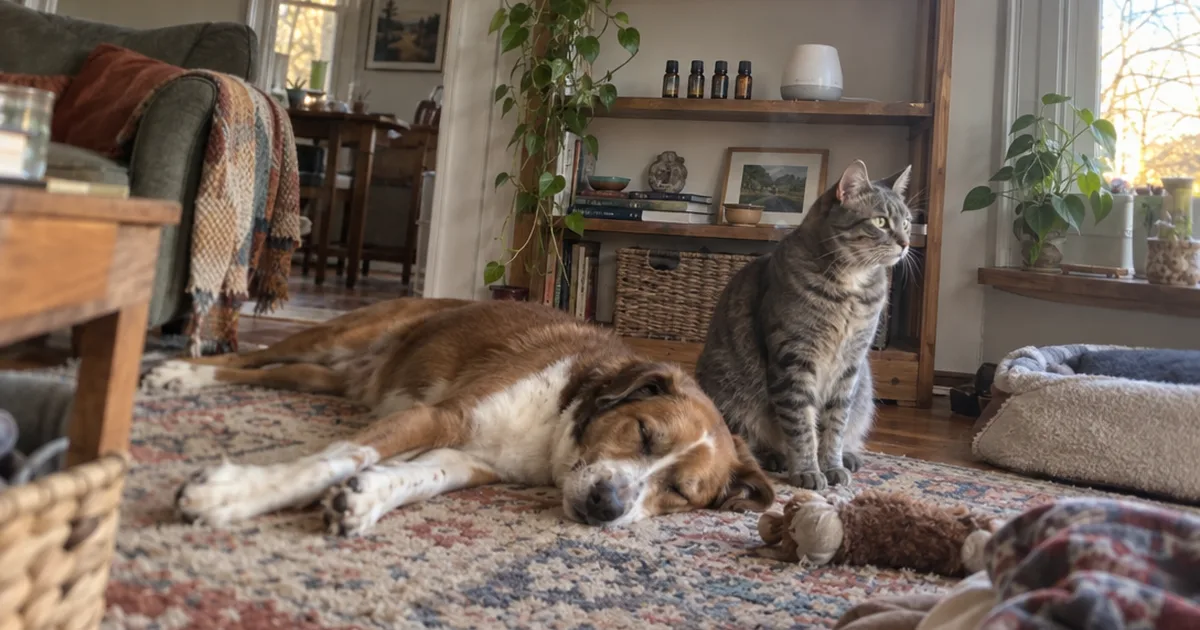
Diffusing essential oils around pets is not likely to be a problem if the diffuser runs briefly in a secured area your pet can’t reach, say the ASPCA’s poison experts.
Tisserand agrees, as long as the dose stays small:
“You can diffuse essential oils around cats safely, so long as there’s good ventilation, you only diffuse small amounts for limited periods of time, and your cat has the freedom to leave the room if it wants.”
Pets smell far better than you do, so a scent that seems light to you can overwhelm them.
How to Diffuse Safely With a Dog or Cat at Home
Combine their advice into 4 habits:
- Run short sessions with a small amount of oil.
- Leave a door open so your pet can escape the aroma.
- Set the diffuser up high, where it can’t be knocked over.
- Skip it if your pet has a history of breathing problems.
Pro Tip: Air the room afterward, so the vapors don’t build up over hours.
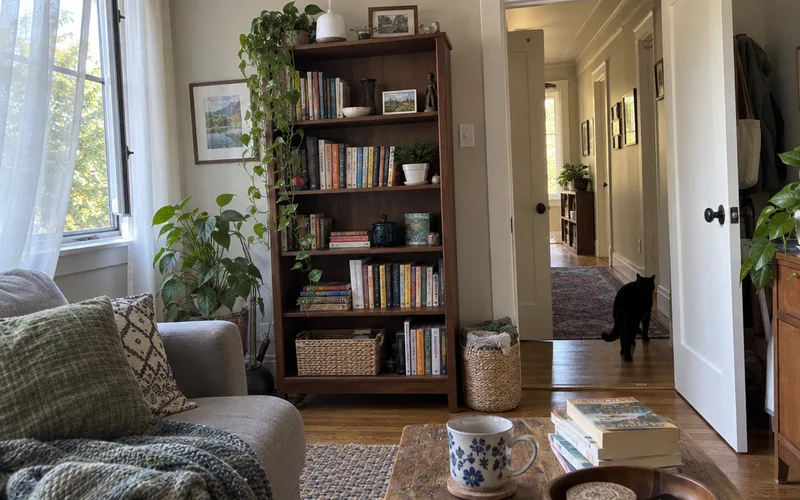
New to this? Start with diffuser basics, and compare diffuser types before you buy one.
Birds, Rabbits and Other Small Pets
Birds should not share a home with an essential oil diffuser at all, the ASPCA says, because their respiratory tracts are very sensitive.
Rabbits and small rodents such as guinea pigs and hamsters face the same concerns as dogs and cats. But a caged pet can’t leave the room when the scent builds up.
So if you keep birds, skip diffusing. With other small pets, diffuse only in a room without their cage.
Never Put Essential Oils on Your Pet’s Skin or Fur
Essential oils should never go on a dog’s or cat’s skin or fur, because direct contact with concentrated oil is the fastest way pets get sick.
Pets that walk through oil or get it on their coat can turn unsteady and depressed. And whatever sits on the fur gets licked off, so skin contact turns into ingestion.
That includes flea remedies. Tisserand notes that no published research has tested essential oils on cat or dog fleas, so nobody knows a dose that kills fleas but spares your pet.
The same goes for home remedies sold as essential oils for fleas on dogs. Ask your veterinarian for a flea treatment made for your pet’s species instead.
Signs of Essential Oil Poisoning in Pets
Essential oil poisoning in pets shows up as unsteadiness and depression after skin contact, or vomiting, diarrhea and depression after swallowing, the ASPCA reports.
That depression means central nervous system depression: a dull, sleepy pet. Severe cases can bring a low body temperature.
In tea tree cases, the same safety author lists weakness, poor coordination and muscle tremors, and the cat that died showed signs of liver damage.
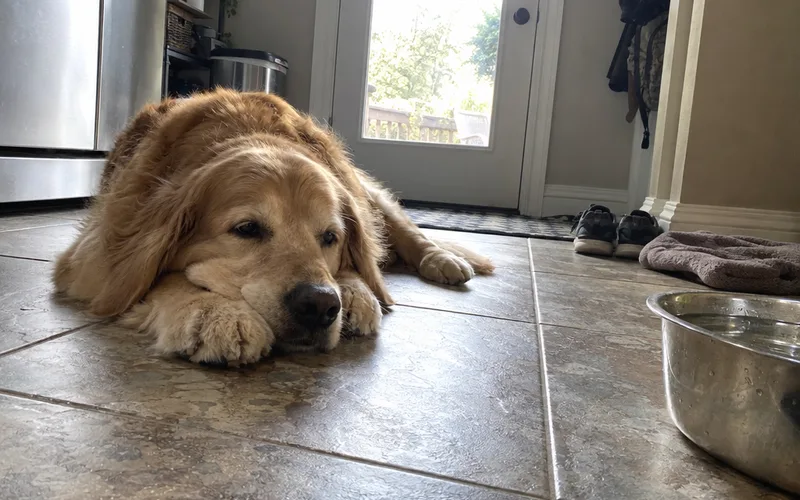
Most of those pets fully recovered within 2-3 days of supportive vet care.
For cats, the poisoning symptoms timeline shows what to watch for after an exposure.
What to Do If Your Pet Licks or Eats Essential Oil
If your pet licks, eats or gets covered in essential oil, move it away from the oil and call your vet or a pet poison line right away. Don’t try to make it vomit.
Pet Poison Helpline’s emergency steps run in this order:
- Remove your pet from the area.
- Check that your pet is breathing and acting normally.
- Give no home antidotes, and don’t induce vomiting unless a vet or the helpline says to.
- Call your vet or the helpline at 855-764-7661.
What a Pet Poison Call Costs
Pet Poison Helpline charges a $99 fee per incident, with follow-up calls included. The ASPCA Animal Poison Control Center answers at (888) 426-4435.
Note: Call even if your pet seems fine, since early treatment is easier.
The Bottom Line
The safest essential oil around a pet is a little scent in the air, for a short time, in a room your pet can leave.
This week, move your tea tree oil and the rest of the avoid list into a closed cupboard.
Then use the essential oil basics and household safety rules to keep the rest of your oils safe for people too.
Frequently Asked Questions
Can I put lavender in my diffuser if I have a dog?
Yes, lavender is on most lower-risk lists for dogs, so a short, light session with a door open suits most dogs. Skip it if your dog has breathing problems.
Can you diffuse frankincense around dogs?
Yes, frankincense appears on most lower-risk lists for dogs and cats. Diffuse it lightly and briefly in a room your dog can leave.
Which diffuser is safe for cats?
No diffuser type makes an essential oil safe for cats, because the risk comes from how much oil fills the air and for how long. Run it briefly with a door open.
How can I make my house smell good without harming my pets?
The lowest-risk way to scent a home with pets is a short, light diffuser session of a lower-risk oil such as cedarwood, in a room your pet can leave. Open a window afterward so the scent doesn’t build up.