
Some bottled essential oils are 100% oil.
Shampoos and fragrances often contain just 1-20%, according to ASPCA Poison Control.
That gap is why “is cedarwood oil safe for cats” has no simple yes. A few drops from the bottle are far stronger than a scented shampoo.
So the answer depends on how the oil reaches your cat: through the air, on the fur or in the mouth.
Is Cedarwood Oil Safe for Cats?
Cedarwood oil isn’t proven safe for cats, and the pages calling it cat-safe are mostly companies that sell cedar products. None of those pages points to a study of cedarwood oil in cats.
So judge cedarwood like other essential oils, by route. ASPCA Poison Control says oil that’s swallowed or on the skin is usually more worrying than oil that’s breathed in.
The air is the lowest-risk route, and your cat’s fur and mouth are the ones to protect. The same rules apply to every oil on a pet-safe oils list.
Why Essential Oils Hit Cats Harder
Essential oils hit cats harder than people for 2 reasons: a cat’s liver clears some plant compounds slowly, and grooming means swallowing any oil on the fur.
The liver problem comes down to an enzyme that clears plant compounds. Cats make very little glucuronyl transferase, which helps break down phenol and similar compounds found in many oils.
Grooming is the second problem. ASPCA Poison Control notes that cats may be more sensitive to oil on the skin because self-grooming raises their risk of swallowing it.
In other words, a drop on the coat becomes ingestion the next time your cat washes.
Is Cedarwood Oil Safe for Cats to Smell?
Cedarwood oil in a diffuser is lower risk for cats than oil on the skin. Still, ASPCA Poison Control advises against a diffuser in the same room as animals that groom themselves.
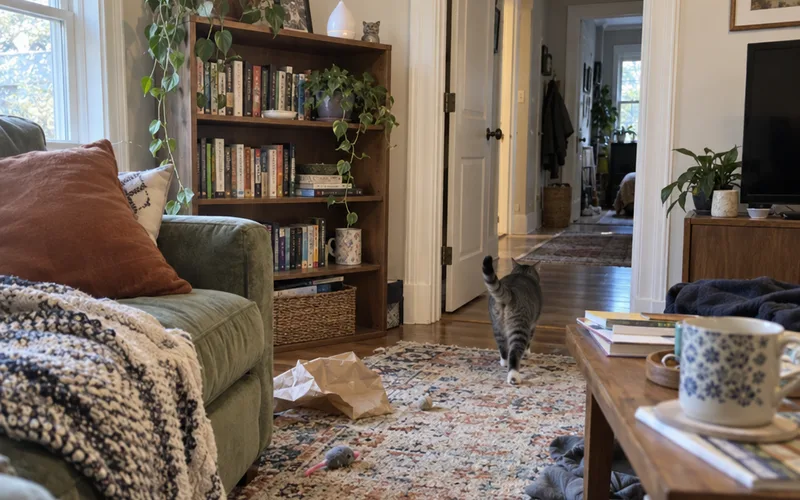
Why, if the oil only goes into the air?
Oil from the air can settle on fur, and your cat licks it off later. The ASPCA also warns against a strong concentration around groomers.
Here’s how to diffuse cedarwood with a cat at home:
- Use a weak blend in a room your cat doesn’t have to be in.
- Keep the door open so your cat can leave.
- Set the diffuser high, out of reach of paws and tails.
Note: Skip diffused oils if your cat has asthma or another breathing problem. The ASPCA names breathing issues as the exception to the lower risk of inhalation.
Check how cedarwood smells before you buy, and review the basics of using a diffuser.
Can You Put Cedar Oil on Your Cat for Fleas?
No, you shouldn’t put cedar oil on your cat for fleas, because ASPCA Poison Control says it’s best not to give or apply highly concentrated oils to pets.
Some cedar bug sprays are labeled pet-safe or cat-safe. That label is the seller’s claim, not a veterinary test, and your cat will still lick the spray off.
Cedarwood does have a reputation against fleas and mosquitoes, and owners also ask whether it keeps ticks away. But a remedy that works on a carpet can still harm a cat that grooms it off.
Ask your veterinarian for a topical flea treatment made for cats instead. If you use cedarwood against fleas at home, keep it on surfaces your cat never touches.
Signs of Essential Oil Poisoning in Cats
Essential oil poisoning in cats can show up as wobbliness, weakness, vomiting or a sudden change in behavior, and any of these means a call to your vet.
The most common signs after skin exposure are wobbliness, muscle weakness, depression and behavior changes, ASPCA Poison Control reports. Severe cases can bring low body temperature and collapse.
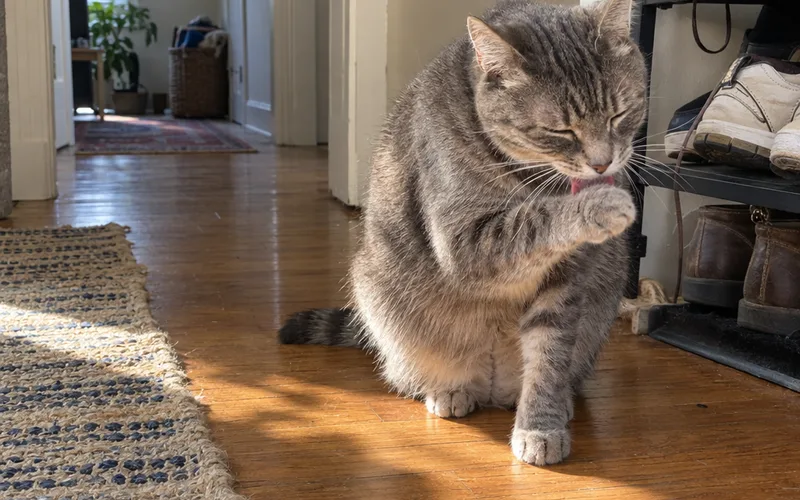
Swallowed oil looks different. It can cause vomiting, diarrhea and central nervous system depression, which means a dull, sleepy cat.
Other symptoms to watch for include drooling, pawing at the mouth, skin irritation and difficulty breathing. The symptom timeline shows what to watch for after an exposure.
What to Do If Your Cat Licks Cedarwood Oil
If your cat licks cedarwood oil, call your veterinarian or an animal poison line right away, and don’t try to make your cat vomit.
Pet Poison Helpline says it doesn’t recommend inducing vomiting with oil products, and that most of these exposures need immediate veterinary care.
Here’s what to do, in order:
- Move your cat away from the oil and the diffuser.
- Call your vet, or Pet Poison Helpline at (855) 764-7661, which answers 24/7.
- Keep the bottle so you can read the label on the phone.
- Follow the vet’s advice, even if your cat seems fine.
Fast action matters more than guessing how much your cat swallowed.
How Cedarwood Compares With Other Oils Around Cats
Cedarwood oil sits on most lists of gentler oils for cats, but those lists disagree on others, such as lavender and lemongrass.
Compare the oils toxic to cats with the oils safe for cats, and check whether lavender oil is safe separately.
In a home with a cat and a dog, follow the cat rules for every oil. Lists of oils safe for dogs run longer, but your cat shares the air and the floors.
The Bottom Line
Cedarwood oil isn’t a proven danger, but it isn’t proven safe for cats either.
Keep it off your cat, diffuse lightly with the door open, and save the poison line number in your phone today.
Frequently Asked Questions
Is cedar wood safe for cats to smell?
Cedarwood scent in the air is the lowest-risk way a cat meets the oil, because ASPCA Poison Control rates inhaled oil as less concerning than skin or mouth contact. Diffuse lightly in a room your cat can leave.
What essential oils can I not use around cats?
Tea tree oil, eucalyptus oil, peppermint, cinnamon, pine oil, citronella oil and citrus oils such as orange, lime and grapefruit appear on nearly every list of oils to keep away from cats. Keep every oil off your cat’s skin and fur, cedarwood included.
Which diffuser is safe for cats?
No diffuser makes an essential oil safe for cats, because the risk comes from the oil’s strength and how close your cat gets. Use a weak blend out of reach, with a door open.
Is cedar oil a safe moth deterrent in a home with cats?
Cedar oil is safest as a moth deterrent inside a closed closet or drawer your cat can’t reach. Never spray it where your cat lies.