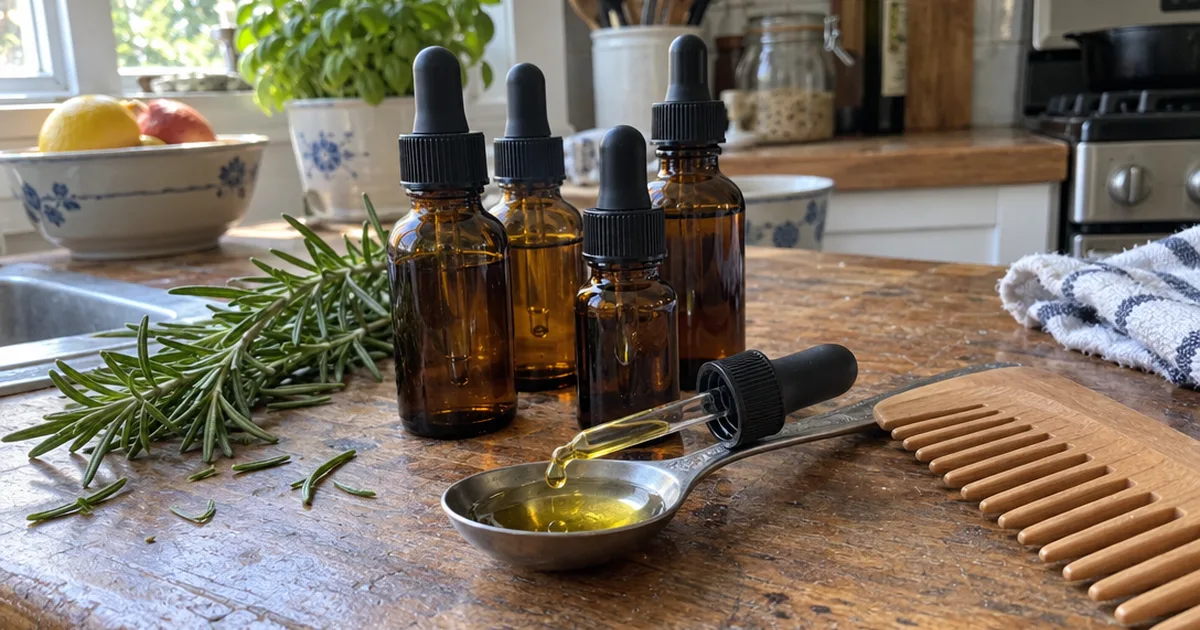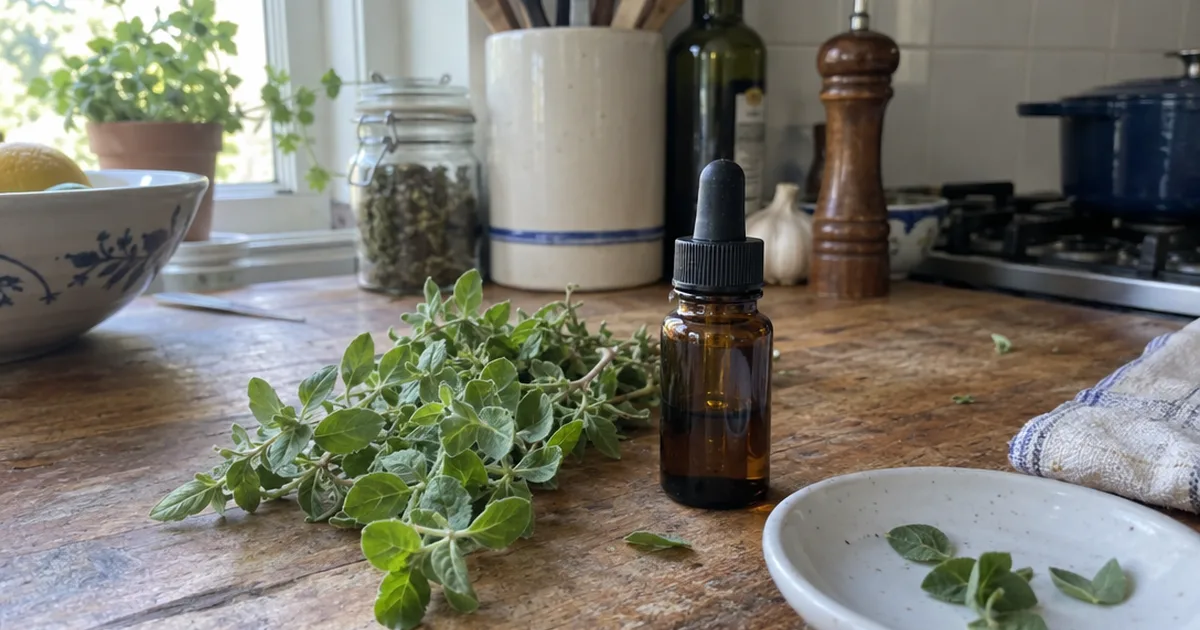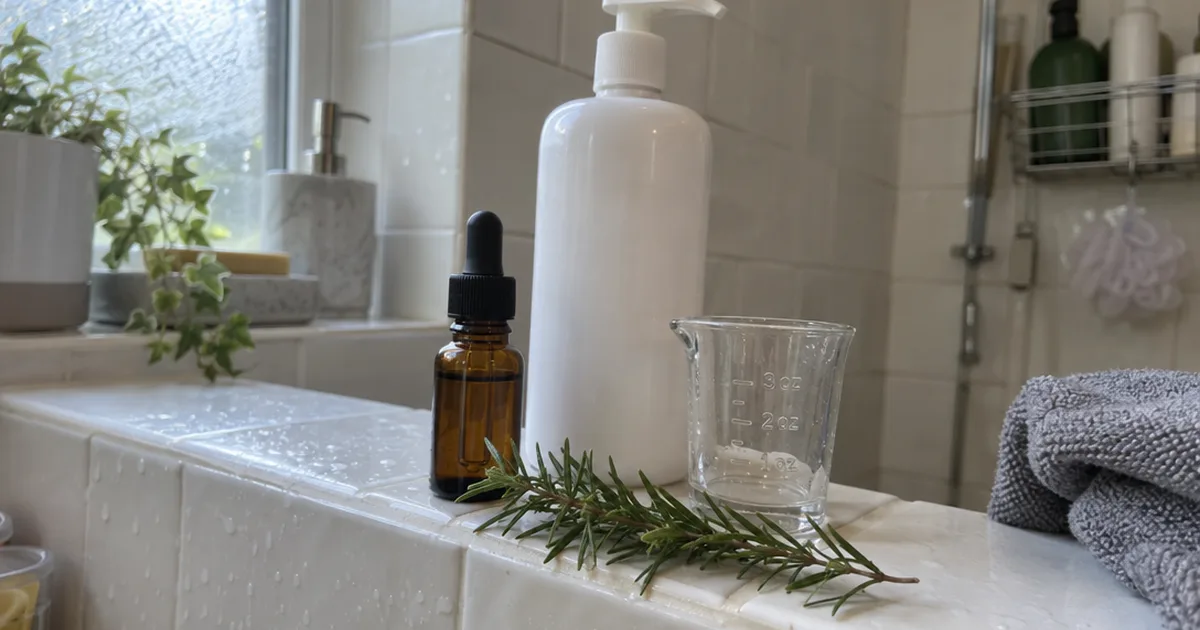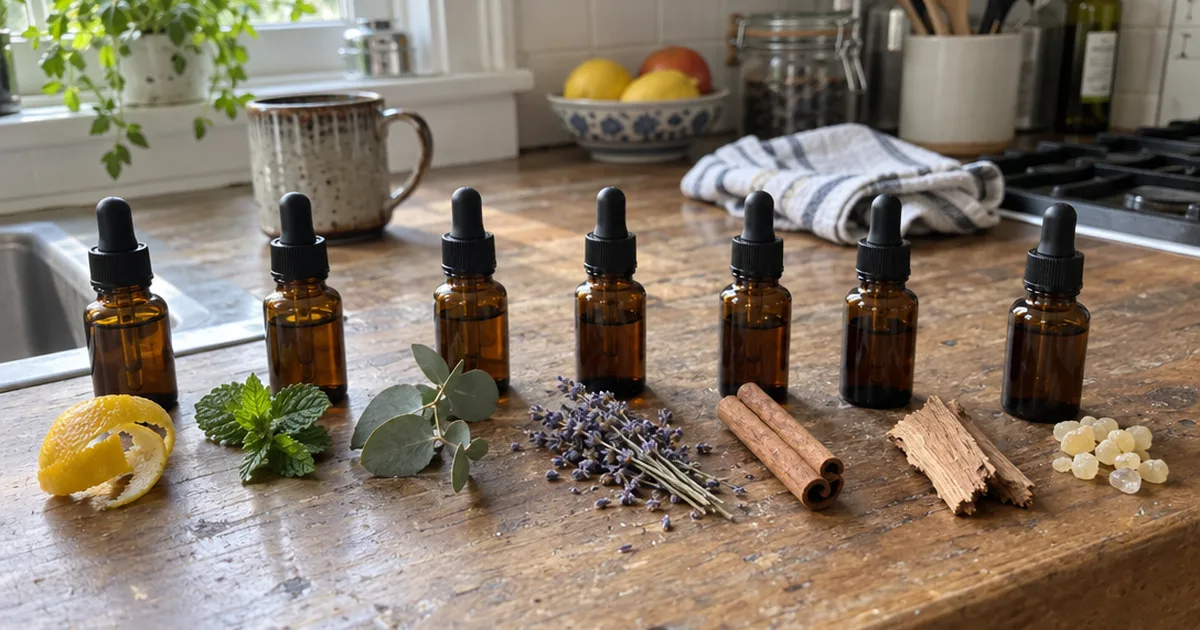

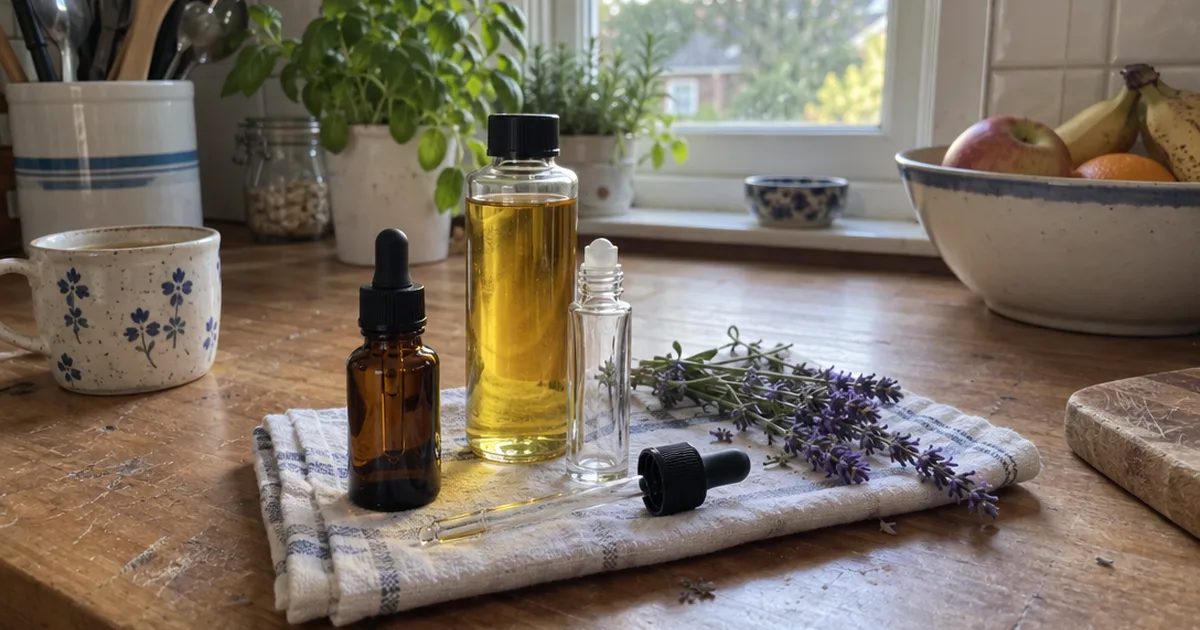
A skin-safe essential oil blend is at least 95% carrier oil.
That’s because WebMD’s medically reviewed advice, last reviewed in June 2025, keeps the essential oil to 1% to 5% of the mix.
Go higher, and a reaction becomes more likely.
So knowing how to use essential oils on skin starts with the mix. Here’s the 6-step method I’d follow, in the order that keeps you out of trouble.
- Best for: adults with healthy, unbroken skin. Skip it for a baby, a rash or a cut.
- Time: Same day to mix and apply, once your patch test is clear.
- First step: Get a carrier oil, such as jojoba oil or sweet almond oil, before you open the essential oil.
How to Use Essential Oils on Skin Step by Step
To use essential oils on skin, dilute the oil in a carrier oil to 1% to 5% strength, patch test the blend, then rub a thin layer into clean, healthy skin and stop at the first sign of a reaction. Each step below handles one part of that, in the order you’ll do them.
Step 1: Pick an Oil That’s Gentle Enough for Skin
Start with the oil itself, because some essential oils are much harsher on skin than others, even once they’re diluted.
Lavender, frankincense, rose, chamomile and geranium are common picks for skin care. Strong, spicy oils such as oregano and clove need far more care, and their own skin guides explain why.
Check the label, too.
A bottle that says “fragrance oil” or “perfume oil” isn’t an essential oil at all, and using fragrance oil on skin comes with its own rules.
Pick one oil to start, not a blend of five, so you know exactly what you’re reacting to.
Step 2: Choose a Carrier Oil
A carrier oil is a plain plant oil, such as jojoba or sweet almond oil, that spreads the essential oil thin so it never lands at full strength.
Pick one you like the feel of and that doesn’t bother you on its own. The best carrier oil for skin depends on whether yours runs dry or oily, and the full list of carrier oils compares the common ones.
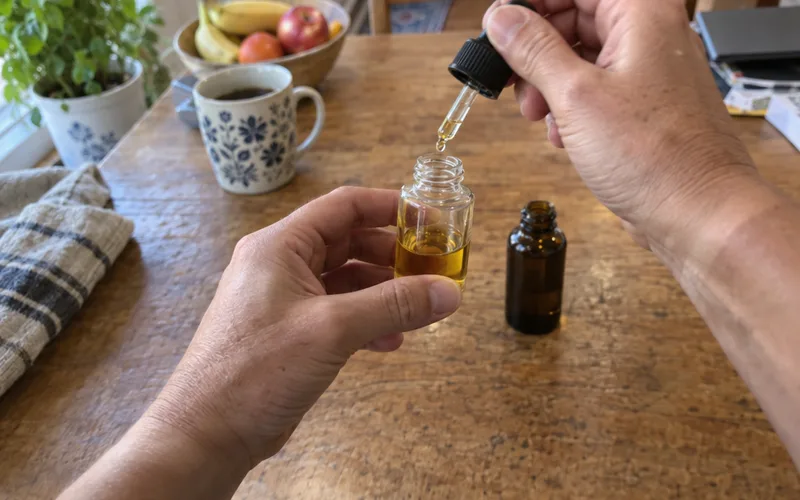
Unscented lotion or cream works too.
That makes it easy to fit an oil into a skincare routine you already have, without buying anything new.
Step 3: Dilute It to 1% to 5%
Essential oils should make up only 1% to 5% of what goes on your skin, and WebMD notes that the higher the percentage, the more likely a reaction. Everything else in the bottle is carrier.
Use the low end for your face and for large areas. Save the top of the range for a small spot.
In other words: start low.
You can always add a drop later, but you can’t take one back out of a blend that’s already on you.
The exact drops per teaspoon or ounce depend on the strength you pick, so keep the dilution math for each strength open while you mix.
Pro Tip: Mix in a small glass bottle and write the strength and the date on its label. That way you know exactly what you’re putting on next week.
Step 4: Patch Test the Blend
A patch test is a small trial on one spot that shows whether your skin tolerates a blend before you use it more widely. It’s the easiest way to catch allergic reactions while they’re still the size of a coin.
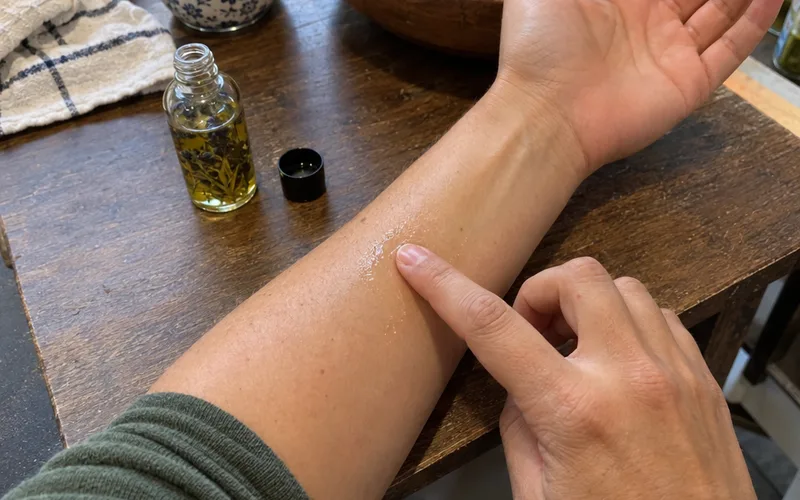
Here’s how to do it:
- Mix the blend at the exact strength you plan to use.
- Rub a little onto the inside of your forearm.
- Leave it on, and check the spot again the next day.
- If you see redness, bumps or itching, wash it off and skip that oil.
Run the test again for every new oil and every new blend.
A clear result for lavender tells you nothing about rose.
Step 5: Apply a Thin Layer to Clean, Healthy Skin
Rub a few drops of the diluted blend into clean, dry skin with no cuts, rashes or sunburn.
That last part matters, because injured or inflamed skin absorbs more oil and may react, the same medically reviewed guide explains.
Use less than you think you need. Rubbing a blend in is the hands-on side of aromatherapy, so a slow massage on your arms or shoulders works well.
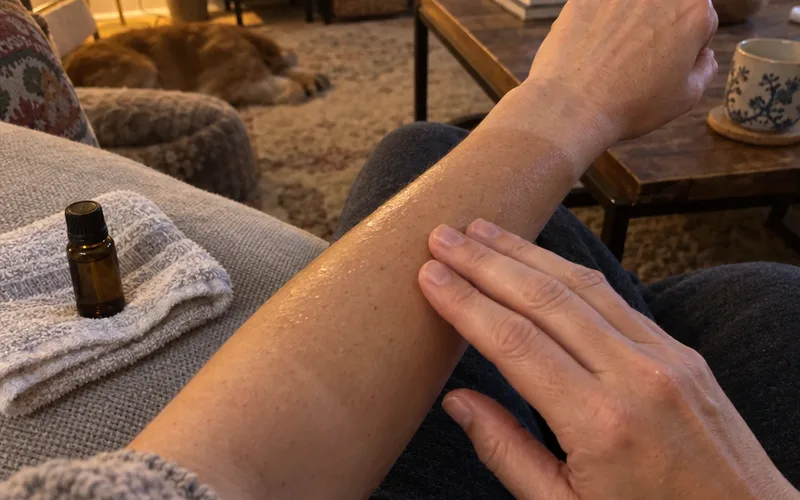
A thin layer gives you the aroma and the feel, and more oil only raises the dose you take in.
For wrists and temples, a roller bottle makes this simple, and ready-made roller blends have the dilution worked out for you.
Step 6: Stop at the First Sign of a Reaction
If you break out in a rash, little bumps or itching, stop. That guide says more of the oil can make it worse, so gently wash the area with water.
Don’t try the same blend again “just to check.”
If the area blisters, swells or keeps burning, follow the steps for an essential oil burn or an allergic reaction. Call a doctor if the symptoms spread or you have any trouble breathing.
Key Takeaway: A reaction means stop and wash, not push through.
Where to Apply Essential Oils on Your Body
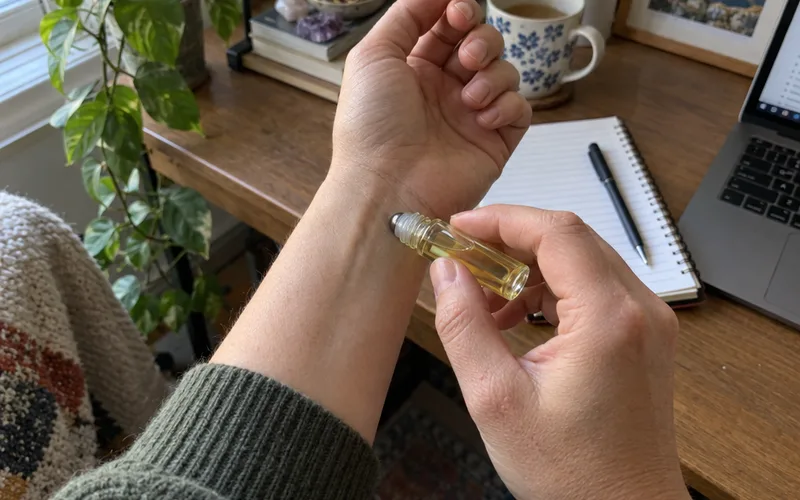
The best places to apply diluted essential oils are areas of healthy, unbroken skin such as your arms, legs, shoulders and wrists, well away from your eyes, nose, mouth and private parts.
Why those limits?
WebMD points out that oils that are fine on your arms and legs, such as lemongrass, peppermint and cinnamon bark, may not be safe inside your mouth, nose, eyes or private parts.
Here’s a quick map of where a diluted blend can and can’t go:
| Area | Diluted oil? | Note |
|---|---|---|
| Arms, legs, shoulders | Yes | Good spot for a first try |
| Wrists, neck, temples | Yes | Small amounts, away from eyes |
| Face | Yes, carefully | Lowest strength in the range |
| Soles of the feet | Yes | Thick skin, low irritation risk |
| Eyes, nose, mouth, private parts | No | Not even diluted |
| Cuts, rashes, sunburn | No | Damaged skin absorbs more |
Wrists and neck are also where you’d dab a blend you wear as an essential oil perfume.
And if you’ve heard that oils on your soles travel to the rest of your body, the essential oils on feet myth is worth a read before you rely on it.
How to Use Essential Oils on Your Face
To use essential oils on your face, mix one into a carrier oil or unscented moisturizer at the lowest strength you’d use anywhere, patch test it first, and keep it well clear of your eyes.
Wondering how to fit essential oils into a daily skincare routine?
Mix your oil into a small scoop of the moisturizer you already use, not into the whole jar. If your face doesn’t like it, you’ve lost a spoonful instead of a full product.
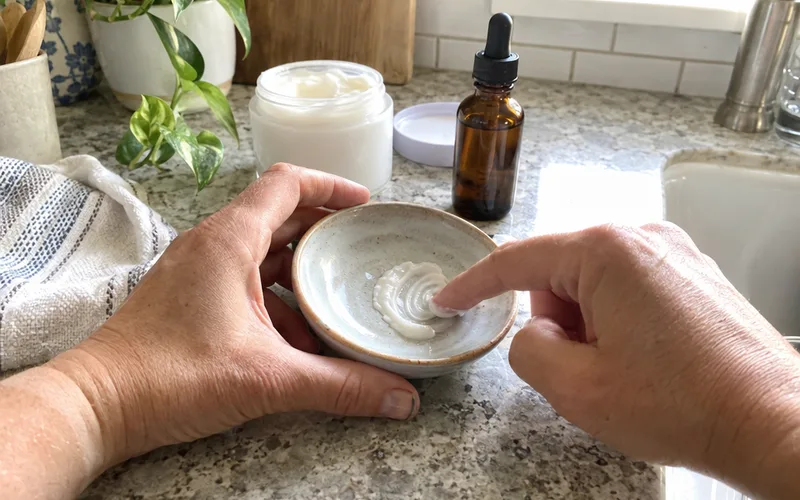
Keep the blend off your eyelids and the edges of your nostrils and lips, because the medically reviewed no-go list includes your eyes, nose and mouth.
Then give your face a few days of the same blend before you add anything new.
If you’re still choosing an oil, the best oils for skin compares picks for dry, oily and sensitive types.
Essential Oils That Shouldn’t Go on Your Skin
The main essential oils to keep off your skin are citrus oils such as lemon and bergamot before sun exposure, lemongrass, peppermint and cinnamon bark near sensitive areas, and birch and wintergreen on young kids.
That first group catches people out.
WebMD warns that citrus oils that are safe in your food may be bad for your skin, especially if you go out into the sun. That sun reaction is called phototoxicity, a burn-like rash where the oil and sunlight meet.
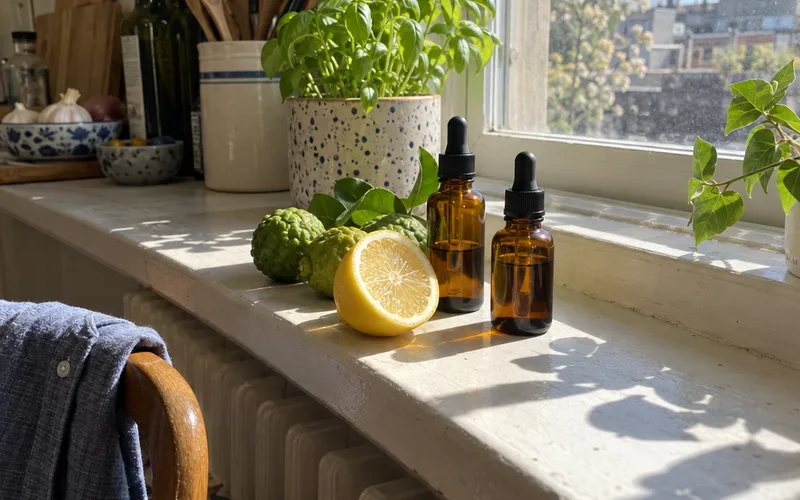
So if you use one of those oils, put it where clothes cover it, or wait until evening.
Here’s the short list to remember:
- Citrus oils on any spot that will see the sun.
- Lemongrass, peppermint and cinnamon bark near your eyes, nose, mouth or private parts, where peppermint’s menthol bite is easy to feel.
- Birch and wintergreen on children 6 or younger.
- Any oil, even diluted, on cuts, rashes or sunburn, as Step 5 explains.
Note: “Natural” doesn’t mean gentle. Treat every new bottle as untested until your patch test says otherwise.
Who Needs Extra Care With Essential Oils on Skin
Children, pregnant people and anyone with a skin or medical condition need extra care with essential oils on skin, and babies shouldn’t get them at all without a pediatrician’s OK.
Children come first.
WebMD says to avoid birch and wintergreen around kids 6 or younger, because the methyl salicylate in them may cause serious problems even in small amounts.
If you’re pregnant or breastfeeding, talk to your doctor or midwife before you use any oil this way. The cautions are different, and aromatherapy in pregnancy goes through them oil by oil.
The same goes for anyone with eczema, other medical conditions or a daily medication.
For every other way oils get used at home, the safety rules for each route cover diffusers, baths and taking oils by mouth.
Skin Guides for Single Oils
Each oil behaves a little differently, so once you have the method down, the single-oil guides cover the details:
- Lavender: what lavender does on skin and how to dilute it.
- Frankincense: what frankincense can do for skin and where the evidence stops.
- Rose: how rose oil fits into skin care.
- Jasmine: using jasmine oil on skin for its aroma and its feel.
- Sandalwood: what sandalwood oil offers skin.
- Lemon: how to use lemon oil on skin without a sun reaction.
- Eucalyptus: when eucalyptus oil suits skin, and when it doesn’t.
- Lemon eucalyptus: lemon eucalyptus oil on skin, including as a bug repellent.
- Clove: clove oil’s effects on skin and why it needs a low dose.
- Oregano: oregano oil as a spot treatment, since it can burn.
- Tea tree: using tea tree oil on dark spots.
- Timing: how long oils stay on skin after you apply them.
For diffusers, baths and the rest of the basics, start with how to use essential oils at home.
Frequently Asked Questions
Is it safe to put essential oils directly on your skin?
No, putting essential oils directly on your skin isn’t safe for most people, because undiluted oil is far stronger than the 1% to 5% blend WebMD recommends. Mix it into a carrier oil such as jojoba first, then patch test it.
What can you mix essential oils with to put on your skin?
You can mix essential oils with a carrier oil such as jojoba or sweet almond oil, or with an unscented cream; WebMD names vegetable oils, creams and bath gels as the usual bases. Keep the essential oil at 1% to 5% of the mix.
Can you use essential oils on your skin every day?
You can use a well-diluted essential oil on your skin every day if it passes a patch test and never irritates you. Keep the strength at the low end of the range and stop the moment you see redness or itching.
Can you go in the sun after putting essential oils on your skin?
You can go in the sun after most diluted essential oils, but citrus oils such as lemon and bergamot are the exception, since WebMD says they may be bad for your skin, especially in the sun. Put those blends only where clothes cover you, or save them for the evening.
Can you put essential oils on broken or irritated skin?
No, keep essential oils off cuts, rashes and sunburn, because WebMD says injured or inflamed skin absorbs more oil and may react. Wait until the skin has healed, then patch test before you use the oil there.
Can you use essential oils on your skin as perfume?
Yes, you can wear essential oils as perfume once they’re diluted in a carrier oil, the same as any other skin use. Dab the blend on your wrists or neck, and keep citrus oils off skin that will see the sun.
Final Thoughts
The biggest takeaway: no essential oil should touch your skin until it’s diluted to 1% to 5% and patch tested.
This week, pick one oil and one carrier, mix a small batch at the low end of that range and test it on your forearm before you use it anywhere else.