
One drop of essential oil is 50-100 times more concentrated than the plant it came from.
That figure comes from the Tisserand Institute, and it explains almost every safety rule that follows.
You’re not handling a herb. You’re handling a potent extract.
The essential oils safety rules here go route by route: your skin, the air, the bath and your mouth.
You’ll also see who needs extra care, the warning signs of a bad reaction and the 17 detailed guides that cover specific oils and accidents.
Are Essential Oils Safe?
Essential oils are safe for most adults when they’re diluted for skin, used in short sessions and kept out of the mouth. The Tisserand Institute’s safety guidelines say millions of people use them every day, most of them without incident.
The same page warns that they’re powerful substances that can be harmful without due care. So the honest answer is “yes, with rules,” whether you use oils for aromatherapy in a diffuser or in a blend for your skin.
Those rules exist because of concentration. A bottle holds what’s left after a large amount of plant material is distilled or pressed down to a few milliliters of oil.
That’s why a single drop can do things a whole sprig of the plant never would, both good and bad.
Most problems come from three habits:
- Putting oil on your skin without diluting it first.
- Swallowing oil, or adding drops to a glass of water.
- Breathing a strong scent for too long in a closed room.
Fix those three habits and you remove most of the risk.
It helps to separate hazard from risk. A hazard is what an oil could do at a high enough dose, while risk is the chance it actually harms you, given how much you use and where you put it.
That’s good news, because dose and route are the 2 things you control every time you open a bottle.
The basics of using essential oils build on these same 2 controls, whatever oil you start with.
Why “Natural” Doesn’t Mean Safe
A “natural” label doesn’t make an essential oil gentle, because every oil is a mixture of active plant chemicals. Some of those chemicals irritate skin, some trigger allergies and some react with sunlight.
In fact, poison ivy is natural too.
The same logic applies to a single compound. Clove oil contains eugenol, and whether eugenol is dangerous depends on the dose and where it lands.
It also applies the other way round. A synthetic scent isn’t automatically worse, but fragrance oils can be toxic in their own ways, and those synthetic scents in candles and cosmetics aren’t essential oils at all.
Judge every bottle by its dose and how you use it, not by the word on the label.
Essential Oil Safety Rules by Route
Essential oil safety rules change with the route: dilute oils before skin use, disperse them before a bath, diffuse in short sessions and never swallow them without a qualified practitioner. Each route has its own main risk and one rule that prevents most problems.
Here’s how they compare:
| Route | Main risk | Key rule |
|---|---|---|
| Skin | Rashes, burns, allergies | Dilute in a carrier oil first |
| Sun after skin use | Phototoxic burns | No UV for 12-18 hours with cold-pressed citrus |
| Bath | Undiluted drops on skin | Mix with a dispersant first |
| Diffuser | Irritated airways | 30-60 minutes on, 30-60 off |
| Steam or bottle | Intense exposure | Under 15-20 minutes |
| Swallowing | Poisoning, gut damage | Don’t, without a qualified practitioner |
Each route has its own section in this guide, with the reasons and the steps.
If you only remember one row, make it the first. Skin reactions are the problem people run into most often.
Is It Safe to Put Essential Oils on Your Skin?
Essential oils are safe on your skin only after you dilute them in a carrier oil, such as jojoba or sweet almond oil. Undiluted oil causes most of the skin reactions people report.
Can You Put Essential Oils Directly on Your Skin?
No, you shouldn’t put essential oils directly on your skin, because undiluted oil is the most common cause of skin reactions. The Tisserand Institute says a skin reaction is the most common adverse reaction of all, hitting hundreds, possibly thousands, of people every year.
The institute puts it bluntly:
“Do not apply undiluted essential oils to your skin. It’s that simple.”
Why does dilution work so well?
It lowers the concentration on any one spot. The oil still carries its scent and its effect, but the dose that reaches you drops sharply.
That’s also why a “safe” oil can still burn you. Even a gentle-sounding oil can cause a rash when you use it neat.
So pick a carrier first. The carrier oils worth using all do the same job: they spread the essential oil thin.
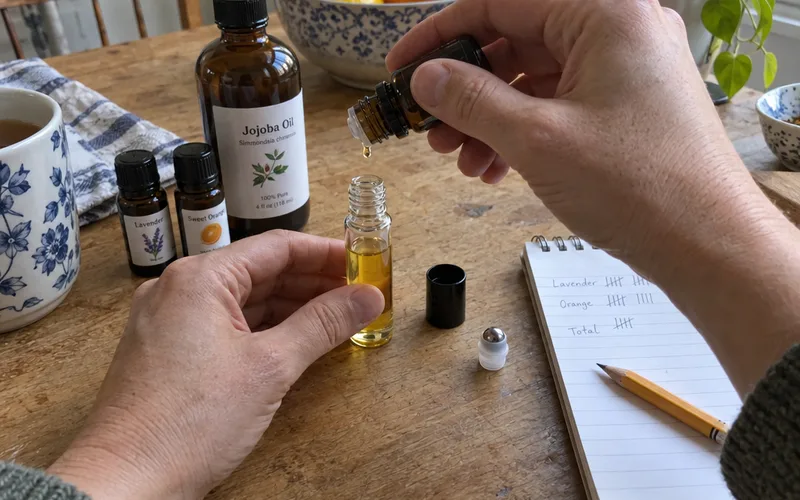
Then work out the drops. The dilution math for each use is simple once you know the ratio for face, body or a small spot.
Pro Tip: Mix your blend in a separate small bottle, not on your palm, so you can measure drops instead of guessing.
Where Not to Put Essential Oils
Essential oils don’t belong on broken, burned, sunburned or freshly shaved skin, even when they’re diluted. Damaged skin lets more of the oil through, and it’s already inflamed.
The same goes for a rash or eczema flare. Putting oil on a reaction you already have can turn a small patch into a big one.
Keep blends off the thin, sensitive skin around your eyes, inside your nose and on your genitals too. Those areas react fast and are hard to rinse.
In other words, healthy, unbroken skin on your arms, legs or back is the safest place to start.
How to Do a Patch Test
A patch test shows whether your skin tolerates a diluted essential oil before you use it on a larger area. It’s the simplest way to catch an allergic reaction early.
Here’s how it works:
- Dilute the oil exactly as you plan to use it.
- Rub a small amount on the inside of your forearm.
- Cover it and leave it alone until the next day.
- Check for redness, itching, bumps or swelling.
- If you see any of those, wash the spot and don’t use that oil.
A clean result doesn’t make you immune forever. But it does tell you this blend is a reasonable start.
Irritation vs. Allergic Reactions
Irritation and allergic reactions look alike at first, but they work differently. Irritation is the oil being too strong for the spot it touched, while an allergy is your immune system reacting to the oil.
Irritation usually stings or reddens soon after you apply the oil. It stays where the oil touched and fades once you wash it off.
An allergic reaction is different. Doctors call it allergic contact dermatitis, and it usually shows up as an itchy rash that can spread past the spot you treated.
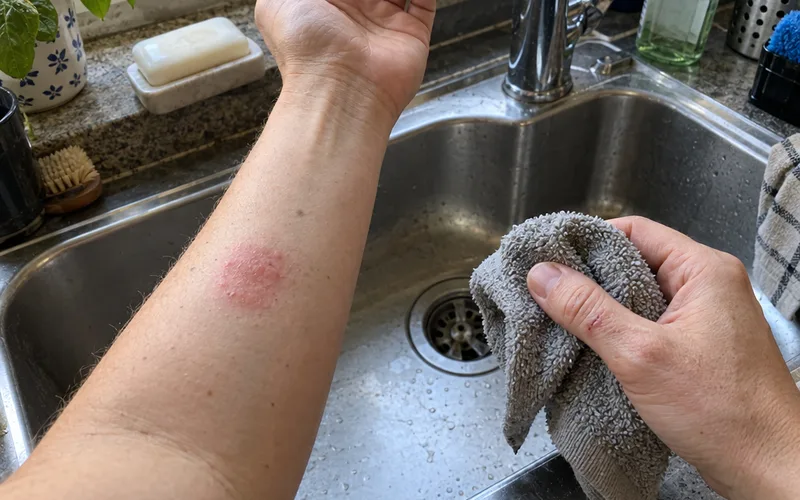
It starts with sensitization: your immune system learns to treat the oil as a threat. After that, even a small, well-diluted dose can set it off, and you may need to avoid that oil for good.
That’s why using an oil undiluted again and again invites sensitization, even if it didn’t bother you the first few times.
Some products and oils deserve a closer look before you use them:
- Frankincense side effects start with skin irritation when the oil is used neat.
- Rosemary oil on your hair can irritate your scalp.
- Ylang ylang side effects are worth checking before you add it to a skin blend.
- Fragrance oil on your skin follows different rules from essential oils.
If a reaction has already started, wash the area with mild soap and cool water. Then follow the steps for treating an allergic reaction, or for an essential oil burn if the area stings or blisters.
Keep Oils Away From Your Eyes and Ears
Essential oils should never go into your eyes or ear canals, because those tissues are far more sensitive than your arm. Even oil on your fingertips can sting badly if you rub your eyes afterward.
So wash your hands after every blend.
If oil does reach an eye, don’t rub it. Rinse it with plenty of clean, cool water and call your doctor or Poison Control if the pain or blurring doesn’t settle.
Two common accidents have their own guides. Read what to do if you got tea tree oil in your eye, or whether peppermint oil in the eye needs urgent care.
Which Essential Oils Make Your Skin Sensitive to the Sun?
Cold-pressed citrus oils, such as bergamot, lemon, lime, grapefruit and bitter orange, can make your skin burn in sunlight. This reaction is called phototoxicity, and it can leave redness, blisters and dark patches.
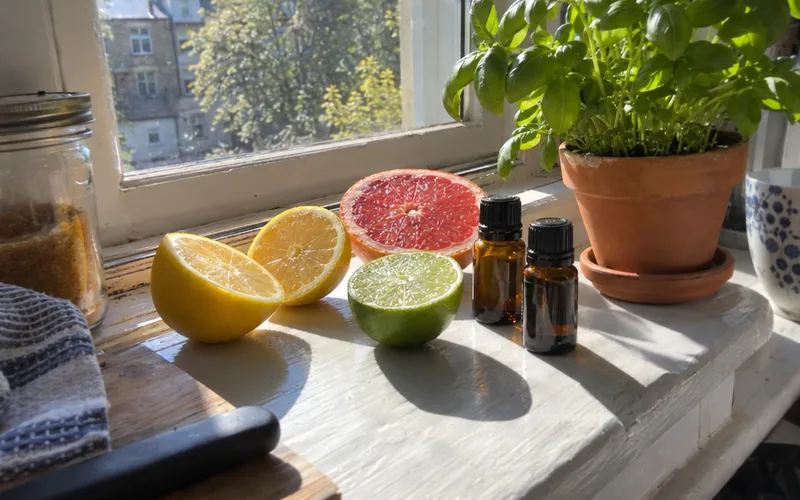
How long should you stay out of the sun?
Tisserand and Young’s reference book Essential Oil Safety recommends that skin treated with phototoxic oils above their maximum use levels shouldn’t see UV light for 12-18 hours. That includes tanning beds, not just the sun.
The method of extraction matters here. The chemicals behind the reaction stay in pressed citrus oils, while steam-distilled citrus oils don’t carry the same risk.
So check the label for “cold-pressed” or “expressed” before you put a citrus oil on skin that will see daylight.
Here’s what to do instead:
- Use citrus oils in a diffuser, where they never touch you.
- Save citrus skin blends for the evening, under clothing.
- Pick a steam-distilled citrus oil when you want it on exposed skin.
If you put on a cold-pressed citrus blend this morning, treat that spot as sun-sensitive for the rest of the day.
Can You Put Essential Oils in Bath Water?
You can use essential oils in a bath only after you mix them with a dispersant, such as liquid soap, because oil won’t blend into water on its own. Plain drops float on top as tiny beads of undiluted oil.
That’s the problem.
When you sit in the tub, those beads land on your skin at full concentration, often on the most sensitive areas. Warm water makes the sting worse.
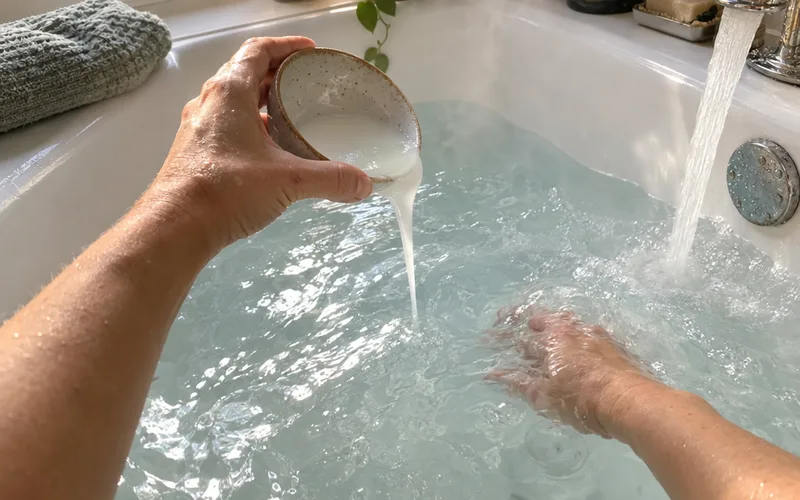
Here’s the safer way to do it:
- Fill the tub first and check the water isn’t too hot.
- Mix a few drops of oil into a spoonful of unscented liquid soap or bath gel.
- Stir the mixture into the water until you can’t see any beads on the surface.
- Get out and rinse if you start to sting.
Once you’ve got the method right, you can choose oils that suit a bath without the burn.
Note: The same floating problem happens in a glass of water, which is why drops in a drink never dilute.
Are Essential Oils Safe to Breathe In?
Essential oils are generally safe to breathe in short, intermittent sessions in a room with fresh air. The risk rises with strong scents, long exposure and closed rooms, and it’s higher for people with asthma or other lung conditions.
How Long Should You Run an Essential Oil Diffuser?
Run your diffuser for 30-60 minutes, then turn it off for 30-60 minutes. That on-off rhythm comes from the Tisserand Institute’s inhalation guidance, which also says some air exchange, meaning fresh air, is advisable.
Why the breaks?
Your body gets used to a scent after a while, so running the diffuser all day adds exposure without adding much effect. Short sessions are both safer and more noticeable.
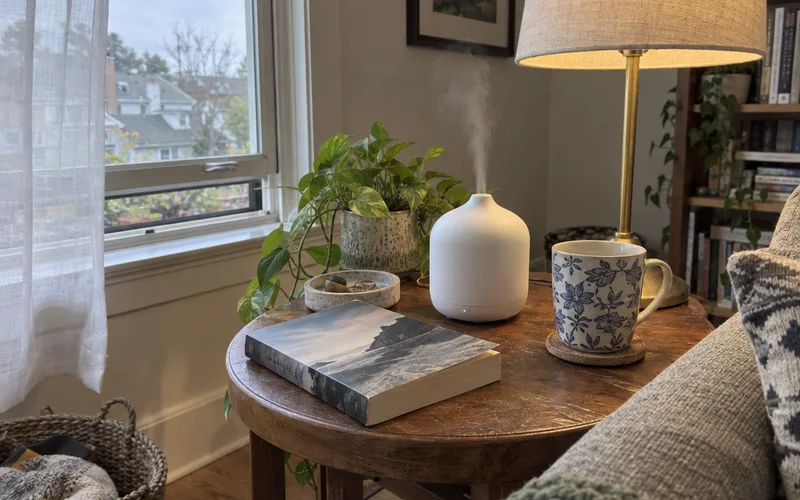
Here’s a simple aromatherapy routine:
- Start with a few drops, not a heavy pour.
- Crack a window or leave the door open.
- Set a timer, or use a diffuser with an auto-off setting.
- Keep the diffuser out of reach of kids and pets.
If you’re new to it, the steps for using a diffuser safely cover water levels, drop counts and cleaning.
Steam Inhalation and Sniffing From the Bottle
Steam inhalation and sniffing straight from the bottle are much more intense than diffusing, so keep them short. The same institute advises against direct, intensive inhalation for longer than 15-20 minutes.
That limit covers a bowl of steaming water with a towel over your head. It doesn’t apply to the light, ambient scent from a diffuser across the room.
So if you use steam, keep your eyes closed and stop well before you feel lightheaded.
Candles, Burners and Open Flames
Essential oils are flammable, so keep bottles, blends and oil-soaked cloths away from candles, stoves, fireplaces and heaters. A spill near a flame can catch fire quickly.
That’s one reason an electric diffuser is a safer pick than a tea-light oil burner. The burner puts a live flame right under the oil.
If you do use a burner, never leave it unattended, and keep it well away from curtains, kids and pets.
Essential Oils, Asthma and Your Lungs
People with asthma or COPD, a long-term lung disease, should talk to their doctor before diffusing essential oils, because strong scents can trigger coughing, wheezing or shortness of breath. A scent that relaxes one person can tighten another person’s airways.
Watch for these signs in anyone sharing the room:
- Coughing or throat clearing
- Wheezing or chest tightness
- A headache or watery eyes
If any of them appear, switch off the diffuser and open a window. Readers with asthma will find the oil-by-oil detail on essential oils and asthma useful before trying again.
Is It Safe to Swallow Essential Oils?
No, swallowing essential oils isn’t safe unless a practitioner who’s qualified to prescribe them tells you to. Oral use can irritate your mouth, throat and stomach, and some oils are poisonous in small amounts.
A qualified practitioner here means someone licensed to prescribe essential oils by mouth, not a sales rep or a post on social media. Plenty of bottles are labeled for internal use, but a label isn’t a prescription.
What about a few drops in water?
That doesn’t help. Oil floats on water, so you swallow it nearly undiluted, and here’s why drops in water never really mix.
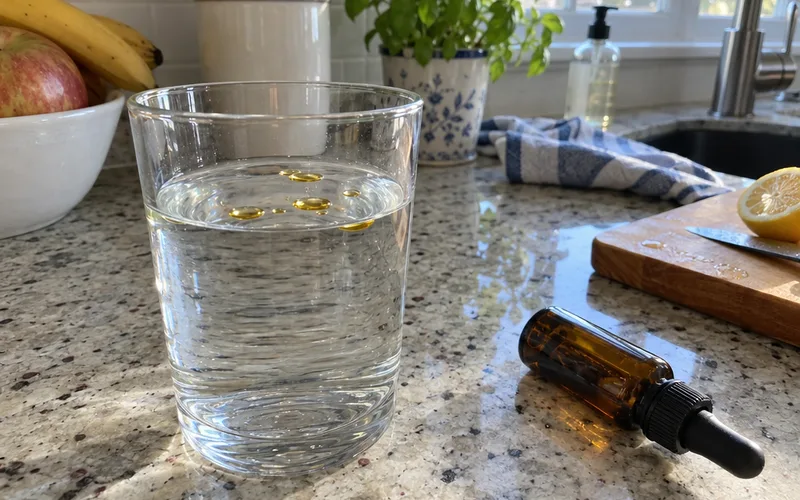
Some oils come up again and again in poisoning questions:
- Tea tree oil: see how much tea tree oil is dangerous if swallowed.
- Eucalyptus oil: the risks of ingesting eucalyptus oil are serious, especially for children.
- Peppermint oil: there’s a real limit to how much peppermint oil is too much.
- Frankincense oil: the claims about taking frankincense internally deserve a hard look.
Key Takeaway: Food flavorings use tiny, controlled amounts. A bottle of essential oil isn’t a flavoring.
What to Do If Someone Swallows an Essential Oil
If someone swallows an essential oil, call Poison Control at 1-800-222-1222 right away, even if they seem fine. That advice comes straight from the American Lung Association, and it covers products containing essential oils too.
Here’s what to do while you call:
- Take the bottle away and keep it with you.
- Don’t try to make the person vomit.
- Tell Poison Control the oil’s name, the amount and the person’s age and weight.
- Follow their instructions exactly.
Call 911 instead if the person is having trouble breathing, having a seizure or can’t stay awake.
Save the Poison Control number in your phone today. You won’t want to search for it in a panic.
Who Needs Extra Caution With Essential Oils?
Children, pregnant or breastfeeding people, pets and anyone with asthma, epilepsy, a skin condition or a daily prescription need extra caution with essential oils. Their bodies react differently, or the usual adult rules don’t fit them.
Children
Children need lower dilutions than adults and should never handle essential oil bottles. A young child can unscrew a cap and drink the contents in seconds.
So store every bottle up high, with a child-resistant cap.
Keep strong-smelling oils away from babies’ and toddlers’ faces. And never leave a diffuser running in a nursery unattended.
If a child does get into a bottle, treat it as a swallow even if you’re not sure they drank any, and call Poison Control.
Pregnancy and Breastfeeding
If you’re pregnant or breastfeeding, ask your doctor or midwife before using essential oils, because some oils and some routes aren’t recommended. Diffusing a mild oil for a short time is a lower-risk choice than skin blends or anything taken by mouth.
The detailed list of oils to skip, and the safer ways to use the rest, is in the guide to aromatherapy in pregnancy.
Pets
Pets, especially cats, can be harmed by essential oils that are safe for you, whether they breathe them in, lick them off their fur or walk through a spill. Cats are especially sensitive, so take extra care in any home with a cat.
Watch for drooling, vomiting, wobbling or trouble breathing after you diffuse or apply oils.
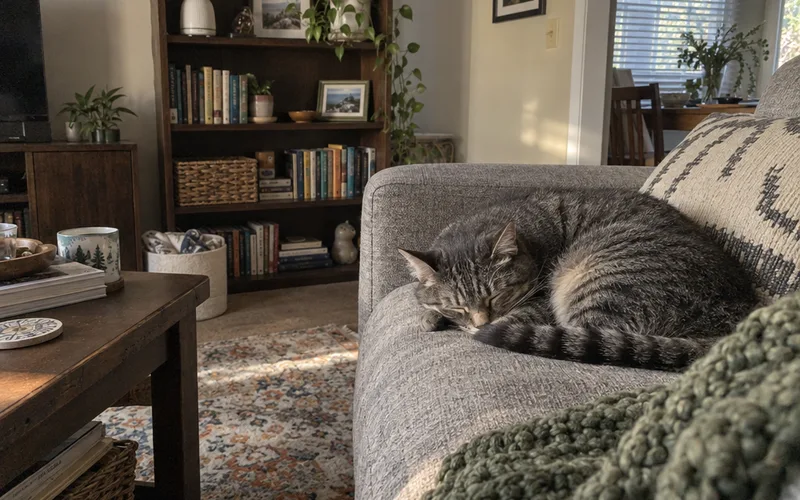
Before you diffuse in a shared room, check the essential oils toxic to cats and dogs. The broader guide to essential oils safe for pets covers which ones you can use and how.
Older Adults
Older adults often have thinner, drier skin and take more daily medicines, so they’re wise to start with a lower dilution and a patch test. A reaction can also be harder to spot on someone who bruises or reddens easily.
If you help an older relative with oils, keep their blends mild, label each bottle clearly and check new oils with their pharmacist.
Health Conditions and Medications
Talk to a physician before using essential oils if you have epilepsy, asthma, a skin condition or take prescription medicine. Some oils can trigger symptoms, and a pharmacist can check the label against your medicines and any herbal medicine you take.
Here’s what to say to your pharmacist:
“I’d like to use [oil name] on my skin and in a diffuser. Here’s the bottle. Is there anything in it that could affect my medicines or my condition?”
That quick question is free, and it covers what a label never will.
Are Essential Oils Regulated by the FDA?
No, essential oils aren’t regulated in the United States, according to a 2024 American Lung Association article on essential oil risks. That means no one checks quality before a bottle reaches the shelf, so you don’t know exactly what’s in it, how concentrated it is or whether it’s contaminated.
That answers a question readers ask a lot: is there any safety standard at all?
Not one that protects you at the store.
So words like “pure,” “therapeutic grade” or “clinical grade” on a label are marketing terms, not a government seal. The same goes for “food grade.”
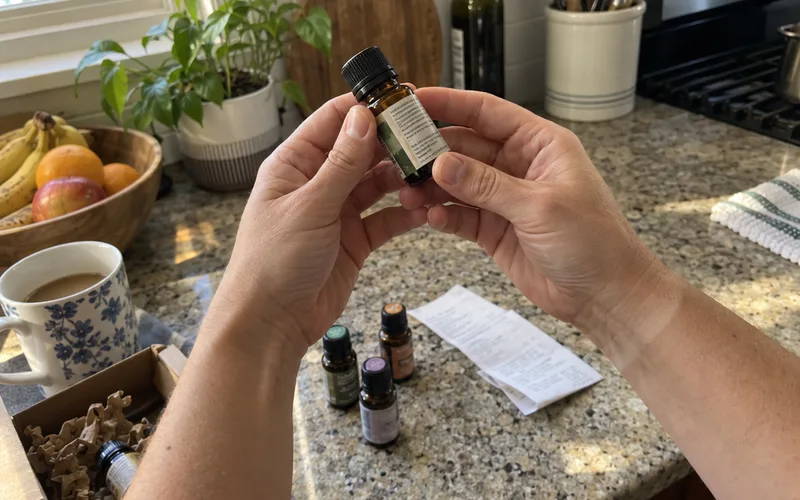
Here’s what that means in practice:
- Buy from sellers who name the plant’s Latin name and the part of the plant used.
- Look for the extraction method, such as steam-distilled or cold-pressed, which matters for citrus and the sun.
- Prefer brands that publish batch test reports, sometimes called GC/MS reports.
- Check for a batch number and a bottling or best-by date.
- Treat dosing information on a seller’s website as sales copy, not medical advice.
None of these proves a bottle is safe. But a seller that shares them is at least telling you what you’re buying.
Because nobody checks the bottle for you, your own habits are the safety system.
Signs of a Bad Reaction and What to Do
The signs of a bad reaction to an essential oil are redness, itching, burning or a rash on skin, or coughing, wheezing, headache or nausea after breathing it in. Swelling of the face, lips or throat, or trouble breathing, is an emergency.
Here’s what to do, by what you notice:
- Skin stings or reddens: wash the area with mild soap and cool water, then stop using that oil.
- A rash spreads or blisters: call your physician, and bring the bottle so they have the ingredient information.
- Coughing or a headache from a diffuser: turn it off, open a window and move to fresh air.
- Swelling, hives all over or trouble breathing: call 911 right away.
- Someone swallowed oil: call Poison Control right away.
Don’t reach for another oil to “calm” the reaction. Adding more oil to an irritated area usually makes it worse.
Some reactions show up late. An allergic rash can appear a day or two after you used an oil, so think back over the last few days when a new rash appears.
Afterward, make a note of the oil and the dilution you used. If it was an allergic reaction, you’ll likely need to avoid that oil from now on.
Which Essential Oils Need Extra Care?
Oregano, eucalyptus, peppermint, tea tree, clove and cold-pressed citrus oils raise more safety questions than most essential oils, so they deserve lower doses and closer attention. Most of those questions are about skin reactions and swallowing.
Here’s the short version for each:
- Oregano oil: check the oregano oil side effects before using it on skin or taking it in a supplement.
- Eucalyptus oil: read the full list of eucalyptus oil side effects before using it on skin or in a diffuser.
- Peppermint oil: use it diluted, keep it away from your eyes and know your daily limit.
- Tea tree oil: keep it on skin only, well diluted, and away from your mouth and eyes.
- Clove oil: read up on eugenol before you apply clove oil.
- Citrus oils: keep cold-pressed citrus off skin that will see the sun later that day to avoid phototoxicity.
In other words, the stronger the oil, the more the basic rules matter.
How to Store Essential Oils Safely
Store essential oils tightly capped, upright and away from heat and sunlight, in a cupboard children and pets can’t reach. Good storage keeps people safe and slows the changes that make an old oil harsher.
Air, heat and light change an oil’s chemistry over time. An old, oxidized oil can be harsher on your skin than the same oil when it was fresh.
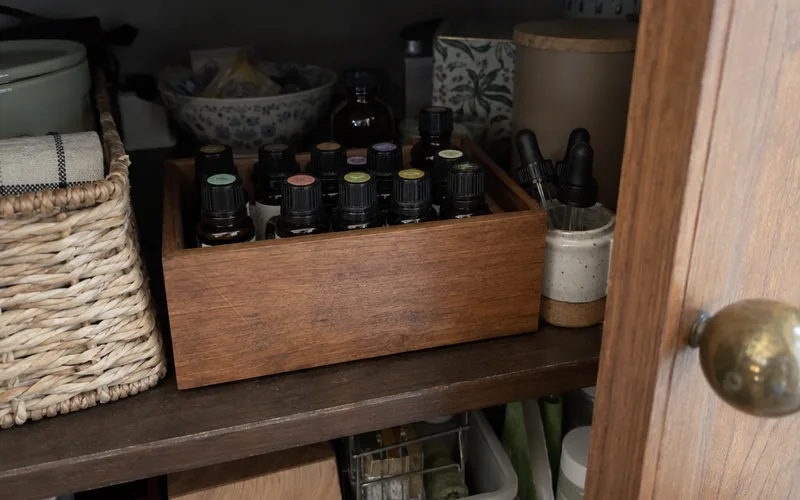
So keep caps on between uses and buy small bottles you’ll finish. The guide to whether essential oils expire explains how long each type lasts and how to tell when one has turned.
The Bottom Line
Dilute before skin, diffuse in short sessions, keep citrus off sun-exposed skin and never swallow essential oils on your own.
This week, put the Poison Control number, 1-800-222-1222, in your phone, and do a patch test before you try any new oil.
Frequently Asked Questions
Are essential oils toxic?
Essential oils can be toxic when they’re swallowed, and many cause skin burns or rashes when they’re used undiluted. If someone swallows one, call Poison Control at 1-800-222-1222 right away, even if they seem fine.
Are there harmful chemicals in essential oils?
Essential oils are mixtures of natural chemicals, and some of those chemicals irritate skin, trigger allergies or react with sunlight. Because the oils aren’t regulated in the US, the label can’t tell you exactly what else is in the bottle.
What essential oils are actually safe?
No essential oil is safe in every situation, because the risk depends on how much you use and how you use it. An oil you’ve diluted, patch tested and kept away from your eyes, your mouth and the sun is the safest choice you can make.
Can breathing essential oils be harmful?
Breathing essential oils can be harmful when the scent is strong or the exposure is long, especially for people with asthma. Diffuse in short sessions with fresh air, and stop if anyone coughs, wheezes or gets a headache.
What are the side effects of essential oils?
The most common side effects of essential oils are skin irritation, rashes and allergic reactions where the oil touched, plus coughing or headaches from strong scents. Cold-pressed citrus oils can also burn sun-exposed skin, and swallowed oils can cause poisoning.
Is it safe to use essential oils every day?
Using essential oils every day is safe for most adults who dilute them, take breaks from the diffuser and patch test new oils. Millions of people use them daily, but using the same undiluted oil again and again raises your chance of an allergy.