

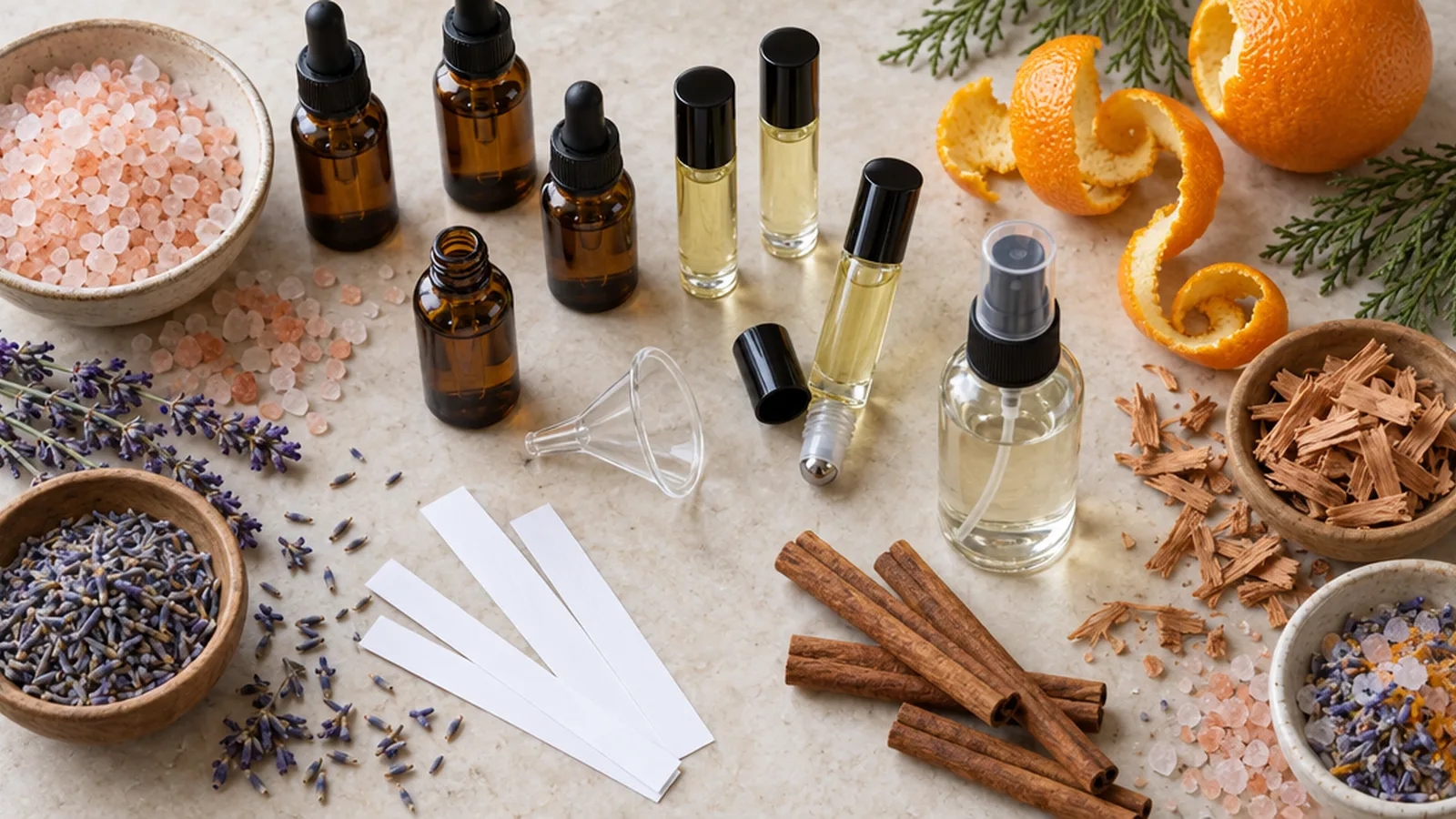
Blends is the recipe section of Call Me Oil. It explains how essential oils combine, then turns that theory into recipes written out by the numbers with exact drop counts, container sizes and dilutions. Every recipe still follows the safety rules from Basics, because a pleasant blend can irritate skin just as easily as a single oil.
How blending works
Perfumers group aromas into top, middle and base notes. Top notes such as citrus and peppermint are bright and fade first, middle notes such as lavender and geranium form the heart of a blend, and base notes such as cedarwood, vetiver and patchouli are heavy and last longest. A common starting point is roughly 30 percent top notes, 50 percent middle notes and 20 percent base notes, adjusted by smell. Blending a few drops at a time on a paper test strip is the cheapest way to learn what works before committing a full bottle.
Dilution still applies
Blends meant for skin follow the same dilution limits as single oils. In a 10 mL roller bottle, a 1 percent blend is about 2 drops of essential oil in total and a 2 percent blend is about 4 drops. Phototoxic citrus oils, strong spice oils such as clove and cinnamon, and oils that are unsafe for children or pets need extra care, and each recipe flags them.
The main topics in Blends
Recipes in this section are grouped into the sub-topics below, and they appear under these headings as they are published.
Diffuser Blends
Diffuser blend guides offer seasonal and mood-based combinations, along with advice on how many drops suit your diffuser and room size.
Essential Oil Roller Recipes
Roller recipes are pre-diluted blends for carrying in a pocket or bag, written for 10 mL bottles with total drop counts that stay inside safe limits.
Home Fragrance
Home fragrance covers room, linen and pillow sprays, reed diffusers, shower sprays, laundry scenting and candles. It also explains when an essential oil works better than a fragrance oil and when it does not.
Cleaning
Cleaning recipes show how to add essential oils to homemade all-purpose sprays, floor washes, wood care and laundry. Essential oils add scent but are not a replacement for a registered disinfectant, and vinegar should never be mixed with bleach.
Bug Repellents
Bug repellent guides cover recipes for keeping ants, spiders, mice and other pests away from the house, plus skin-safe insect sprays. Where ticks or mosquitoes can spread disease, we point readers to EPA-registered repellents, which include oil of lemon eucalyptus, a refined product that differs from lemon eucalyptus essential oil.
Perfume Making
Perfume guides explain how to build a fragrance from notes, choose between alcohol and carrier oil bases, and make perfumes, colognes and body sprays at safe concentrations for skin.
Skin & Body
Skin and body recipes cover facial oils, body oils, massage oils, aftershave and bath products, with gentle dilutions for the face.
Hair Care
Hair care recipes cover scalp oils, shampoo add-ins and hair oil blends, along with how often to use them.
Before you start mixing
Use clean glass containers, label every blend with its ingredients and date, and keep finished products away from children and pets. Patch test any blend meant for skin, and stop using it if redness or itching appears. For what the evidence says about health uses, see Wellness, and for help choosing oils to blend with, see Brands.