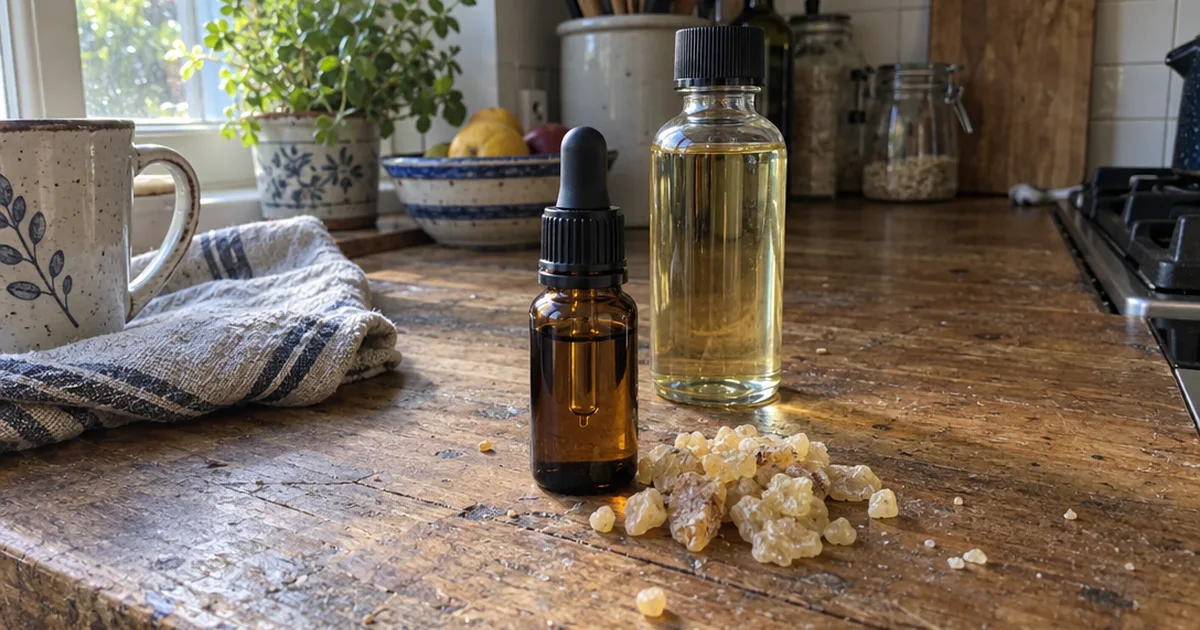

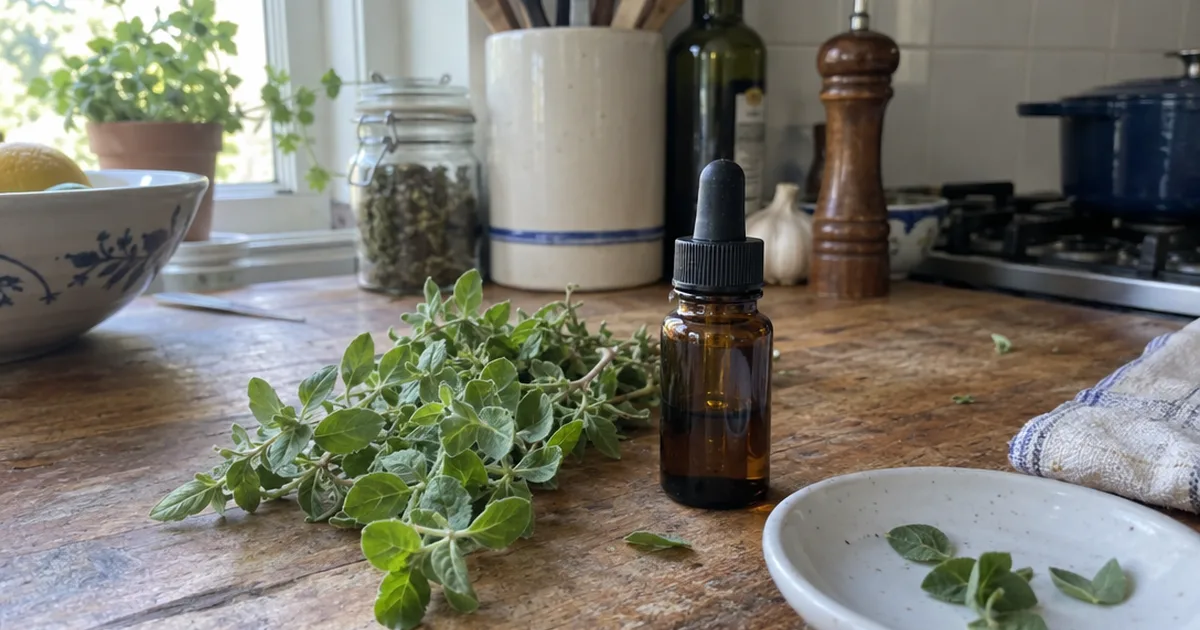
Oregano oil cut the bacteria in infected burn wounds by 99.9% in 1 hour.
That result comes from a 2018 mouse study in Frontiers in Microbiology, and it’s the strongest evidence behind oregano oil for skin.
But a mouse wound isn’t a pimple on your chin.
So let’s look at what the research really shows for bacteria, acne and wounds, then walk through how to use oregano oil on skin: the dilution, patch test and spot-treatment steps that keep it from burning you.
What Is Oregano Oil?
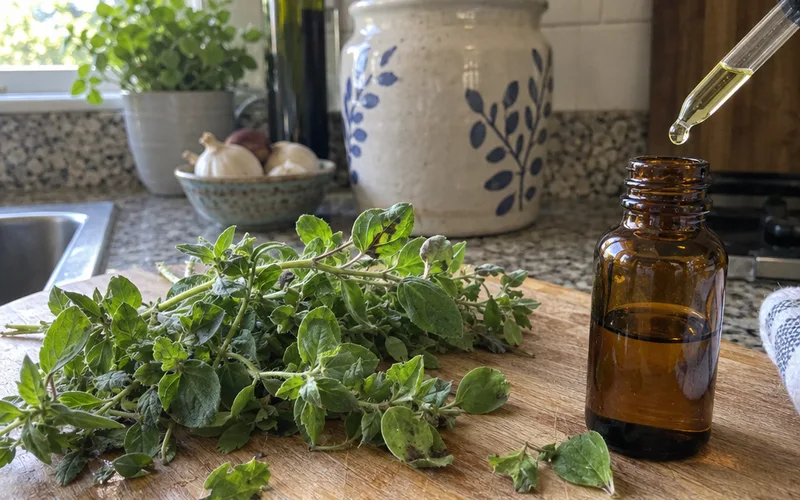
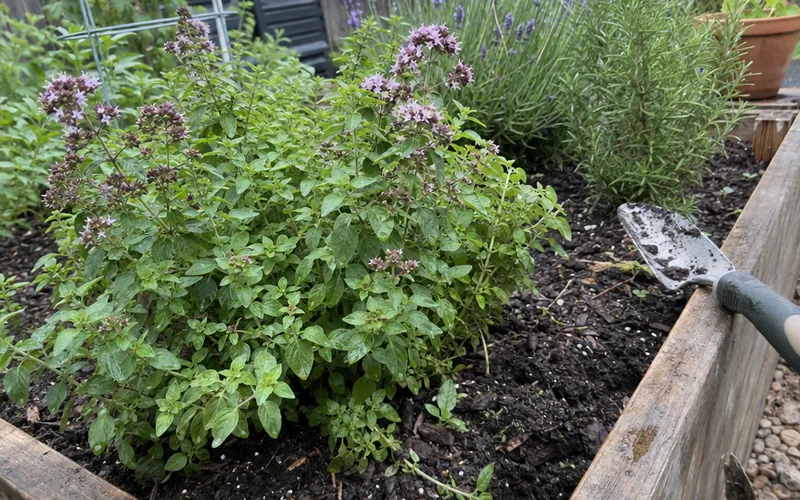
Oregano oil is an essential oil distilled from the leaves of the oregano plant, Origanum vulgare, a member of the Origanum genus. It’s packed with a compound called carvacrol and a related compound, thymol, which give it its sharp, spicy smell.
Those two compounds are also why the oil gets so much attention in skin care and cosmetics.
Both are antibacterial and antimicrobial, and under the microscope, researchers have watched oregano oil physically damage bacteria cells. That’s the same job a lot of acne washes and wound ointments try to do.
The catch?
That power cuts both ways. A plant oil strong enough to break down microorganisms is also strong enough to irritate the living tissue of your own skin.
So think of oregano oil as a strong spot treatment, never a gentle everyday skin oil.
One more thing before we go further. “Oil of oregano” on a supplement shelf is often a capsule or a pre-mixed liquid made for swallowing, which comes with its own oil of oregano dosage rules.
This article is about putting the essential oil on your skin.
Is Oregano Oil Good for Your Skin?
Oregano oil can be good for your skin in one narrow way: as a diluted spot treatment for problems driven by bacteria, such as blemishes. The evidence comes from lab and animal studies, so it’s a promising option, not a proven treatment.
Here’s how the main oregano oil benefits for skin stack up:
- Killing bacteria: the best evidence, including a 2018 study where it beat 11 drug-resistant strains.
- Blemishes and acne: a logical use, since bacteria play a part, but untested in people.
- Wound healing: promising in infected mouse burns, not something to try on open skin at home.
- Fungal spots: a common use, with its own research and limits.
- Aging skin and “glow”: antioxidant marketing claims with nothing solid behind them.
What does that mean for you?
If you have a stubborn spot and healthy, non-sensitive skin, a well-diluted drop is reasonable to try. But if you’re hoping for a cure-all, oregano oil isn’t it.
And if you want an oil for everyday skin care, gentler oils for topical use will serve you better.
What Does Oregano Oil Do for Skin?
Oregano oil works on skin mainly by killing bacteria and other microorganisms, thanks to its carvacrol and thymol. There’s no good evidence that it moisturizes, exfoliates dead skin or repairs your skin barrier, so its job is narrow.
That matters, because a lot of product pages promise much more.
Some say oregano oil hydrates dry skin. Others say it gives you a glow.
None of those claims came with evidence in any page we checked for this guide.
So what’s left is the antibacterial part, and it’s a real strength against microorganisms.
Does Oregano Oil Kill Bacteria on Skin?
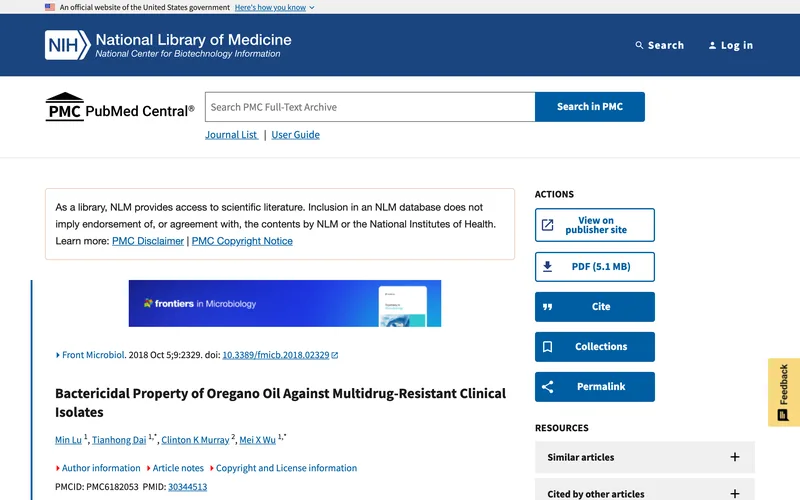
Yes, oregano oil kills bacteria, including antibiotic-resistant strains, though the proof comes from lab and animal work rather than human skin. In a 2018 study in Frontiers in Microbiology, oregano oil showed significant antibacterial activity against 11 multidrug-resistant bacteria taken from wounded soldiers.
That’s huge.
Those 11 included MRSA, short for methicillin-resistant Staphylococcus aureus, and Pseudomonas aeruginosa, 2 germs behind some of the hardest skin infections doctors treat. The oil also broke up their protective biofilm, the slimy shield bacteria build to protect themselves.
There’s a second finding worth knowing.
The researchers exposed bacteria to low doses of oregano oil again and again, up to 20 rounds in a row, and saw no resistance develop. That’s the kind of test that shows whether germs can learn to survive a treatment.
Key Takeaway: Oregano oil is a genuinely strong antibacterial, but “kills bacteria in a dish” is not the same as “clears your skin.”
How Strong Is the Evidence for Oregano Oil on Skin?
The evidence for oregano oil on skin is early-stage: lab and animal studies show it kills bacteria, but no human trial in the research behind this guide tested it on acne, wounds or aging skin. That makes its skin benefits possible, not proven.
That’s not a knock on the research. It’s just where science starts.
Most treatments climb a ladder of evidence:
- Lab studies test the oil on germs in a dish.
- Animal studies test it on living skin, usually in mice.
- Human trials test it on people, ideally against a placebo or a standard treatment.
Oregano oil has reached the second rung.
The 2018 study in Frontiers in Microbiology tested 11 drug-resistant bacteria in the lab, then moved to infected burn wounds in mice. That’s a solid design for what it set out to do, which was to see if oregano oil could fight wound infections when antibiotics fail.
But it never looked at pimples, wrinkles or everyday skin care.
What does that mean for you?
When a product page lists oil of oregano benefits for skin, such as “clears acne” or “fights aging,” it’s stretching lab results well past what they show. Treat oregano oil as an experiment on one spot, with your own skin as the test, not as a proven fix.
And keep the basic essential oil safety rules in mind, because a strong oil only helps when it’s used carefully.
Can Oregano Oil Help With Acne?
Oregano oil may help acne because it kills bacteria and acne involves bacteria, but no human acne trial was found in the research behind this guide. Use it only as a diluted spot treatment on single blemishes, never across your whole face.
On paper, it makes sense.
Acne breakouts start when oil and dead skin clog a pore. Germs then multiply inside, and your body answers with inflammation, the redness and swelling you see.
Oregano oil goes after the germ part of that chain.
But it does nothing for the clogged pore itself. That’s still the job of your cleanser and your regular acne routine.
And there’s a real risk for acne-prone skin. Irritated skin can turn red and bumpy, which can look a lot like the breakout you were trying to fix.
So if you try it:
- Pick one blemish, not a whole area.
- Use the weakest blend that still smells clearly of oregano.
- Stop for good if the spot gets redder, hotter or sore.
If oregano oil feels too harsh, there are gentler oils for pimples you can compare, including tea tree oil, a common pick in acne skin care.
In other words, treat oregano oil as one tool for one spot, not an acne plan.
Can Oregano Oil Help Heal Wounds?
Oregano oil helped clear infected wounds in mice, but there’s no human evidence, so don’t put it on cuts, scrapes or burns at home. In the 2018 study, oregano oil reduced the bacterial load by 3 log in infected burn wounds within 1 hour.
What does “3 log” mean?
It means the number of bacteria dropped by a factor of 1,000. Put another way, about 99.9% of the germs in those wounds were gone.
The same study also checked the mice’s skin for harm.
After 3 applications of oregano oil at 10 mg per ml over 3 days, the researchers found no significant skin damage under the microscope and no damage to the cells’ DNA. That’s an encouraging safety signal, but it was measured in mice at a set dose.
That’s where home use gets risky.
The oil in that study was measured and applied by researchers, not mixed by eye in a kitchen. A home blend on a fresh cut is far more likely to sting and cause inflammation than to speed healing.
Note: A cut or burn that’s red, warm, swollen, oozing or spreading needs a doctor, not an essential oil.
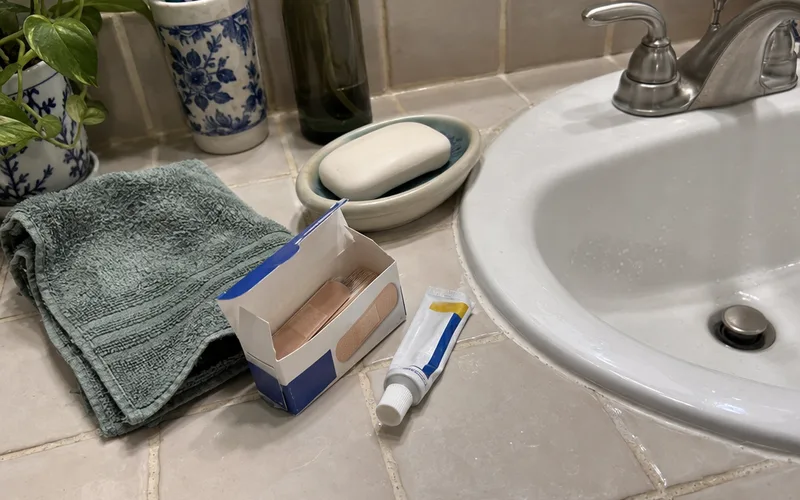
So clean small cuts with soap and water, and save oregano oil for intact skin.
Can Oregano Oil Help Skin Fungus?
Oregano oil is widely used on small fungal skin spots such as athlete’s foot, but the 2018 oregano oil study behind most skin claims tested bacteria, not fungus. So its antifungal reputation comes from other research and from what people report.
That matters, because fungal skin problems behave differently from bacterial ones.
A fungal patch can be easy to mistake for another kind of rash. Getting the problem right first saves you weeks of dabbing oil on the wrong thing.
So if you suspect athlete’s foot, toenail fungus or another fungal patch, have a doctor or pharmacist check it for a fungal infection, especially if your symptoms keep spreading or returning.
If you do want to try oregano oil on a fungal spot, use the same weak blend and patch test you’d use anywhere else. The fungus-specific dilutions, treatment length and limits are covered under oregano oil for skin fungus.
Can You Put Oregano Oil Directly on Your Skin?
No, you should never put undiluted oregano oil directly on your skin. The Organic Forest’s Amazon listing says its oregano oil is so concentrated that it must be diluted with a carrier oil before it touches skin, to avoid irritation.
That’s the seller talking about its own product, and it’s a fair warning.
Undiluted, the same compounds that break down bacteria can redden, sting and even blister your skin. On Reddit’s r/essentialoils, one reader’s thread title says it all: they burned their face with oregano oil and had to ask how to calm it down.
A carrier oil fixes most of that.
It’s a plain, mild plant oil, such as jojoba oil or coconut oil, that spreads the essential oil out so less of it touches each patch of skin. You get the oregano without the full concentration.
In other words, dilution isn’t optional with oregano oil. It’s the whole safety plan.
How to Dilute Oregano Oil for Skin
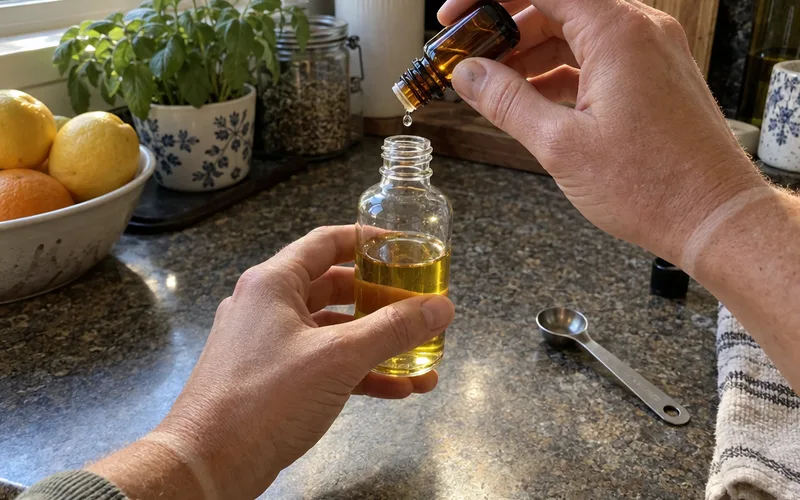
To dilute oregano oil for skin, mix 1 to 2 drops into a carrier oil such as jojoba or coconut oil before you apply it, the amount The Organic Forest’s listing gives. Start with 1 drop and a generous amount of carrier, especially for your face.
That listing doesn’t say how much carrier oil to use, so here’s how to think about it.
The more carrier oil you add, the weaker and gentler the blend. Your face, neck and any thin or sensitive skin need the weakest mix you can make.
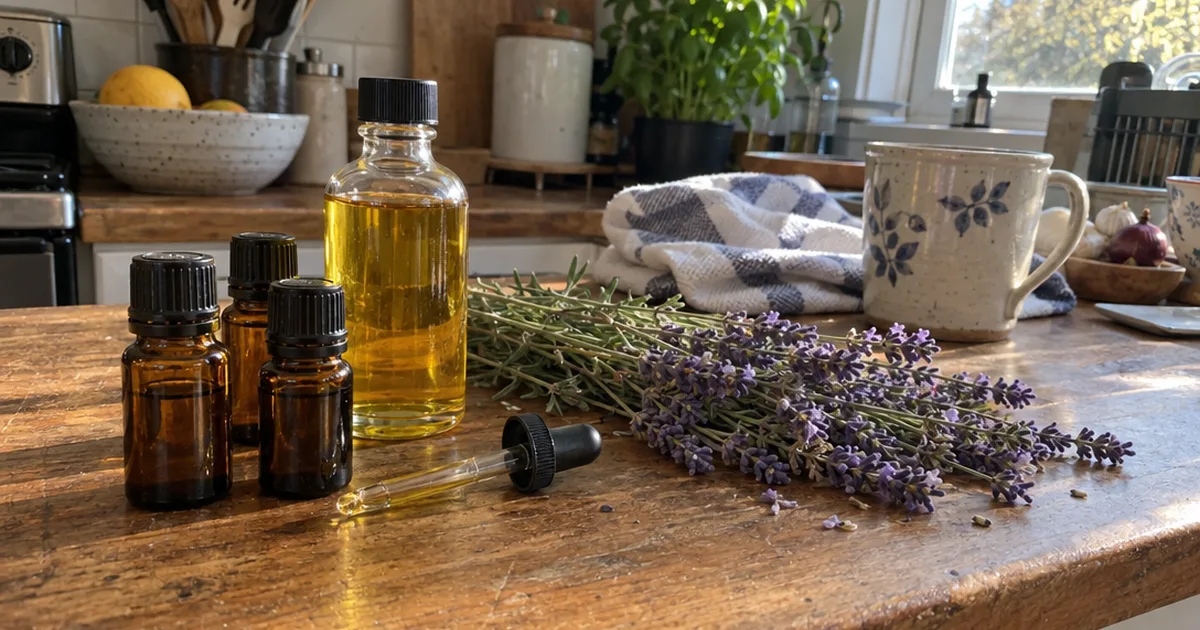
To mix a small batch:
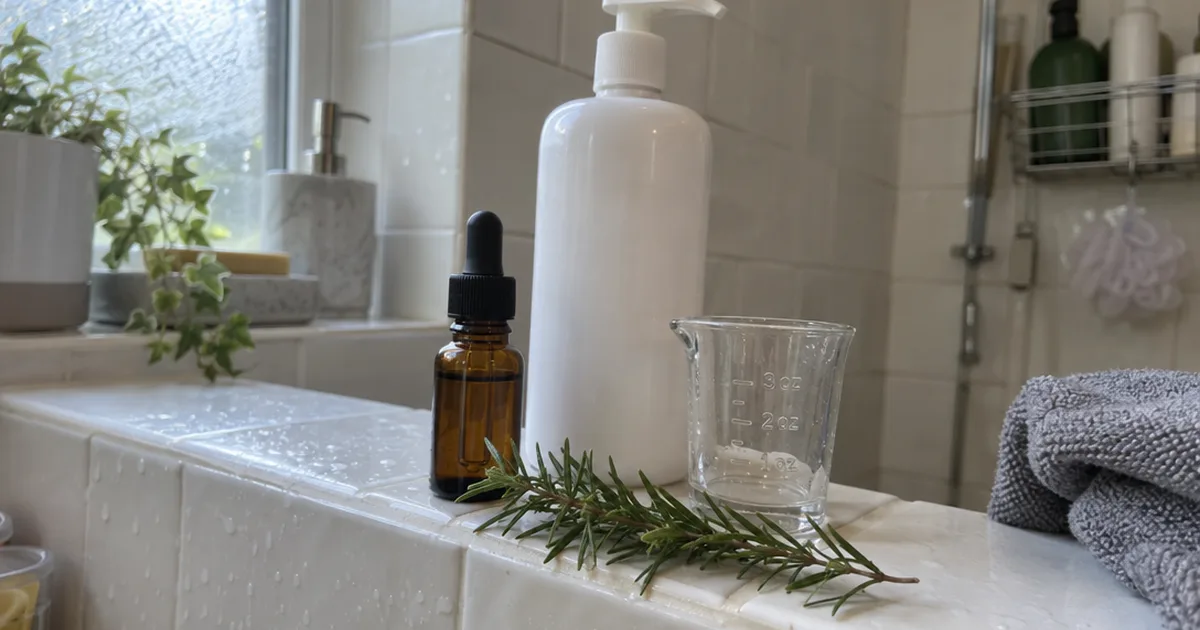
- Wash and dry a small glass bottle, ideally amber or dark blue.
- Add your carrier oil first, using a measuring spoon so you know your amount.
- Add 1 drop of oregano oil.
- Cap the bottle and roll it between your hands to mix.
- Label it with the date and the drop count.
Which carrier should you pick?
Jojoba oil is a common pick for the face because jojoba feels light, while coconut oil is thicker and works well on body skin. Choosing the right carrier oil for oregano comes down to your skin type and where you’re applying it.
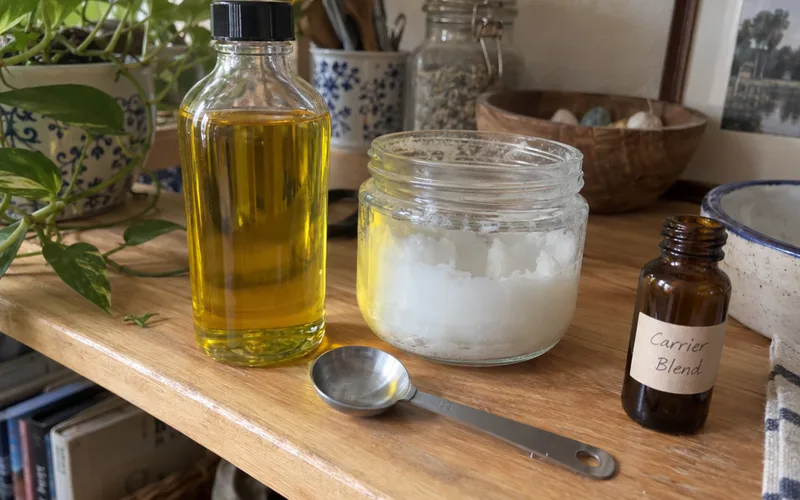
The drop-to-teaspoon math works the same way when you dilute other essential oils, so it’s worth learning once.
Pro Tip: Mix only a small batch. A blend you’ll use in a week or two stays fresher, and you’re less tempted to slather it on.
How to Use Oregano Oil on Your Face
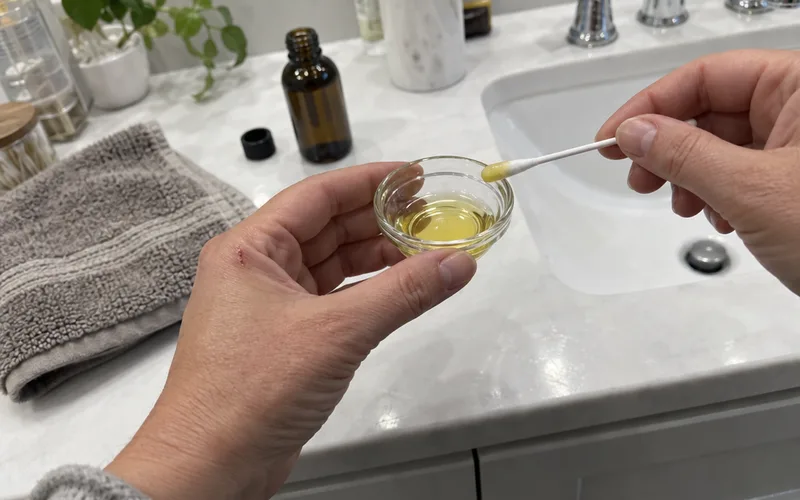
To use oregano oil on your face, dab a weak, pre-mixed blend onto one blemish with a cotton swab, keeping it well away from your eyes, lips and nostrils. Do this only after the blend passes a patch test.
Here’s the routine, step by step:
- Cleanse first. Wash with your usual gentle cleanser, then pat dry with a clean towel.
- Wash your hands. Oregano oil on your fingers ends up in your eyes far too easily.
- Load a cotton swab. Dip just the tip into your diluted jojoba oil blend.
- Dab, don’t rub. Touch the swab to the center of the spot only.
- Leave the rest of your face alone. Skip your moisturizer on that exact spot so you don’t spread the oil.
- Watch for a reaction. Burning, stinging or spreading redness means wipe it off and stop.
How often should you do it?
No source sets a schedule for face use, so keep it short: once a day at most. If the spot isn’t better after a few days, oregano oil probably isn’t the right fix for it.
Note: Keep the oil far from your eyes and eyelids. If it gets in, rinse with clean water right away and call a doctor if the stinging doesn’t stop.
In other words, use the least oil on the smallest area for the shortest time.
How to Use Oregano Oil on Body Skin
To use oregano oil on body skin, such as a blemish on your back, chest or shoulders, dab the same weak, patch-tested blend onto the spot only. Thicker body skin may feel the oil less, but it can still burn, so don’t make the blend stronger to speed things up.
A few body areas need extra care.
Skin folds such as your armpits and groin stay warm and damp, which can hold the oil against your skin. Skip those spots, along with any skin that’s freshly shaved, sunburned, cracked or broken.
After a workout, shower first. Sweat and friction already irritate skin, so adding a strong oil on top raises the odds of a reaction.
And use a cotton swab here too, not your palm. Rubbing a blend across your whole back spreads the oil over far more skin than the blemish needs.
In other words, body skin gets the same rules as your face: weak blend, small spot, short time.
How to Patch Test Oregano Oil
To patch test oregano oil, put a small amount of your diluted blend on your inner forearm, leave it alone and check the spot over the next day. If you see redness, itching, swelling or blisters, don’t use that blend on your face.
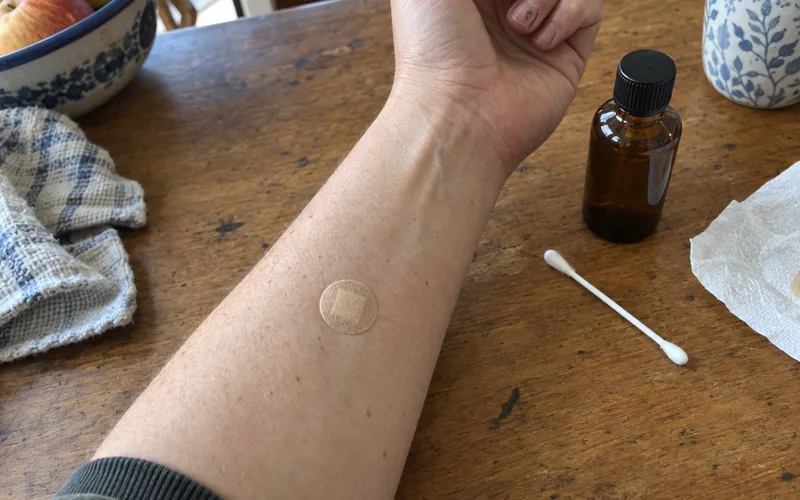
A patch test is a tiny trial run on a small, hidden patch of skin. Dermatology clinics use a formal version to find allergies, but a home version works fine for a new oil.
It takes 4 steps:
- Mix your blend exactly as you’ll use it.
- Dab a drop on the inside of your forearm, about the size of a coin.
- Cover it with a bandage so it stays put.
- Check it later that day and again the next morning.
Why test a blend you’ve already diluted?
Because skin varies a lot from person to person. A mix one person barely feels can leave another with a red, itchy patch, and you want to learn that on your arm, not your cheek.
And test again whenever you change the recipe, the carrier oil or the bottle of oregano oil.
Side Effects of Oregano Oil on Skin
The main side effect of oregano oil on skin is irritation: redness, burning, itching, swelling and sometimes blisters, especially when it’s undiluted or used on thin skin. Allergic reactions are possible too, even with a well-diluted blend.
Most of that redness and inflammation depends on concentration.
The higher the concentration and the thinner the skin, the bigger the risk, which is why your face, lips and any broken skin are the riskiest places to use it.
Skin reactions are only part of the picture, since swallowing the oil carries its own oregano oil side effects.
Who Should Skip Oregano Oil on Skin
A few groups should skip oregano oil or talk to a doctor first:
- Pregnant or breastfeeding readers: check these pregnancy aromatherapy cautions before using strong oils.
- Children: ask your pediatrician before using a strong oil like this on a child.
- People with eczema, rosacea or very sensitive skin: skin that’s already irritated reacts more easily.
- Anyone on prescription skin medications: ask your dermatologist before adding an oil.
- Pet owners: keep bottles and treated skin away from cats and dogs, and check which oils are safer around pets.
What to Do if Oregano Oil Burns Your Skin
If oregano oil burns your skin, stop using it right away, gently wipe off what’s left and don’t put any more oil on the spot. See a doctor if the area blisters, swells, spreads or still hurts the next day.
Don’t scrub. Rubbing hard spreads the oil and roughs up skin that’s already irritated.
Readers often ask whether to rinse with water or wipe with olive oil or another plain oil first, and that choice is part of treating an essential oil burn properly.
And once your skin settles, don’t retry the same blend. Either dilute much further or drop oregano oil for good.
How to Choose an Oregano Oil for Skin
The best oregano oil for skin is a pure essential oil labeled Origanum vulgare, sold in a dark glass bottle, from a seller that marks it for external use. Skip anything sold as a supplement for swallowing when you want a skin oil.
Check these 5 things on the label:
- The Latin name: Origanum vulgare tells you which plant it came from.
- What’s in the bottle: “100% essential oil” means it’s undiluted, so you’ll dilute it yourself.
- The bottle: dark glass protects the oil from light.
- The use: a skin oil should say “for external use.”
- A test report: some brands share a GC/MS report, a lab test that lists the oil’s compounds.
For example, The Organic Forest’s oregano oil comes in a 30 ml bottle with 4.4 out of 5 stars from 56 Amazon ratings. Its listing says it’s for external use only and not meant for ingestion.
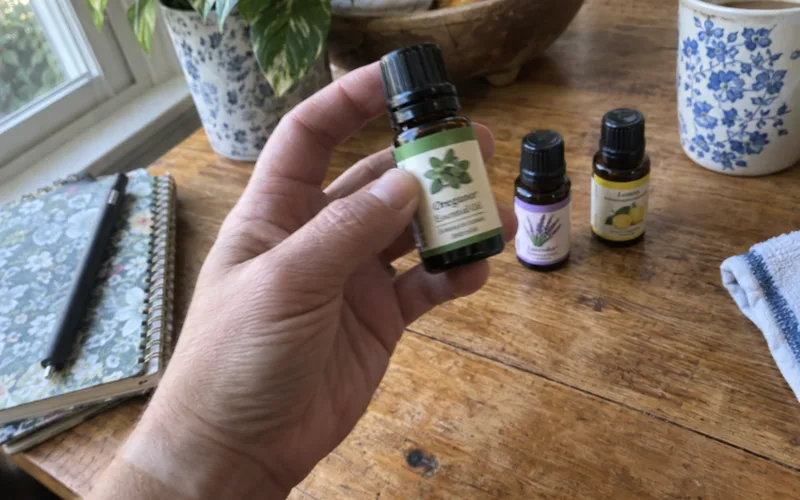
Those ratings tell you buyers liked it, not that it’s safe for your face. You still need to dilute it and test it on your arm.
A small bottle is plenty. At 1 to 2 drops per use, a 30 ml bottle will last a long time.
The Bottom Line on Oregano Oil for Skin
Oregano oil is a strong antibacterial that works in the lab, but it’s a spot treatment, not a moisturizer or a skin care staple.
If you want to try it, mix 1 drop into carrier oil and patch test it on your forearm before it ever touches your face.
Frequently Asked Questions
What infections does oregano oil treat?
Oregano oil isn’t an approved treatment for any skin infection, though in lab tests it killed bacteria behind serious wound infections, including MRSA and Pseudomonas aeruginosa. Any skin infection that’s hot, spreading, oozing or painful needs a doctor and real medications, not an essential oil.
Is oregano oil good for aging skin?
Oregano oil has no human evidence for wrinkles or aging skin in the research behind this guide, which tested bacteria, not fine lines. If anti-aging is your goal, choose products that were tested for it rather than an antibacterial oil.
Can you use oregano oil on your skin every day?
Oregano oil has no research showing that daily skin use is safe, and the 2018 mouse study that found no skin damage used just 3 applications over 3 days. Keep it to short stretches on single spots, and stop as soon as your skin turns red or sore.
Can you mix oregano oil with tea tree oil?
You can mix oregano oil with tea tree oil, and The Organic Forest’s listing says its oregano oil blends well with tea tree and lavender. Each oil you add brings its own irritation risk, so keep the total drop count low and patch test the finished blend.
Does oregano oil help itchy skin?
Oregano oil has no research behind it for itching, even though readers in psoriasis forums trade stories about it. Itch is also a common sign that an oil is irritating your skin, so stop if it gets worse and compare other oils for an itchy rash.