
Only 2 drugs are FDA-approved for pattern hair loss.
Tea tree oil isn’t one of them, a 2024 dermatology review notes.
But tea tree oil for hair still earns a spot in your routine. It goes after the scalp problems that make hair look worse: flakes, itch and greasy buildup.
Here’s what each benefit rests on, the exact dilution and who should skip it.
What Does Tea Tree Oil Do for Your Hair?
Tea tree oil works on your scalp, not the hair strands. Its antifungal and antimicrobial action targets the flakes, itch and buildup on the skin under your hair.
The oil comes from the leaves of Melaleuca alternifolia, a plant native to eastern Australia, says the National Center for Complementary and Integrative Health (NCCIH).
So when people call tea tree oil good for hair care, they mean it’s good for the scalp hair grows from.
Dandruff and Flaking
Dandruff is the one hair problem with a clinical result behind tea tree.
One study found a shampoo with 5% tea tree oil beat plain shampoo on the itching and flakiness of dandruff, Poison Control reports.
Why would it work? Dandruff is linked to a yeast called Malassezia, and tea tree oil is antifungal.
If your flakes don’t improve, other essential oils for dandruff have their own evidence. Red, greasy scaling that won’t clear may be seborrheic dermatitis, so show those symptoms to a dermatologist.
Itchy, Dry Scalp
That same 5% shampoo study measured itching, so an itchy scalp from dandruff is where tea tree has its best shot.
It also fits the oil’s reputation: a trichologist TODAY.com interviewed calls it well known for antimicrobial and anti-inflammatory properties.
If your scalp is simply dry and tight, the carrier oil in a scalp oil does the moisturizing, so a plain carrier oil may be enough.
Oily Scalp and Buildup
Tea tree oil can help an oily scalp, trichologist Sara Hallajian told TODAY.com. She says it suits people with excess sebum and oily-scalp problems like itchiness, flaking or sweat buildup.
That cleanup role is the core of what tea tree does for your scalp.
Head lice need a full tea tree lice routine, not a scalp oil.
Does Tea Tree Oil Help Hair Grow?
Tea tree oil is not a proven hair-growth treatment. Finasteride and minoxidil are the only FDA-approved drugs for pattern hair loss, a 2024 dermatology review states.
What the oil can do for hair growth is keep the skin around your hair follicles clean and calm.
Trichologist Tabitha Osman told TODAY.com:
“It creates a clean and balanced scalp environment.”
That helps the hair you already have, but it won’t reverse pattern hair loss.
So if you’re shedding more than usual, see a dermatologist first.
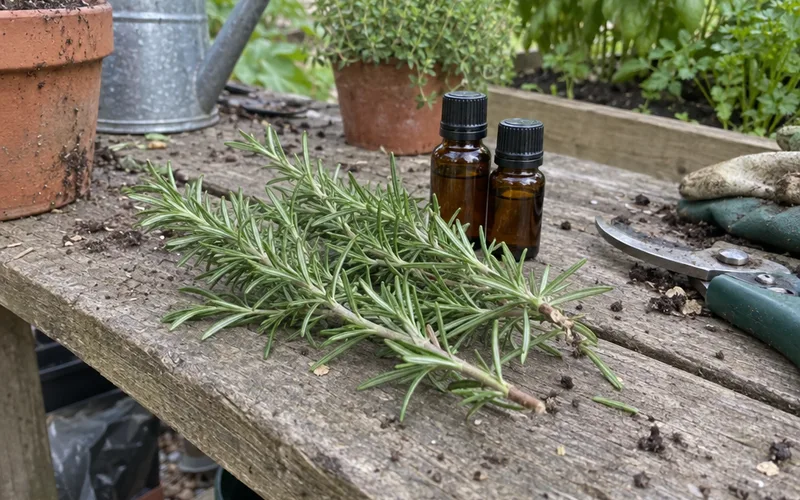
Want an oil with more growth research? The same review calls rosemary oil a promising natural alternative.
Start with rosemary oil for hair, then compare other essential oils for hair growth.
How to Use Tea Tree Oil on Your Hair
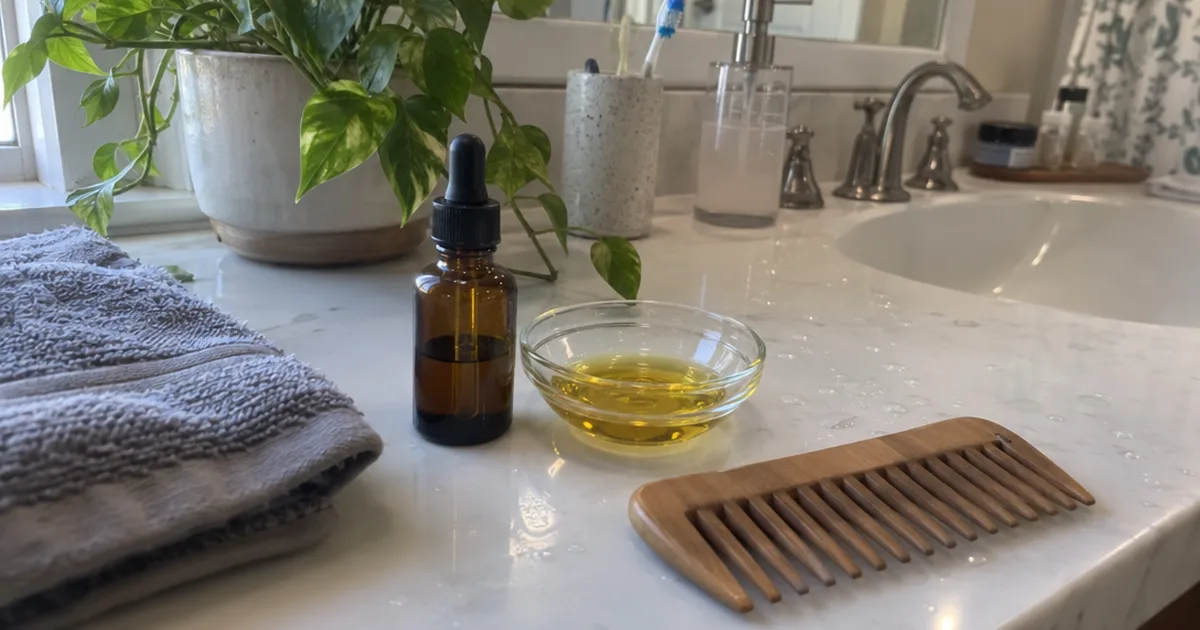
To use tea tree oil on your hair, mix 2 to 3 drops into a tablespoon of carrier oil and massage it into your scalp. Wait 15 to 20 minutes, then shampoo it out.
That’s the method trichologist Sara Hallajian describes to TODAY.com, step by step:
- Patch test first. Dab a little of the diluted mix on your inner forearm and check it the next day for redness or itching.
- Mix the oil. Stir 2 to 3 drops of tea tree oil into 1 tablespoon of jojoba or grapeseed oil.
- Apply to your scalp. Part your hair and use your fingertips or a dropper on the skin, not the lengths.
- Massage it in. Rub gently so the oil spreads across your scalp.
- Wait, then wash. Leave it on for 15 to 20 minutes, then shampoo.
Is It Safe to Mix Jojoba Oil With Tea Tree Oil?
Yes, jojoba oil is one of the carrier oils trichologist Sara Hallajian names for diluting tea tree oil, along with grapeseed oil.
A carrier oil spreads the tea tree thin, so the mixture you apply topically is far weaker than the bottle.
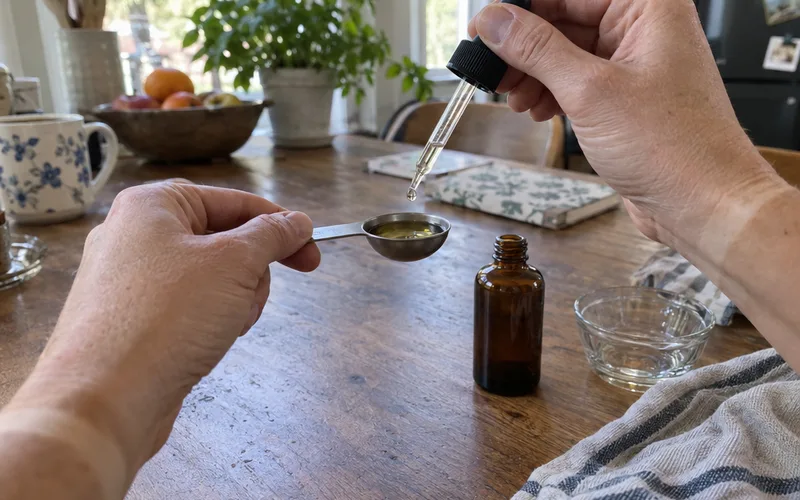
Your hair type decides the best carrier oil for tea tree, whether that’s jojoba, almond or another light oil.
Want a stronger or weaker mix? Learn how to dilute essential oils before you change the drop count.
And if you’d rather go the easy route by adding it to shampoo, the amounts are different.
Can You Leave Tea Tree Oil in Your Hair Overnight?
No, a tea tree oil mix shouldn’t sit on your scalp longer than 30 minutes before you wash it out, trichologist Penny James told TODAY.com.
That rules out overnight treatments.
A longer soak adds no benefit, just more contact with an oil that can irritate.
How Often Should You Use Tea Tree Oil on Your Scalp?
Use tea tree oil on your scalp once or twice a week, as trichologist Sara Hallajian recommends. Trichologist Tabitha Osman says people with more serious scalp concerns may go up to 3 times a week.
If your scalp is on the itchy side, trichologist Penny James suggests once a week, depending on how your skin handles it.
Here’s how to decide:
- Start at once a week for the first few weeks.
- Move to twice a week if your scalp stays calm.
- Drop back at the first sign of redness, burning or new itching.
Key Takeaway: More often isn’t better here, so let your scalp set the pace.
Tea Tree Oil Side Effects on Hair and Scalp
The main side effects of tea tree oil on the scalp are redness, irritation and allergic reactions. NCCIH says these are more likely when the oil is old or has been exposed to heat, light or air.
Most people can use topical tea tree products without problems, the same NCCIH page adds.
But Poison Control notes that the oil irritates skin more at higher strengths and has caused allergic skin reactions.
That’s why straight, undiluted oil on your scalp is a bad idea: it skips the dilution that keeps irritation down.
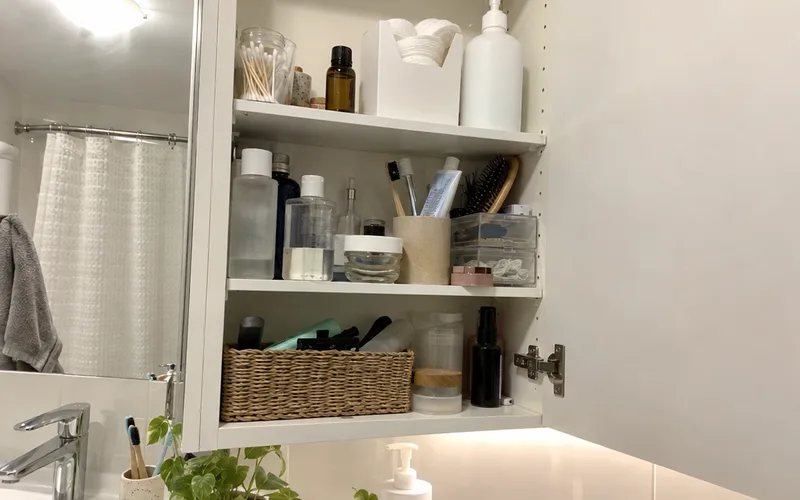
Using too much can cause contact dermatitis, an itchy rash where the oil touched, trichologist Penny James warns.
Old oil adds risk, so swap a long-open bottle for a fresh tea tree oil for hair.
Two more risks matter when the bottle lives in your bathroom:
- Your eyes. Tea tree oil in the eyes can damage the cornea, so rinse right away and follow the steps for tea tree oil in your eye.
- Swallowing. US poison centers handled more than 2,200 tea tree oil exposures in 2022, nearly twice as many as any other named essential oil, Poison Control reports.
Note: Tea tree oil is poisonous if swallowed, so learn how much tea tree oil is toxic and store it out of children’s reach.
Who Should Not Use Tea Tree Oil on Their Hair?
Skip tea tree oil on your hair if you’ve reacted to it or other essential oils before. If you’re pregnant or breastfeeding, check with your care team first.
The sources don’t fully agree on pregnancy.
NCCIH says topical tea tree products may be safe during pregnancy and breastfeeding. Trichologist Sara Hallajian advises avoiding it on your hair unless your care team approves.
Children need extra caution, since Poison Control cites reports of 8 boys who grew breast tissue and 4 girls with early breast growth while exposed to tea tree or lavender oils. The tissue went back to normal once the oils were stopped.
So keep tea tree scalp treatments for adults and ask your child’s doctor first.
The Bottom Line on Tea Tree Oil for Hair
Tea tree oil for hair is worth trying for dandruff, itch and an oily scalp, but not for regrowing hair.
Mix 2 to 3 drops into a tablespoon of jojoba oil this week, leave it on for 20 minutes and see how your scalp responds.
Frequently Asked Questions
What happens if I put straight tea tree oil on my scalp?
Straight tea tree oil on your scalp raises your risk of redness, irritation and an allergic reaction, because Poison Control says it irritates skin more at higher concentrations. Wash it off with shampoo and dilute it next time.
Which is better, tea tree oil or rosemary oil?
Tea tree oil is the better pick for dandruff and an itchy scalp, while rosemary oil is the one a 2024 dermatology review calls a promising natural alternative for pattern hair loss. Choose by your problem: flakes point to tea tree, thinning points to rosemary or a dermatologist.
What oil is proven to regrow hair?
No essential oil is an FDA-approved hair regrowth treatment, because finasteride and minoxidil are the only FDA-approved drugs for pattern hair loss, a 2024 dermatology review notes. If you’re losing hair, see a dermatologist before you rely on an oil.
Does tea tree oil kill head lice?
Tea tree oil hasn’t been shown to kill head lice on its own, because NCCIH says it has only been tested mixed with other ingredients. Use a proven lice treatment and comb out the nits.
Should you put tea tree oil on the ends of your hair?
Tea tree oil belongs on your scalp, not the ends of your hair, because the problems it targets, flakes, itch and buildup, live on the skin. No study in the research shows a benefit for the hair shaft itself.