
A single female louse lays 8 to 10 eggs a day.
That figure comes from the background of a 2012 lice study in Parasitology Research, and it explains why tea tree oil for lice so often seems to work, then lets you down a week later.
Miss a few of those eggs, and the whole case starts over.
So I’ll walk you through what the lab research really found, how to try tea tree oil safely if you still want to, and the comb-out routine that actually ends a case.
Does Tea Tree Oil Kill Lice?
Tea tree oil does kill head lice in the lab: in a 2012 Parasitology Research study, a 1% solution killed 100% of the lice within 30 minutes. But that test used lice in dishes, not lice living on a child’s scalp.
Tea tree oil comes from the leaves of Melaleuca alternifolia, the Australian tea tree, a different plant from the tea you drink. Lice are one of the home uses people try with antimicrobial essential oils like it, alongside fungal infections like nail fungus and athlete’s foot.
Here’s how the study worked:
Researchers at universities in Chieti-Pescara and Messina, Italy, collected 69 head lice and 187 louse eggs from school children. Then they tested the oils in vitro, which means in lab dishes rather than on anyone’s head.
Head lice, or Pediculus humanus capitis, are tiny wingless insects that live on the scalp and feed on blood. In a dish, there’s no hair to hide in and no scalp to crawl back to, so every louse meets the oil.
A lab kill rate is a good sign, but it isn’t proof that tea tree oil clears a real case.
None of the research behind this article includes clinical trials of that 100% result on children’s heads. So treat the lab number as a starting point, not a promise.
Why Some Parents Swear It Works
Parents who say tea tree oil cleared their child’s lice are usually seeing a real effect on the live bugs. The catch is timing: in the 2012 study’s account of the louse life cycle, eggs take over a week to hatch, so the first few days can look clean.
You’ll find both sides in forum threads. One popular post is titled “Tea tree oil is extremely effective at killing lice,” while another insists “Tea tree oil doesn’t kill head lice.”
Both can be partly right. A treatment can kill the crawling lice you see tonight and still miss the nits that start the next infestation.
So if you’ve heard it worked for a friend, ask one follow-up question: did they comb out the nits too?
What the 2012 Lab Study Found
The study compared tea tree oil with nerolidol, a natural compound found in many plant oils, on both live lice and their eggs. It tested dilutions from 1% up to 8%, and here’s what the main results look like side by side:
| Oil and strength | Tested on | Result |
|---|---|---|
| Tea tree oil, 1% | Live lice and nymphs | 100% dead within 30 minutes |
| Nerolidol, 1% | Eggs | 50% failed to hatch after 4 days |
| Tea tree oil, 2% | Eggs | Same 50% after 4 days |
In other words, tea tree oil needed twice the concentration to match nerolidol on eggs. That gap is a big reason home treatments so often seem to fail.
You may also see claims that 1% to 5% tea tree oil kills lice. The study behind them got its full kill at the low end, 1%, so a stronger concentration adds skin risk without a proven lice benefit.
Does Tea Tree Oil Kill Lice Eggs (Nits)?
Tea tree oil is weak against lice eggs, called nits: in the 2012 lab study, it took a 2% solution just to stop half the eggs from hatching after 4 days. So even a careful treatment can leave live eggs stuck to the hair.
Why does that matter so much?
Because the nits keep a head lice infestation going. According to the same study’s background, a female louse lays 8 to 10 eggs a day and 50 to 300 in her lifetime.
Those nits hatch into nymphs after 8 to 12 days. So a treatment that kills every crawling louse on Monday can still leave you with a fresh batch of lice the following week.
That’s why the nit comb, not the oil, does the heavy lifting.
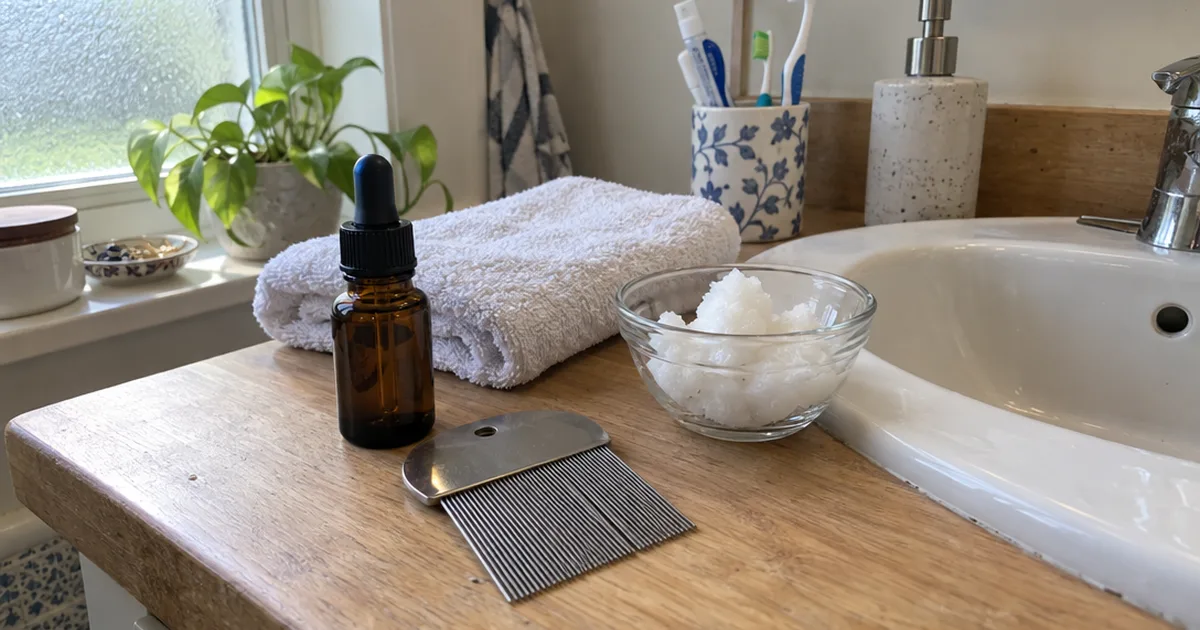
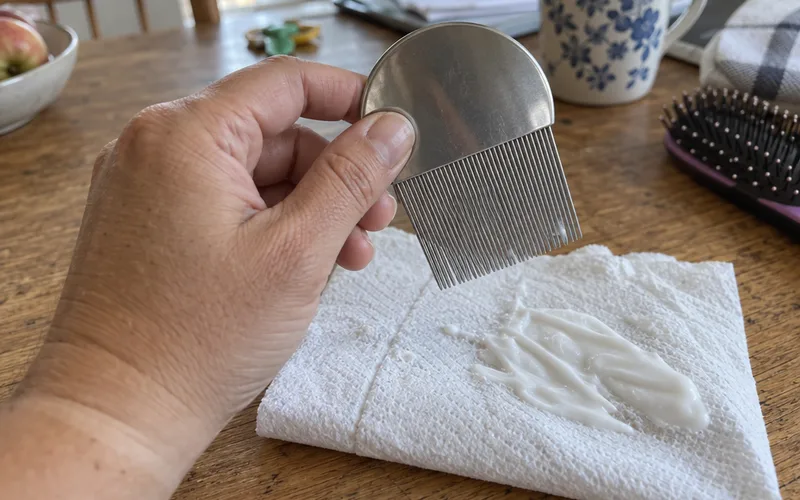
A metal nit comb has fine, close teeth that pull nits off the hair shaft strand by strand. Combing again over the next 2 weeks catches the lice that hatch after your first pass.
You can work through a thick coat of white conditioner, which helps the teeth glide and makes the nits easier to spot. Wipe the teeth on a paper towel after each stroke so you can see what you’re catching.
How to Check for Nits After a Treatment
Nits are tiny oval eggs glued to the hair close to the scalp, and unlike dandruff they don’t flick off with a fingertip. Check in good light, section by section, starting behind the ears and at the nape of the neck.
Live nits sit near the scalp, while empty shells ride farther out as the hair grows. So the nits closest to the skin are the ones to pull first.
Do a quick check every few days for 2 weeks after any treatment, tea tree or not. One clean check is a good sign, but only a full week of clean checks means the case is over.
Is Tea Tree Oil Safe on a Child’s Scalp?
Tea tree oil seems relatively safe on the skin, Orlando Health Arnold Palmer Hospital for Children says, but it can cause irritation or swelling for some people, and it’s poisonous if swallowed. So any tea tree oil lice treatment needs a patch test first and a bottle kept well out of reach.
That last warning matters most with young kids. Keep the bottle locked away, and check how much tea tree oil is toxic so you know when a sip means a call to Poison Control.
Skin irritation from tea tree oil usually shows up as redness, itching or a rash. When the reaction is allergic, dermatology calls it allergic contact dermatitis: a rash triggered by something that touched the skin.
A patch test catches that before it reaches the whole scalp. Dab a little of your diluted mix on your child’s inner forearm, then wait a day and check for redness.
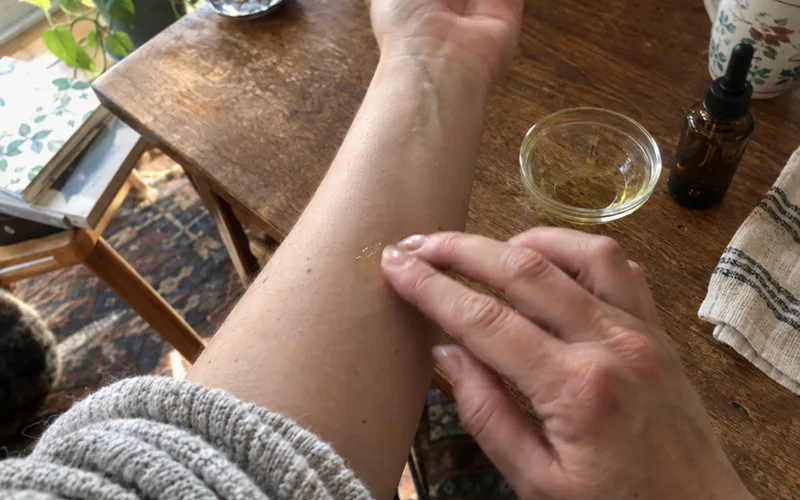
If a rash shows up, wash the spot with soap and water, skip the treatment, and follow these steps for an allergic reaction. A rash that spreads or blisters needs your pediatrician.
I’d skip tea tree oil for infants and toddlers and ask your pediatrician first. A curious toddler can get oil on their hands, then in their mouth.
Keep the mix away from the eyes too, and know what to do if tea tree oil gets in an eye before you start. Parents of young boys also sometimes ask whether tea tree oil affects estrogen or breast tissue, which is worth reading before repeated use.
Key Takeaway: Patch test, dilute, and store the bottle like a medicine. Those 3 habits cover the main safety risks.
What Happens If You Put Straight Tea Tree Oil on Your Scalp?
Putting straight tea tree oil on your scalp makes irritation more likely, because essential oils are meant to be diluted in a carrier oil before they touch skin. And the 2012 lab study got its 100% kill at just 1%, so there’s no lice benefit in going stronger.
Undiluted oil on a scalp that’s already itchy and scratched from lice is likely to sting. The same skin safety rules that apply to any essential oil apply here, even more so on a child.
How to Use Tea Tree Oil for Lice
To use tea tree oil for lice, dilute it in a carrier oil or conditioner, coat dry hair from the roots out, leave it on for about 30 minutes, then comb every section with a metal nit comb. Repeat the comb-out over the next 2 weeks, because tea tree oil won’t reliably kill the eggs.
Here’s the routine, step by step:
- Patch test the day before. Dab the diluted mix on the inner forearm and check it after a day.
- Mix a weak dilution. The lab’s best result came at a 1% concentration, which is 1 part tea tree oil to 99 parts carrier.
- Coat the hair. Work the mixture through dry hair in sections, close to the scalp, behind the ears and at the nape of the neck.
- Cover and wait. Put on a shower cap, drape a towel over the shoulders and wait about 30 minutes.
- Comb every section. Pull the nit comb from the scalp to the tip of each strand, wiping the teeth clean after every pass.
- Wash it out. Shampoo twice to lift the oil, then dry the hair.
- Repeat the comb-out. Comb again every few days for 2 weeks to catch the eggs that hatch after your first round.
Note: 1% sounds tiny, but the number of drops depends on how much carrier you use. This dilution chart for essential oils turns any percentage into drops.
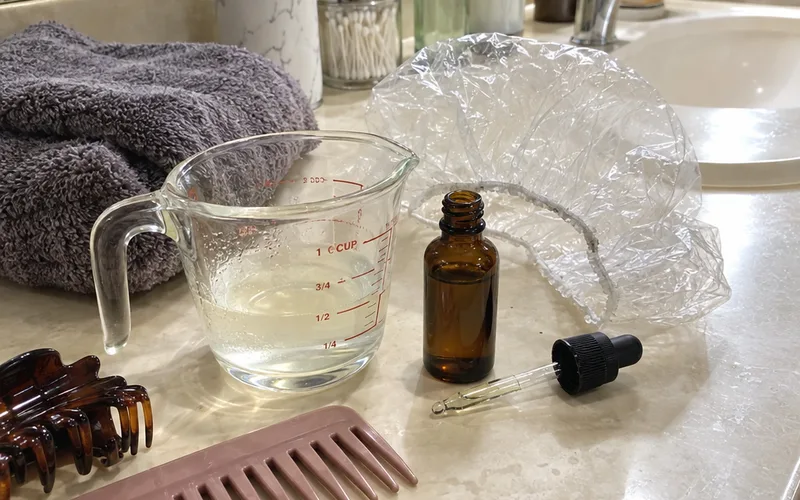
For the carrier, coconut oil, olive oil, jojoba oil or a plain conditioner all work. The best carrier oil for tea tree comes down to what you have and how greasy you mind the hair being.
How Long Does Tea Tree Oil Take to Kill Lice?
Tea tree oil killed every louse in the 2012 lab study within 30 minutes at a 1% concentration, but the study didn’t test any time on a real scalp. So 30 minutes is a sensible guide for a home treatment, not a guarantee.
Leaving the oil on overnight raises the dose your child’s skin gets without any study showing more dead lice. If your child’s scalp starts to sting or turn red, rinse it out early.
What to Mix With Tea Tree Oil for Lice
The usual mixes pair tea tree oil with a carrier like coconut oil or olive oil, with conditioner for combing, or with lavender oil. Of those, only the lavender pairing has lice research behind it, according to Arnold Palmer Hospital.
The hospital says tea tree oil and lavender oil together appear to kill some live lice. That’s still a “some lice” result, and it doesn’t solve the egg problem.
A tea tree oil and coconut oil mix, or one made with olive oil, plays a different role. The carrier dilutes the tea tree and helps the teeth glide, which makes the comb-out less of a fight with a wriggly child.
Eucalyptus, rosemary and neem oils show up in plenty of homemade lice recipes too. But none of the sources behind this article tested them on lice, so I can’t tell you eucalyptus or the others help.
Does Tea Tree Oil Keep Lice Away?
Tea tree oil has no scientific evidence showing it prevents lice, Arnold Palmer Hospital says, and whether it can prevent an infestation at all is unknown. That covers the popular tea tree sprays, leave-in mixes and lice-prevention shampoos.
So what about that tea tree shampoo in your shower?
A tea tree shampoo is fine for regular washing, and these tea tree shampoo benefits show what it can do for a flaky scalp. But it isn’t a lice barrier, and you shouldn’t skip head checks because of it.
When lice are going around your child’s school, a weekly comb check catches a case while it’s still small. That habit does more than strong odors from any oil can.
Lice prevention sits on the long list of benefits of essential oils people hope for, but for tea tree oil it’s the claim with the least proof behind it.
Tea Tree Oil vs. Permethrin: Which Works Better for Lice?
Over-the-counter lice treatments are far more effective than tea tree oil at killing live lice and getting rid of the eggs once an infestation has started, according to Arnold Palmer Hospital. Common ingredients in those products include pyrethrins and permethrin, an insecticide sold in drugstore lice creme rinses.
Here’s the deal:
A drugstore lice product comes with a tested strength, a set contact time and a label that tells you when to repeat it. A homemade tea tree mix, like most alternative therapies, has none of that, so every batch is a guess.
That doesn’t mean you have to choose one or the other. The most effective plan for head lice is a proven lice treatment plus a thorough comb-out, repeated until you go a full week without finding anything.
If you’d rather avoid pesticides, ask a pharmacist which non-pesticide lice medication suits your child’s age. Read the label’s age limits before you buy, because some products aren’t meant for infants or young children.
What to Do If Tea Tree Oil Didn’t Clear the Lice
If you still find live lice a few days after a tea tree oil treatment, switch to an over-the-counter lice treatment and keep combing, because the oil most likely missed the eggs. Another round of tea tree oil won’t fix that.
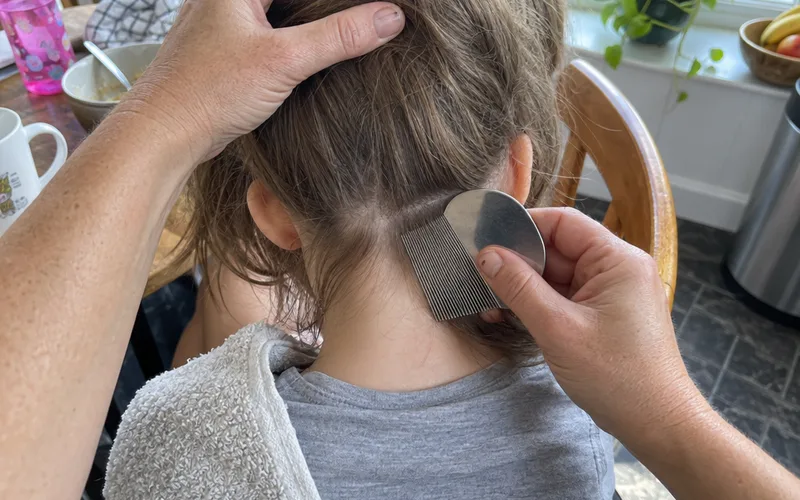
Check everyone in the house the same day, since one missed case can pass lice back to the child you just treated. Then comb every few days for 2 weeks.
Call your pediatrician if lice survive a drugstore treatment, or if the scalp looks raw or infected. A doctor can recommend a prescription option.
The Bottom Line
Tea tree oil kills lice in a dish, but the eggs decide whether a case ends.
Buy a metal nit comb this week and do a full comb-out tonight, whatever product you choose.
Frequently Asked Questions
What is the best essential oil to kill lice?
No essential oil is proven to clear head lice, though tea tree oil has lab support: a 1% solution killed every louse within 30 minutes in a 2012 Parasitology Research study. For a real case, an over-the-counter lice treatment plus a nit comb works better than any oil.
Does tea tree oil shampoo get rid of lice?
Tea tree oil shampoo won’t get rid of an active lice case, and Arnold Palmer Hospital says there’s no scientific evidence that tea tree oil prevents one either. Use the shampoo for normal washing, and rely on a nit comb and a lice treatment for the lice.
Can I spray tea tree oil on my child's hair every day to keep lice away?
A daily tea tree oil spray isn’t proven to keep lice away, and every extra day of use is another chance for the oil to irritate your child’s scalp. A weekly head check with a nit comb is the better habit when lice are going around school.
Can adults use tea tree oil for lice?
Adults can use the same diluted tea tree oil routine as children, with the same patch test, 30-minute wait and comb-out. The same limits apply too: the oil is weak against eggs, so the comb still does most of the work.