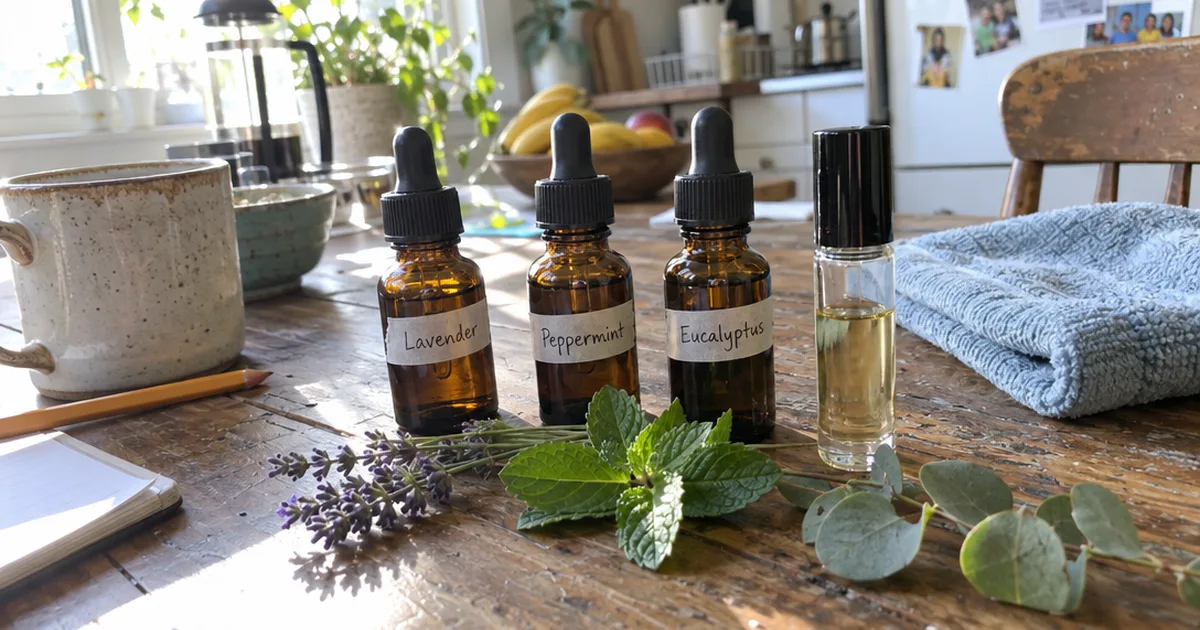

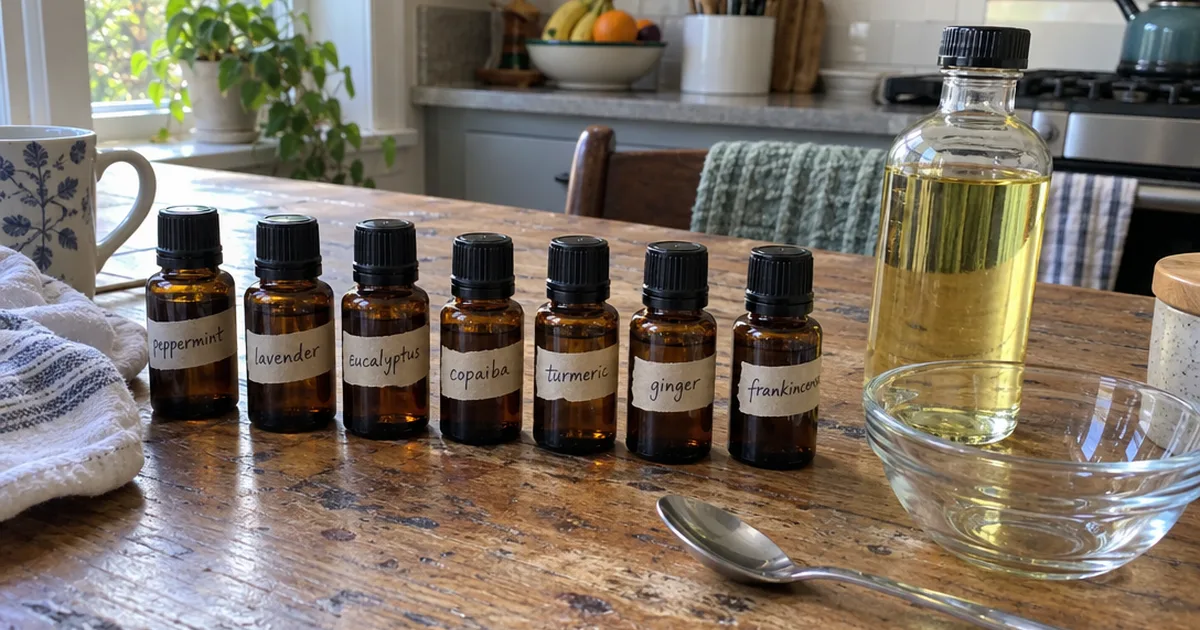
7 oils fill one seller’s anti-inflammatory collection, priced from $9.99 to $22.99.
Yet that seller, Plant Therapy, says the label describes how an oil feels, not a defined result.
So this list of anti inflammatory essential oils ranks all 7 by price, with the compound each is known for, who it suits and a safe first step.
- Sore legs after a long walk call for peppermint (#1), the cheapest cooling oil here.
- For skin that feels hot or irritated, lavender (#2) is the calming floral pick.
- A stiff back that likes heat matches ginger (#6), the warming one.
- If you’d rather rub in something thick, copaiba (#4) is an oleoresin, not a runny oil.
How These Oils Were Ranked
Price decides the order: the 7 anti-inflammatory essential oils are ranked by what each costs to start, using Plant Therapy’s list price for its organic version in October 2026.
Cheapest comes first.
Lavender and eucalyptus tie at $11.99, and lavender goes first because its soft floral scent suits more people than eucalyptus’s sharp, camphor-like note.
Why price and not strength?
Price is the one number the sources give for every oil, and no source behind this list ranks these oils by how well they calm swelling in people.
The company’s page also shows no bottle sizes, so check the milliliters before you compare one price with another.
A higher spot on this list means cheaper to try, not stronger.
What Makes an Essential Oil Anti-Inflammatory?
An essential oil gets called anti-inflammatory when lab studies show its compounds calming the chemistry of inflammation, as a 2010 review in the journal Molecules describes.
Inflammation itself is your immune system’s response to a perceived injury or infection, Harvard Health Publishing’s doctors explain.
That response helps when you’re hurt.
The trouble starts when it doesn’t switch off.
So where do oils come in?
Each essential oil is a mix of a dozen to several hundred compounds, and the main ones can make up as much as 85% of the oil, the Molecules review reports.
That’s why one compound, such as menthol in peppermint, can define how a whole oil feels.
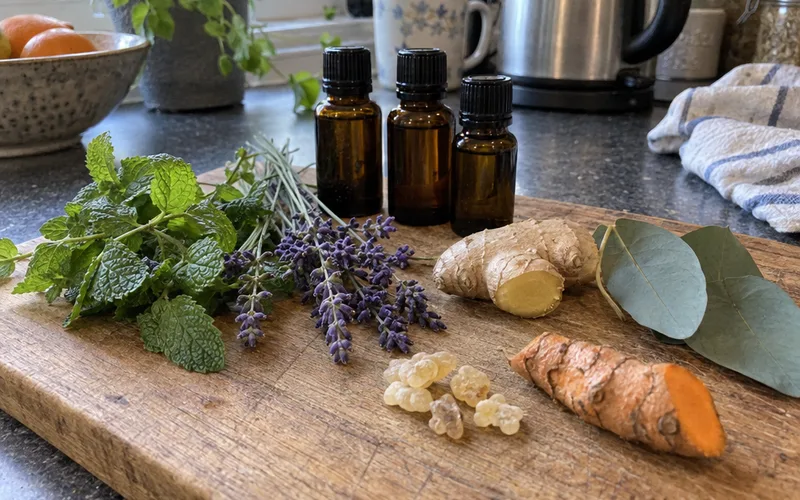
The same review links the effect to free radicals, the unstable molecules immune cells release in a burst while they fight.
Oils that mop up some of those free radicals can also act against inflammation, it explains.
But those mechanisms were measured in vitro, meaning in lab dishes, not in people rubbing oil on a sore knee.
Treat the label as a reason to try an oil for comfort, not a promise that it will shrink swelling.
The 7 Anti-Inflammatory Essential Oils, Ranked by Price
The 7 anti-inflammatory essential oils ranked by price are peppermint, lavender, eucalyptus, copaiba, turmeric, ginger and frankincense, from $9.99 to $22.99.
Every price below is Plant Therapy’s October 2026 list price for its organic version.
1. Peppermint
Peppermint oil is the cheapest oil here and the one to reach for when you want a cooling feel on sore muscles.
Best for: tired, sore muscles after a long day on your feet. Skip it if the sore spot is close to your eyes.
Cost: $9.99.
Known for: Menthol, which the seller calls widely recognized for its cooling properties.
First step: Mix a drop into a spoonful of carrier oil and rub it into one sore calf tonight.
Say your calves ache after a weekend hike.
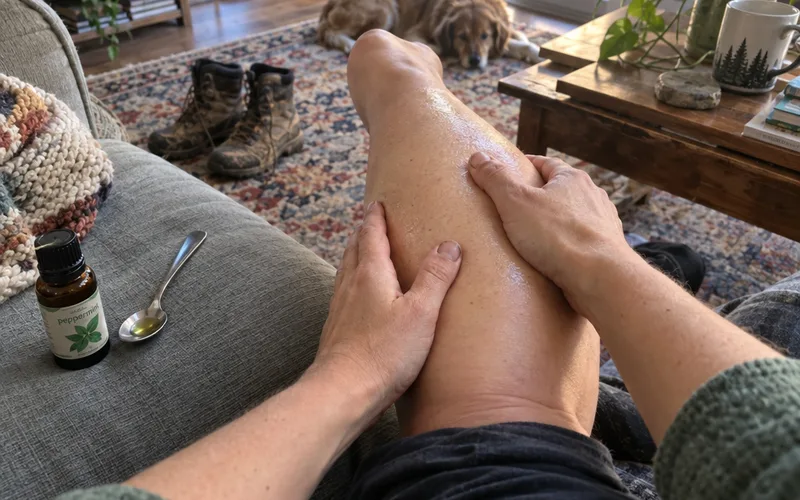
A diluted peppermint rub gives you a cool, tingly feel, and that feel is what people notice first.
The catch?
Cooling isn’t the same as less swelling, so judge it by comfort, not by whether a puffy ankle shrinks.
If head pain is your problem instead, the headache oils ranking covers peppermint on the temples, and peppermint for headaches goes deeper on where to rub it.
In other words, peppermint is the low-cost way to find out whether a cooling oil helps you at all.
2. Lavender
Lavender oil is the calming pick, best when the irritation is on your skin and you’d also like to wind down.
Best for: irritated skin and evening routines. Skip it if you want a strong cooling or warming sensation; pick #1 or #6 instead.
Cost: $11.99.
Known for: A soft, herbal-floral scent from the flowering tops, which the seller says blends into calming routines.
First step: Patch test a diluted drop on your inner forearm tonight.
Here’s a short checklist before lavender touches irritated skin:
- Dilute it in a carrier oil first.
- Test it on a small patch and wait to see how your skin reacts.
- Use it only on unbroken skin.
- Stop at the first sign of redness or itching.
The guide to lavender oil for skin covers each step in detail.
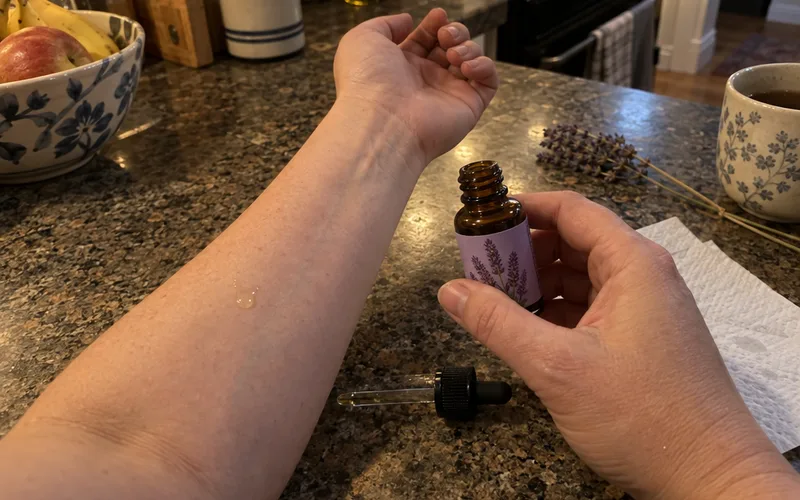
Lavender earns its spot as the gentle, calming choice, not as a treatment for a rash.
3. Eucalyptus
Eucalyptus oil brings a crisp, cooling scent, so pick it when you want peppermint’s cool feel with a sharper smell.
Best for: a cooling massage blend for tired muscles when you don’t like mint. Skip it if strong smells bother you.
Cost: $11.99.
Known for: Cineole, also called eucalyptol, plus the cooling, camphor-like scent the seller says comes from the leaves.
First step: Swap it in for peppermint in your next massage blend and compare the two.
Here’s an example: mix one small batch with peppermint and a second with eucalyptus, then use one on each leg.
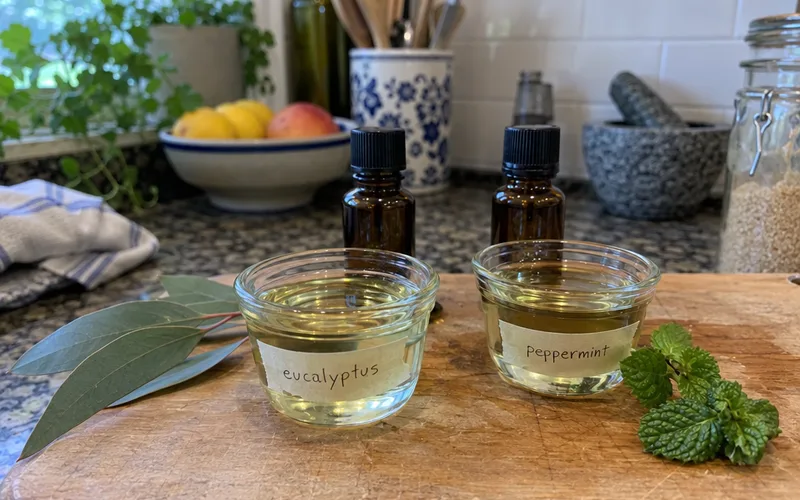
One evening tells you which cooling scent you’d rather live with, and since they cost about the same, smell decides.
Key Takeaway: Eucalyptus is the cooling oil for people who find mint too sweet.
4. Copaiba
Copaiba is the thick one: it’s sold as an oleoresin rather than a traditional essential oil, so it spreads more like a balm.
Best for: a longer massage on stiff joints or muscles. Skip it if you want a strong scent, since the seller calls its aroma mild.
Cost: $13.99.
Known for: Beta-caryophyllene and a smooth texture suited to richer rubs.
First step: Add it to a carrier oil and try it on one stiff shoulder after a warm shower.
Here’s how to use copaiba for a slow massage:
- Blend it into a carrier oil, since thick doesn’t mean it’s safe undiluted.
- Warm a little of the blend between your palms, so it spreads evenly.
- Work it into the stiff area for a few minutes, then wash your hands.
The guide to copaiba essential oil benefits covers its other uses and cautions.
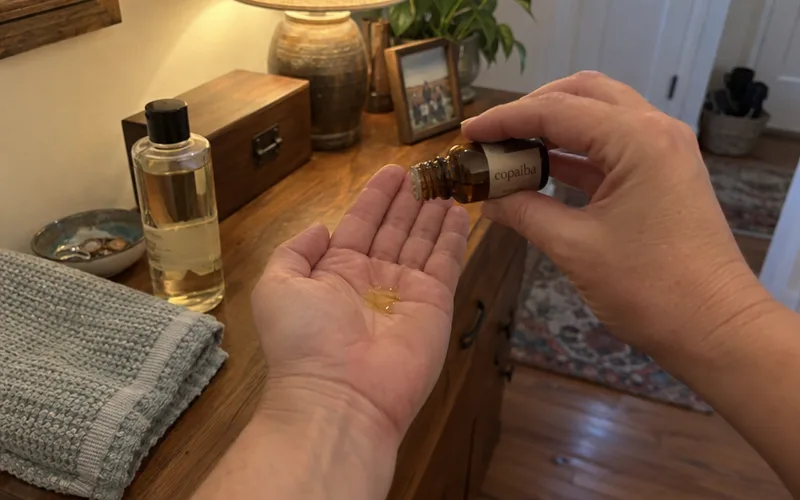
That makes copaiba the oil for people who like a balm-style rub more than a quick splash of scent.
5. Turmeric
Turmeric comes as a CO2 extract, which keeps heavier plant parts and feels thicker and more concentrated than a steam-distilled oil.
A CO2 extract is made by pulling the plant’s oils out with carbon dioxide instead of steam.
Best for: a rich, earthy rub after activity. Skip it if you prefer a light, runny oil.
Cost: $14.99.
Known for: Curcuminoids, the compounds the seller says turmeric is known for.
First step: Blend a small amount into a carrier and test it on your forearm.
Why does the format matter?
A thicker, more concentrated extract can feel stronger on your skin, so start with less of it than you would with lavender.
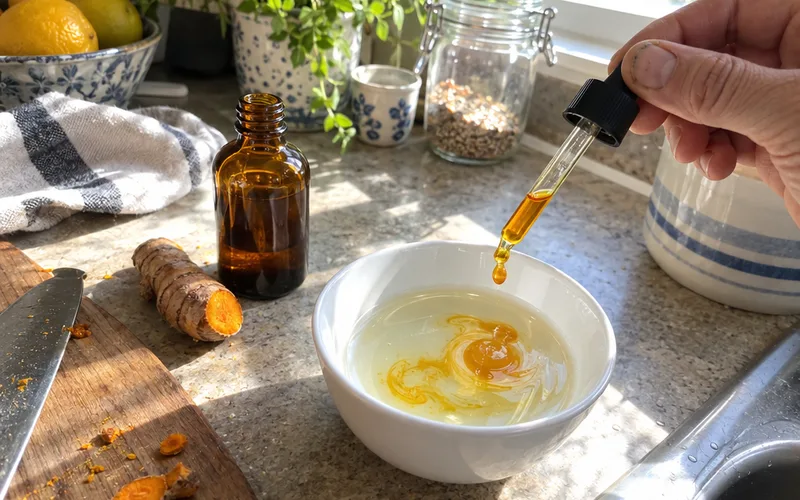
That concentrated feel isn’t evidence it calms swelling better, though.
So treat turmeric like any other oil: dilute it, test it and judge it by comfort.
6. Ginger
Ginger is the warming oil on this list, the one the seller ties to movement and recovery habits.
Best for: stiff backs and joints that feel better with warmth. Skip it if heat makes your sore spot feel worse.
Cost: $19.99.
Known for: A warming, spicy aroma from the root.
First step: Massage a diluted blend into your lower back after a warm shower.
Ginger is easy to bring to a massage appointment, as long as the therapist knows what’s in the bottle.
Here’s what to say: “Can you use an unscented carrier with a little ginger, well diluted, and keep it away from my face?”
For back pain in particular, oils for back pain and inflammation compares more options, and ginger essential oil benefits covers its other uses.
In other words, ginger is the oil to try when heat, not cold, is what helps.
7. Frankincense
Frankincense is the priciest oil here, a resin oil for people who want a warm, woody scent instead of a herb.
Best for: a daily rub on achy joints when you like a warm, woody scent. Skip it if price matters most.
Cost: $22.99.
Known for: Boswellic acids, which the seller says the resin naturally contains.
First step: Read the tips on frankincense for pain before you buy.
Note: Those acids belong to the resin, and how much reaches a distilled oil is a separate question, which the guide to frankincense side effects explains.
Here’s the math: frankincense costs $22.99 and peppermint costs $9.99, so frankincense runs $13.00 more.
That’s more than double the price of the cheapest oil on this list.
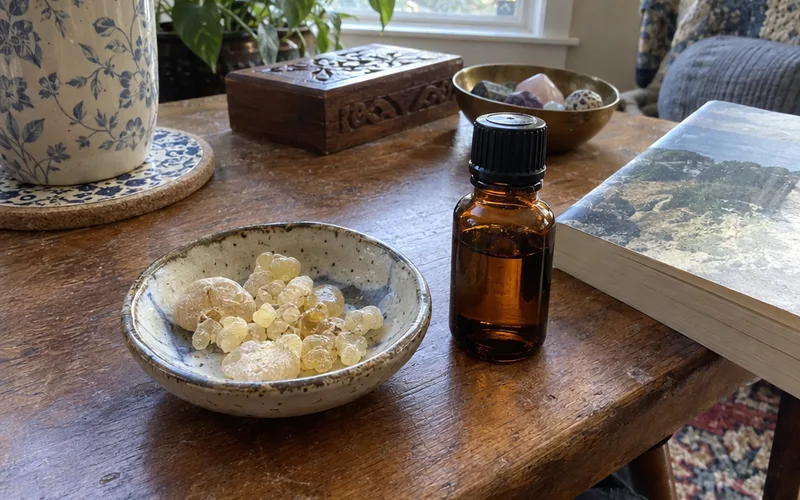
Here’s how to use frankincense for inflammation:
- Dilute it in a carrier oil, the same as every oil here.
- Patch test it on your forearm before the first full use.
- Massage a small amount into the achy joint once a day and note how it feels.
Frankincense is worth the extra $13.00 only if you love its scent, because no source here shows it works better.
Anti-Inflammatory Essential Oils Compared
Anti-inflammatory essential oils range from $9.99 for peppermint to $22.99 for frankincense, and each one is known for a different compound or feel.
This table puts all 7 in ranking order, with the same values as each oil’s quick facts:
| Oil | Cost | Known for | Best for |
|---|---|---|---|
| 1. Peppermint | $9.99 | Menthol, cooling | Sore muscles |
| 2. Lavender | $11.99 | Soft floral scent | Irritated skin |
| 3. Eucalyptus | $11.99 | Cineole, cooling | Muscles, no mint |
| 4. Copaiba | $13.99 | Beta-caryophyllene | Long massage |
| 5. Turmeric | $14.99 | Curcuminoids | Rich rub |
| 6. Ginger | $19.99 | Warming, spicy | Stiff back |
| 7. Frankincense | $22.99 | Boswellic acids | Achy joints |
Pick by feel first: cooling for tired muscles, warming for stiffness, calming for skin.
Then let price break the tie, since the evidence doesn’t separate these oils by strength.
Other Oils You’ll See on These Lists
Wintergreen, German chamomile, helichrysum and lemon eucalyptus also show up on anti-inflammatory oil lists, but they aren’t ranked here because this article’s sources give no price or compound for them.
Here’s who each is named for, and the deal-breaker:
- Wintergreen: named for deep muscle and joint aches. It’s mostly methyl salicylate, an aspirin relative, so skip it if you’re allergic to aspirin or take a blood thinner.
- German chamomile: named for sensitive skin.
- Helichrysum: named on a joint-pain list for bumps and bruises.
- Lemon eucalyptus: named on the same kind of list for tendon and joint pain. It’s a different oil from the eucalyptus at #3.
If you try one of these, the same dilution and patch-test rules apply.
Which Oil Fits Joints, Muscles, Skin or Nerve Pain?
The right anti-inflammatory essential oil depends on where it hurts: cooling peppermint or eucalyptus for sore muscles, warming ginger or thick copaiba for stiff joints, and calming lavender for irritated skin.
Each spot below links to its own guide.
Muscles and Back
Sore muscles respond best to the cooling oils, peppermint and eucalyptus, because that cool feel is what you notice on tired legs or shoulders.
The oils for muscle pain guide compares more picks, and massage oils covers which ones blend well for a full rub.
Joints and Swelling
Stiff joints suit the slow, thick rubs, copaiba and frankincense, or warming ginger if heat helps.

Swelling that pools in the feet, such as puffy ankles after a long flight, has its own guide to oils for swollen ankles.
For essential oils to reduce inflammation and pain together, start with oils for pain and inflammation, then compare ready-made pain relief oils.
Skin, Scalp and Bites
Irritated skin needs the calmest, most diluted option, which makes lavender the place to start.
Itchy bites have two guides: oils for mosquito bites and tea tree oil for insect bites.
A red, itchy scalp is covered in oils for scalp inflammation, and very sensitive areas in oils for hemorrhoids.
Nerve Pain
Nerve pain is the one area where an oil should never be your first step, because numbness, burning or tingling can signal a problem that needs a doctor.
The guide to oils for nerve regeneration explains what the research does and doesn’t show.
Match the oil’s feel to the spot, and let a doctor handle anything that burns, tingles or goes numb.
How to Use Essential Oils for Inflammation
To use essential oils for inflammation, dilute them in a carrier oil and massage them into the sore area, which is how Plant Therapy describes topical use.
A diffuser or bath only gives you the scent, unless the oil is mixed into a carrier first.
Here’s how the 4 common methods compare:
| Method | Good for | How |
|---|---|---|
| Massage | Sore muscles, stiff joints | Diluted oil rubbed in |
| Roller | Small spots | Diluted blend, one swipe |
| Bath | All-over aches | Oil mixed in carrier first |
| Diffuser | Calm and scent | A few drops in water |
Massage matches how these oils are described, since the cooling or warming feel comes from oil on skin.
Get the strength right with the dilution guide, which gives drop counts for each carrier amount.
For a soak, oil and water don’t mix, so stir the oil into a carrier before it goes in; oils for the bath lists the gentler choices.
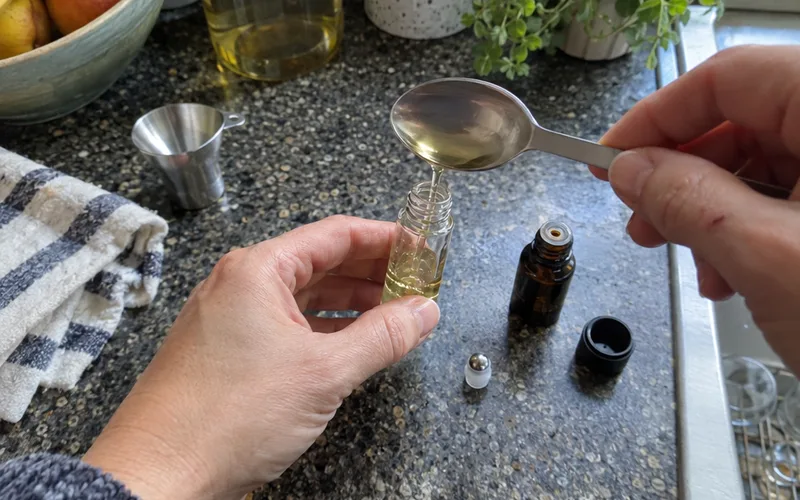
Want to combine 2 or 3 oils from this list?
The pain and inflammation recipe gives a ready blend, and the skin routine guide covers everything from patch test to when to stop.
Are Anti-Inflammatory Essential Oils Safe?
Anti-inflammatory essential oils need the same care as any essential oil: dilute them in a carrier oil, patch test them first and never swallow them.
These rules matter most:
- Children: Plant Therapy itself recommends its KidSafe line for routines that involve kids.
- Swallowing: don’t, even a drop in water; here’s why drinking essential oils is risky.
- Pets: check which oils are safe for pets before you diffuse, and see a vet for arthritis in dogs.
- Pregnancy, nursing or daily medicine: ask your doctor before you use any oil.
Wintergreen carries an extra aspirin warning, covered in the section on other oils.
The full essential oil safety rules cover skin, air, baths and swallowing in one place.
Note: Stop using an oil the moment your skin turns red, itches or burns.
When an Oil Isn’t Enough
An essential oil isn’t enough when swelling lasts or keeps coming back, because Harvard Health’s doctors link chronic inflammation to heart disease, arthritis, depression, Alzheimer’s disease and even cancer.
That’s a reason to see a doctor, not to buy a stronger oil.
Harvard’s doctors point to food instead: green leafy vegetables and fruits, nuts, fatty fish and olive oil, plus enough exercise and sleep and keeping stress in check.
For the other benefits of essential oils, such as sleep or calm, the Wellness guide sorts each oil by what the evidence shows.
Frequently Asked Questions
What is the best essential oil for inflammation?
No essential oil is proven best for inflammation in people, so the best one depends on where it hurts. Peppermint ($9.99) is the cheapest pick for sore muscles, lavender ($11.99) suits irritated skin and ginger ($19.99) suits stiff spots that like warmth.
What is the strongest anti-inflammatory oil?
No essential oil has been shown to be the strongest anti-inflammatory, and Plant Therapy, which sells these oils, says searches for the most powerful one really reflect extraction type, concentration and aroma intensity. A thick CO2 extract such as turmeric feels more concentrated, but that isn’t proof it works better.
Which oil reduces body inflammation?
No essential oil has been shown to reduce inflammation throughout the body, because the anti-inflammatory effects in a 2010 review in Molecules were measured in lab studies. For body-wide inflammation, Harvard Health’s doctors point to food, exercise, sleep and stress control instead.
What is the best natural remedy to reduce inflammation?
The best natural remedy for inflammation that Harvard Health’s doctors name is an eating pattern, not an oil: green leafy vegetables and fruits, nuts, fatty fish and olive oil. They pair it with enough exercise and sleep and keeping stress under control.
How do you use frankincense for inflammation?
To use frankincense for inflammation, dilute it in a carrier oil, patch test it and massage a small amount into the sore joint or muscle. At $22.99 it’s the priciest oil on this list, so try a cheaper oil first if cost matters.
How much do anti-inflammatory essential oils cost?
Anti-inflammatory essential oils cost $9.99 to $22.99 each at Plant Therapy as of October 2026, from peppermint at the low end to frankincense at the top. The page doesn’t list bottle sizes, so compare milliliters before you compare prices.
Can you put anti-inflammatory essential oils in a diffuser?
Yes, you can put anti-inflammatory essential oils in a diffuser for their scent, but the cooling or warming feel people link to them comes from diluted oil on the skin. Diffuse lavender for a calming room, and save a massage blend for the sore spot.
Final Thoughts
No essential oil has proof it shrinks swelling in people, so choose one for how it feels.
This week, buy the cheapest oil that matches your sore spot, dilute it and patch test it before the weekend.
If the swelling lasts or keeps coming back, see a doctor before you buy a second bottle.