
Only 1 essential oil on this list was studied on cold symptoms themselves.
In a 2010 study, breathing steam with chamomile oil helped relieve them, Healthline reports.
Below are 4 essential oils for colds, ranked by how directly research tested each one, with the safest way to use them tonight.
A blocked nose points to eucalyptus (#2) or peppermint (#3).
Caring for a child under 6? Read the safety section first.
The 4 Best Essential Oils for Colds, Ranked by Evidence
The 4 best essential oils for colds are chamomile, eucalyptus, peppermint and tea tree, in that order, though none cures a common cold.
As with most everyday uses for essential oils, expect comfort, not a cure. The study details below come from Healthline’s medically reviewed cold guide.
1. Chamomile
Chamomile oil is the only oil here tested on cold symptoms, and it was tested as steam.
Best for: a cold that keeps you from resting. Skip it if you want a chest rub.
Payoff: Relief of cold symptoms in a 2010 study.
Time: Same day.
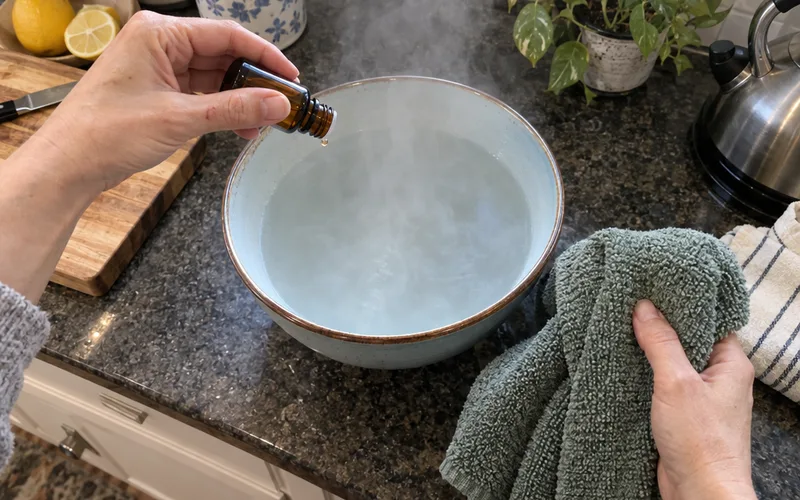
First step: Add 3 drops to a bowl of hot water.
2. Eucalyptus
Eucalyptus oil is the pick for a cold that settles in your chest. A 2010 review found it has antiviral and antimicrobial properties.
Best for: chest congestion. Skip it for a sore throat alone.
Payoff: Inhaled eucalyptus and its main compound, 1,8-cineole, may safely fight viruses and problems like bronchitis.
Time: Same day.
First step: Diffuse a few drops where you rest.
For cheek pressure, try eucalyptus for sinus relief, or read the eucalyptus diffuser benefits.
3. Peppermint
Peppermint oil is a natural decongestant because it contains menthol, which helps relieve congestion in topical rubs.
Best for: a blocked nose. Skip it for any child under 6.
Payoff: A clearer nose, from the same menthol found in rubs.
Time: Same day.
First step: Add 1 drop to your steam bowl.
More options sit among these oils for congestion, and pressure pain has its own sinus headache oils.
4. Tea Tree
Tea tree oil, also called melaleuca oil, showed antiviral properties in a separate 2010 study.
Best for: a diffuser blend. Skip it as your only cold oil.
Payoff: Antiviral properties, not proven symptom relief.
Time: Same day.
First step: Add 1 drop to a eucalyptus diffuser blend.
Essential Oils for Colds Compared
The 4 oils compare like this:
| Oil | Best for | Evidence | Use |
|---|---|---|---|
| Chamomile | Resting | Cold symptom study | Steam |
| Eucalyptus | Chesty cold | Antiviral review | Diffuser |
| Peppermint | Blocked nose | Menthol content | Steam |
| Tea tree | Blends | Antiviral study | Diffuser |
Start with chamomile unless your nose is badly blocked.
How to Use Essential Oils for a Cold
Steam inhalation is the most tested way to use essential oils for a cold, because the chamomile study used it. Healthline gives the National Association for Holistic Aromatherapy (NAHA) method:
- Put up to 7 drops in a large bowl of boiling water.
- Lean over it about 10 inches away, under a towel.
- Close your eyes and breathe through your nose for no more than 2 minutes.
For a chest rub, NAHA recommends 15 to 30 drops per ounce of carrier oil for adults, and these dilution steps cover smaller batches.
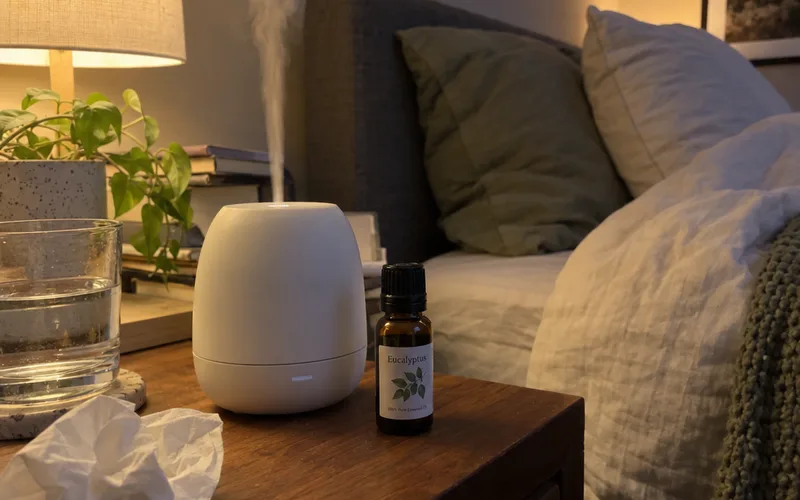
A diffuser is gentler overnight, so follow this diffuser how-to.
Which Oils Help a Cough, Sore Throat or Fever?
Eucalyptus oil is the best essential oil for a cough with a cold, while a sore throat or fever has its own best oils. For a dry hack, people try oregano oil for coughs or oregano for the lungs.
A scratchy throat has its own sore throat oils, and a temperature calls for oils for fever.
Endless sneezing may mean allergies instead of a cold, and wheezing points to allergies and asthma. The doTERRA flu bomb is a blend of these oils.
Are Essential Oils Safe for a Cold?
Essential oils are generally safe for a cold in low doses, but Healthline warns they’re potent and you shouldn’t swallow them.
Never use peppermint oil on a child under 6. For other kids, NAHA’s limit is 3 drops per ounce of carrier oil, and the full essential oil safety rules cover pregnancy.
When to See a Doctor for a Cold
See a doctor when a cold lasts past a week or brings a persistent fever, cough or trouble breathing, Healthline advises.
Frequently Asked Questions
Which essential oil is best for cough and cold?
Eucalyptus oil is the best essential oil for a cough with a cold, because a 2010 review Healthline reports found it may fight viruses and problems such as bronchitis.
Can eucalyptus oil help with the flu?
Eucalyptus oil may ease flu congestion, since a 2010 review Healthline reports found antiviral properties, but no study here tested it on the flu itself. See a doctor for a lasting fever.
How do you get rid of a cold fast?
No essential oil gets rid of a cold fast: most colds clear up within a week on their own, Healthline says. Eucalyptus or chamomile steam can ease your nose while you rest.
Final Thoughts
Chamomile steam has the most direct cold research, and eucalyptus and peppermint are the 2 oils for a blocked nose.
Tonight, breathe eucalyptus steam for 2 minutes.
If your cold lasts past a week, call your doctor.