
The best-tested allergy blend is just 0.2% essential oil.
That’s 1 to 2 drops each of 3 oils in 50 ml of almond oil.
In a small 2016 study, people with year-round allergies who breathed it in reported fewer sneezes and a clearer nose.
Below are 6 essential oils for allergies, ranked by how strong the research behind each one is.
Here’s a quick way to pick:
- A nose that’s blocked most of the year matches #1, the only blend tested on that.
- For a cooling sniff when you’re stuffed up, #2 works straight from a tissue.
- Cats or dogs at home? Leave #6 on the shelf.
Do Essential Oils Help Allergies?
Essential oils may ease mild nasal allergy symptoms, such as a stuffy or runny nose, but they don’t treat allergies or replace allergy medicine.
Cleveland Clinic finds no strong evidence that oils are safe or effective for allergies. That’s from a June 2026 article with integrative medicine specialist Melissa Young, MD.
So I ranked these oils by their research.
A study in people comes first, then studies of allergic inflammation, then oils known only for a useful property.
The 6 Best Essential Oils for Allergies, Ranked by Evidence
Most of these studies come from a medically reviewed Healthline summary updated March 16, 2026.
1. Sandalwood, Frankincense and Ravensara Blend
This 3-oil blend is the only option here with a described trial in people with allergies.
Best for: a stuffy, runny or itchy nose that lasts all year. Skip it if you want a single oil.
Payoff: Less blocked, runny and itchy nose and less sneezing in a small 2016 study.
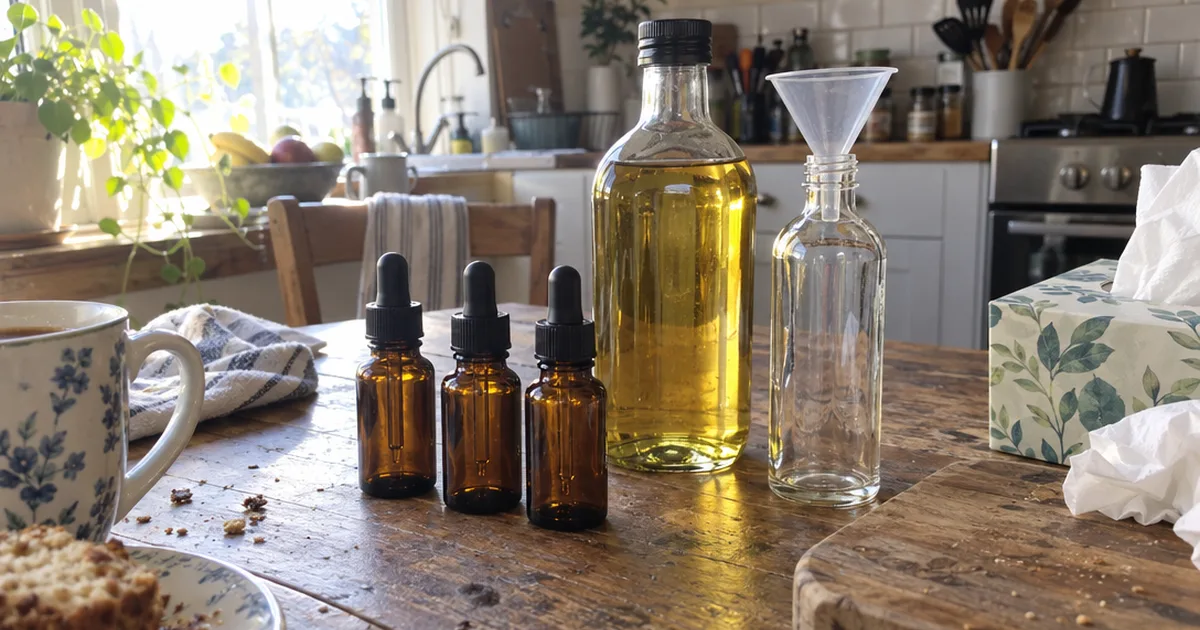
First step: Add 1 to 2 drops each of sandalwood, frankincense and ravensara oil to 50 ml of almond oil in a glass bottle.
People with perennial allergic rhinitis, meaning nasal allergies that last all year, breathed in a 0.2% blend in almond oil, Healthline reports.
You don’t rub it on. You hold the open bottle under your nose and breathe in.
2. Peppermint
Peppermint is the oil to reach for when your nose feels blocked.
Best for: stuffiness that makes breathing hard. Skip it if you have asthma.
Payoff: Less allergic rhinitis inflammation after inhaling peppermint oil, in a 2022 study.
First step: Put a few drops on a tissue and breathe in.
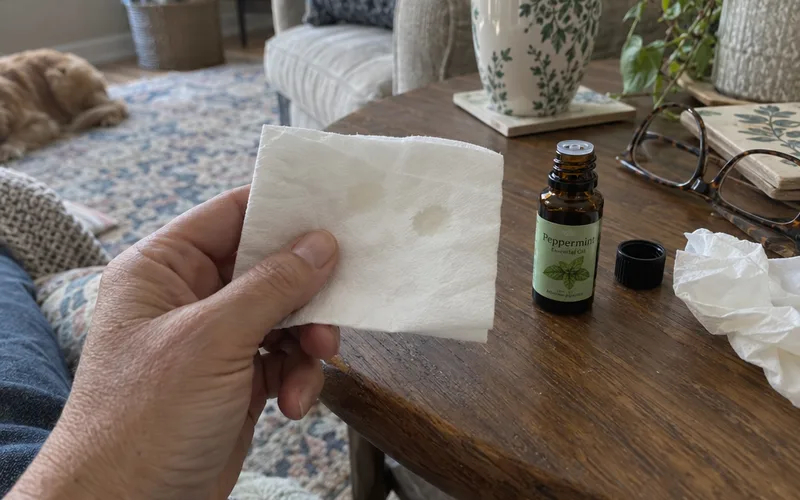
Its menthol helps open nasal passages and reduces mucus, the same summary says.
These oils for congestion cover a blocked nose from any cause.
3. Lavender
Lavender calmed allergic inflammation in mice, not people.
Best for: allergy nights when you want a calming scent. Skip it if lavender has made your skin itch.
Payoff: Less allergic airway inflammation in a 2014 study on mice.
First step: Add a few drops to your diffuser before bed.
Healthline also reports a 2024 study where English lavender soothed atopic dermatitis, an itchy skin condition.
So lavender’s research is about skin and mouse airways, not sneezing.
4. Eucalyptus
Eucalyptus is the one to try when dust mites drive your allergies.
Best for: stuffy allergies that last all year indoors. Skip it if you only flare in pollen season.
Payoff: Strong potential for controlling dust mites, a common year-round trigger, in a 2025 study.
First step: Breathe it in from the open bottle, or diffuse a few drops.
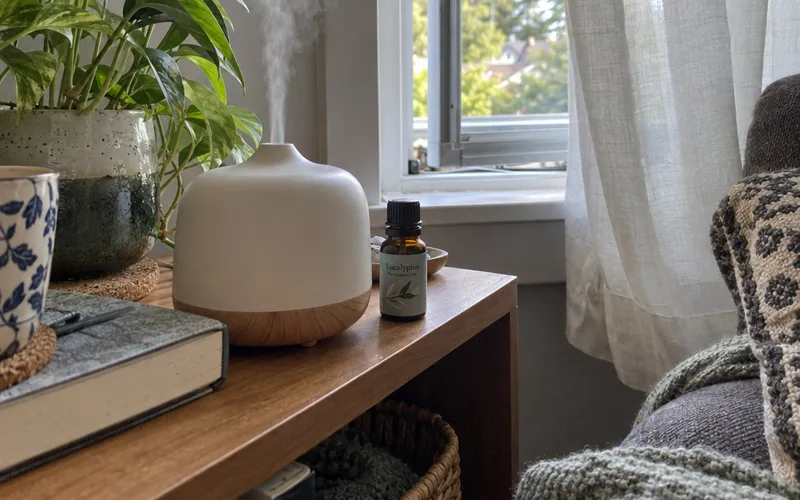
That study, which Healthline reports, tested the oil against the mites, not your symptoms.
For pressure behind your cheeks, eucalyptus for sinus pressure has its own routine.
5. Lemon
Lemon oil acts as a natural decongestant, the summary says, but no allergy study backs it.
Best for: freshening a room while you’re stuffy. Skip it on skin you’ll take outside.
Payoff: No allergy study result; it’s used as a decongestant scent.
First step: Add lemon to a diffuser, not a skin blend.
Citrus oils raise your risk of sunburn on skin in sunlight, so keep lemon in the air.
6. Tea Tree
Tea tree can calm histamine-driven skin inflammation, but it also causes skin reactions in some people.
Best for: homes that already keep tea tree for other uses. Skip it if you have sensitive skin.
Payoff: Less histamine-induced skin inflammation, in research the same summary cites.
First step: Patch-test a diluted drop on a small area of skin.
If your skin reacts, follow these steps for an allergic reaction.
It’s also highly toxic to pets, so never diffuse it near them.
How to Use Essential Oils for Allergies
Use essential oils for allergies by breathing them in from a tissue, the open bottle or a diffuser, and never swallow them.
How Much to Dilute
Mix about 5 drops of essential oil into 1 ounce of carrier oil, such as sweet almond oil, Healthline advises.
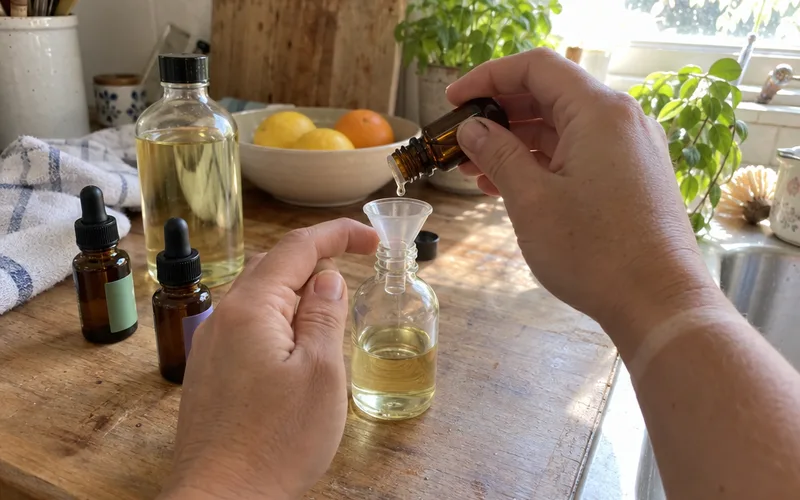
Then follow these dilution and patch-test steps before it touches your skin.
In a Diffuser
A diffuser fills the whole room, so keep that room well ventilated.
New to them? Start with how to run a diffuser and a short session.
Who Should Skip Essential Oils for Allergies
Essential oils for allergies are a poor fit if you have asthma, and they need extra care with ragweed allergy, pregnancy, babies, rashes and pets.
Cleveland Clinic warns that oils give off volatile organic compounds (VOCs), which can worsen breathing conditions. Read about oils with allergies and asthma first.
Skip them in these cases too:
- Ragweed allergy: you’re more likely to react to chamomile, a related plant.
- Kids under 2: oils with methyl salicylate, like birch and wintergreen, can be deadly.
- Pregnancy or breastfeeding: some oils can cause complications or affect milk supply, so ask your obstetrician.
- Hives or eczema: experts don’t recommend oils on allergic skin.
- Pets: some oils are poisonous to animals even in a diffuser, so check which oils are riskier for pets.
Note: Essential oils can’t stop anaphylaxis, which needs epinephrine and emergency care.
The full essential oil safety guide covers every other rule.
What Works Better Than Essential Oils for Allergies
Nasal rinsing, a warm salt-water gargle and steam are the natural options Cleveland Clinic recommends instead of essential oils for allergies.
A neti pot flushes allergens and mucus from your nose, and the gargle soothes a scratchy throat, Dr. Young says.
A quick steam loosens congestion too, and the oils for colds help if it’s really a cold.
If none of this helps, see an allergist.
Frequently Asked Questions
Which oil is best for allergies?
A sandalwood, frankincense and ravensara blend is the best-supported oil for allergies, the only one with a described trial in people with year-round nasal allergies, from 2016. Mix 1 to 2 drops of each into 50 ml of almond oil.
Where do you put essential oils on the body for allergies?
Put essential oils for allergies under your nose, not on it: on a tissue, in a diffuser or straight from the bottle. On skin, dilute about 5 drops per ounce of carrier oil and keep it off irritated skin.
Is there an essential oil that works as a natural antihistamine?
No essential oil is proven to work like an antihistamine, and Cleveland Clinic finds no strong evidence oils are safe or effective for allergies. Keep your usual allergy medicine and use oils only for comfort.
Are store-bought allergy oil blends worth it?
Store-bought allergy blends cost more without study backing: Vibrant Blue Oils lists its Histamine Balance blend at $38.95 for 5 ml. The one tested blend is a mix you can make from 3 single oils.
Final Thoughts
Start with the sandalwood, frankincense and ravensara blend, the only allergy oil here with a described trial in people. Mix a small bottle this week, sniff it when symptoms flare and keep your regular allergy treatment going.