
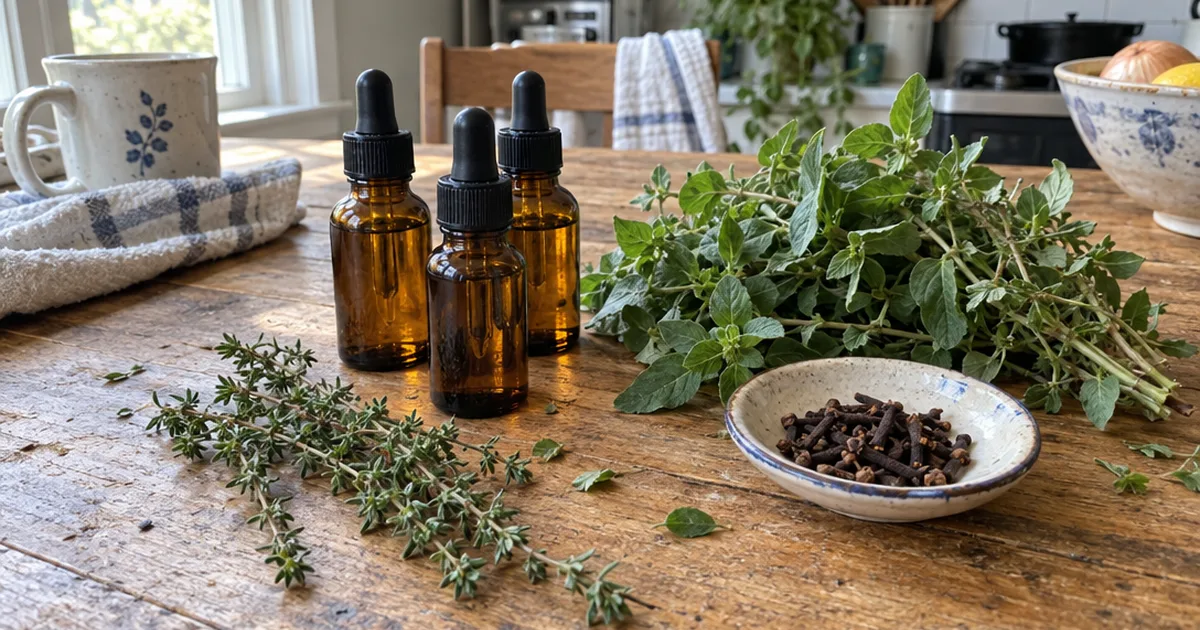
Only about a dozen of 250 essential oils on sale are strong germ fighters.
That’s the count of truly antimicrobial essential oils in a 2019 review in Molecules. Chemists at a university in Wrocław, Poland, wrote it.
So picking an oil because the label says “antibacterial” is mostly a guess.
Below, you’ll see which oils lead in lab tests, how they work and where they fall short. You’ll also find the right guide for your infection.
What Are Antimicrobial Essential Oils?
Antimicrobial essential oils are concentrated plant oils that kill or slow the growth of microorganisms such as bacteria and fungi.
Most are made by steam distillation of leaves, flowers or bark. People have used them in perfume and food preservation for thousands of years.
The word antimicrobial is the umbrella term. An antibacterial oil works on bacteria, and an antifungal oil works on fungi like yeast and mold.
Here’s the catch:
Most of what we know comes from in vitro tests, which means tests on agar or broth in a lab dish. None of the studies in this guide tested an oil on an infection in a person.
That’s still useful, because lab tests show which oils deserve a closer look. Just keep the dish and the body apart when you weigh germ-fighting against the other benefits of essential oils.
How Do Essential Oils Kill Bacteria?
Essential oils kill bacteria by damaging the cell membrane, the thin wall that holds a bacterium together.
A 2017 study in the Oriental Journal of Chemistry explains why. The oils are lipophilic, meaning they mix with fat, so they slip right into that fatty wall.
Once inside, they make the membrane leak.
The same study explains that the damage reaches the proton pumps, tiny gates that keep the cell’s energy running. When the proton pumps fail, membrane potential drops, ATP (the cell’s fuel) runs low and the cell can die.
In other words, these oils work by punching holes in a germ’s outer wall.
Which Essential Oil Is the Most Antimicrobial?
Oregano and thyme are the most antimicrobial essential oils in the research, and in one lab study they beat a real antibiotic. In a Scientific Reports study of six oils, oregano and thyme cleared much bigger germ-free zones on lab plates than the antibiotic chloramphenicol.
That’s huge for a kitchen herb.
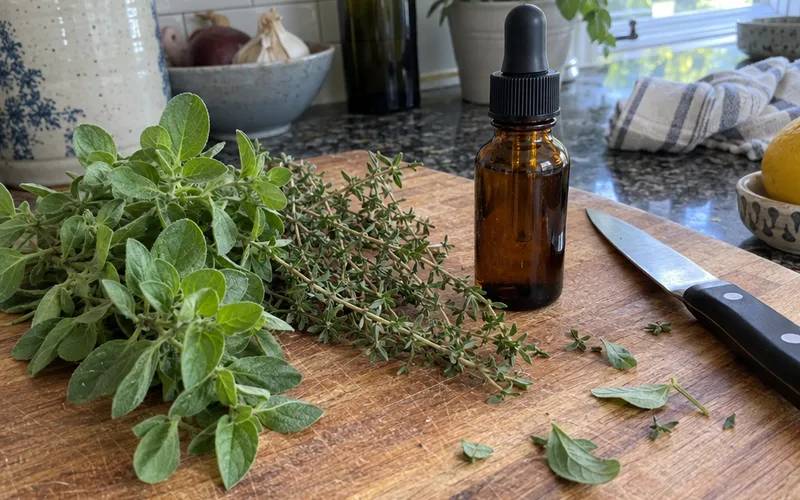
The team also tested clove, arborvitae, lavender and clary sage, and only the top 4 moved on to minimum inhibitory concentration tests. Here’s how the six stacked up against bacteria:
- Oregano: strongest overall, against every bacterium tested.
- Thyme: close behind oregano.
- Clove: strong, but a step below the top 2.
- Arborvitae: similar to clove.
- Lavender: weak.
- Clary sage: weak.
The Wrocław review adds a reality check: oils aren’t equally strong against every strain. So an oil that crushes one germ can do far less against the next.
Curious about oregano? Check the right oil of oregano dosage before you use it anywhere.
Which Essential Oil Is the Most Powerful Antifungal?
Oregano, thyme, clove and arborvitae are the strongest antifungal oils in the research, while lavender and clary sage did nothing to fungi. In the Scientific Reports study, those 2 weaker oils didn’t stop any of the 5 fungi tested.
That gap matters if you’re dealing with athlete’s foot, nail fungus or a yeast like Candida albicans.
In fact, people often reach for lavender because it smells gentle. But for a fungal problem, it’s the wrong pick based on this study.
Is Lavender Oil Antibacterial?
Lavender oil only works a little on bacteria, and it isn’t a strong germ killer. In the Scientific Reports comparison, lavender ranked near the bottom against bacteria and did nothing to any of the 5 fungi tested.
So why does lavender show up on so many “antibacterial oil” lists?
It’s popular, it’s gentle on the nose, and it does have some effect in a dish. That’s a long way from cleaning a counter or a cut.
Use lavender for its scent, and pick a stronger oil when killing germs is the actual goal.
Do Store-Bought Oils Work Like the Ones in Studies?
Store-bought essential oils can test weaker than the oils researchers use. A 2017 Oriental Journal of Chemistry study tested 4 oils bought at local markets: black seed, lemongrass, oregano and marjoram.
All 4 killed some bacteria, and every one worked on Escherichia coli. But none did a thing to fungus.
The fungus they tested was Candida albicans, the yeast behind most candidiasis infections, according to the Wrocław review.
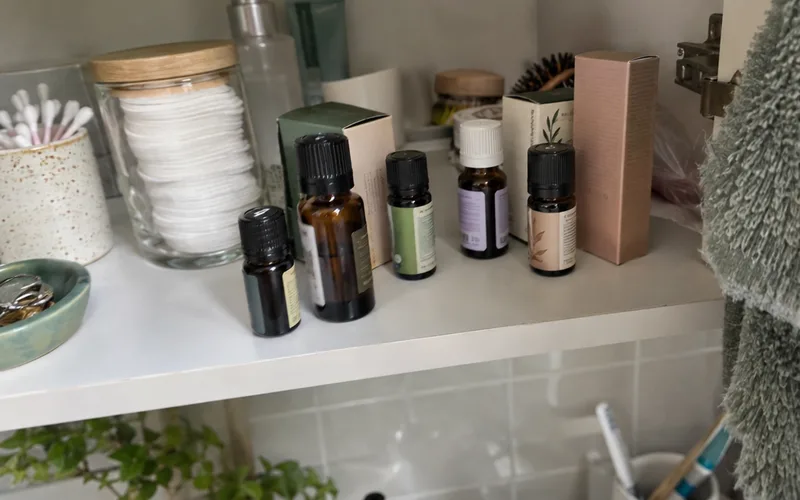
The team also checked each oil’s minimum inhibitory concentration, the weakest mix that still stops germs from growing. Black seed oil killed bacteria best, ahead of lemongrass, oregano and marjoram.
Black seed and oregano both hit Pseudomonas aeruginosa hard. Oregano missed Staphylococcus epidermidis, though, while the other 3 oils stopped it.
What does that mean for you? A label can’t tell you how well the oil inside works, and a store-bought oil may not match lab results.
Can Essential Oils Kill Germs in the Air?
Some essential oil vapors can stop fungi from growing, but only in a closed lab dish, not in a room. In the Scientific Reports study, vapor from oregano, thyme, clove and arborvitae oils at 0.075% completely stopped the growth of every fungus tested.
That’s a sealed plate with the vapor trapped inside.
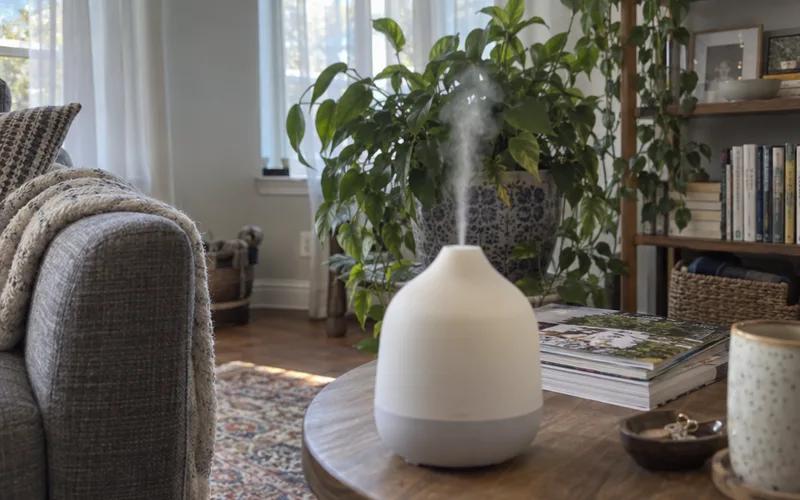
A diffuser in your living room spreads oil through far more air, and no study here measured germs in room air. So treat a diffuser as a scent, not a disinfectant.
The same researchers did suggest these oils might help decontaminate indoor spaces. If you want to try oils around the house, cleaning and disinfecting with essential oils is the more practical route.
Can Essential Oils Replace Antibiotics?
No essential oil can stand in for an antibiotic when you have an infection. A lab win over chloramphenicol doesn’t mean oregano oil will clear an infection in your body.
The 2019 Wrocław review calls oils worth studying because more germs now resist antibiotics. But “worth studying” is where the evidence stops.
So if an infection is getting worse or comes with a fever, see a doctor before you reach for an oil.
Are Antimicrobial Essential Oils Safe on Skin?
Antimicrobial essential oils are only safe on skin when diluted, and the strongest ones are the harshest. In the Scientific Reports study, oregano oil killed half of a batch of human lung cells at 0.058 µL/mL.
No other oil did that at such a low dose. Lavender took 0.28 µL/mL to do the same, and clary sage took 0.45 µL/mL.
In other words, oregano was about 5 times harsher on human cells than lavender. The same strength that kills germs can harm your own cells too.
Here’s what I’d do:
- Learn how to dilute essential oils before any oil touches your skin.
- Read the oregano oil side effects if you plan to use the strongest oil.
- Keep oils away from cats and dogs, since some essential oils are unsafe for pets.
Babies, pregnancy and swallowing oils carry their own limits, which our essential oil safety rules cover in full.
Which Essential Oils Do People Use for Common Infections?
Tea tree, oregano and clove oils are the essential oils Call Me Oil’s guides cover for nail and foot fungus. Ringworm, warts, earaches, lice and viruses each get their own guide too.
Each infection has its own evidence and method, so start with the one that matches your problem.
For nail and foot fungus:
- Using tea tree oil for nail fungus, and what tea tree before-and-after results really show.
- Diluting oregano oil for toenail fungus, plus oregano nail fungus reviews from people who tried it.
- Clove oil for toenail fungus and which is the strongest oil for toenail fungus.
- An athlete’s foot oil recipe and the benefits of Thieves oil on feet.
For skin, ears and hair:
- Antifungal oils for ringworm and oregano oil for skin fungus.
- The best oil for warts and an essential oil for earache.
- Tea tree oil for lice, which kills lice in a dish but struggles with eggs.
For viruses, the research behind this guide covers bacteria and fungi only. The most powerful antiviral oil gets its own look.
The Bottom Line
Oregano and thyme are the strongest antimicrobial essential oils in lab tests, and lavender is one of the weakest.
This week, pick the guide above that matches your problem and check its dilution before you open a bottle.
Frequently Asked Questions
Which essential oil is the most antimicrobial?
Oregano oil is the most antimicrobial essential oil in the research behind this guide, with thyme oil close behind. In a Scientific Reports lab study, both beat the antibiotic chloramphenicol, though oregano was also the harshest on human cells.
What essential oils are antifungal and antibacterial?
Oregano, thyme, clove and arborvitae oils were both antibacterial and antifungal in a Scientific Reports lab study. Lavender and clary sage worked weakly on bacteria and not at all on the fungi tested, so they’re poor picks when fungus is the problem.
What is the strongest natural antimicrobial?
Among essential oils, oregano oil is the strongest natural antimicrobial in the lab studies reviewed here, ahead of thyme, clove and arborvitae. Those are dish results, though, so a strong lab score doesn’t mean an oil will clear an infection in your body.
Do essential oils kill viruses and bacteria?
Some essential oils kill bacteria in lab dishes, but the studies behind this guide tested bacteria and fungi, not viruses. Antiviral evidence is a separate question, so treat any viral illness with your doctor’s advice rather than an oil.