
15 minutes of breathing lavender oil eased pain in a 2013 study.
People in it reported a significant drop in pain, according to Healthline, which updated its headache oil review in July 2025.
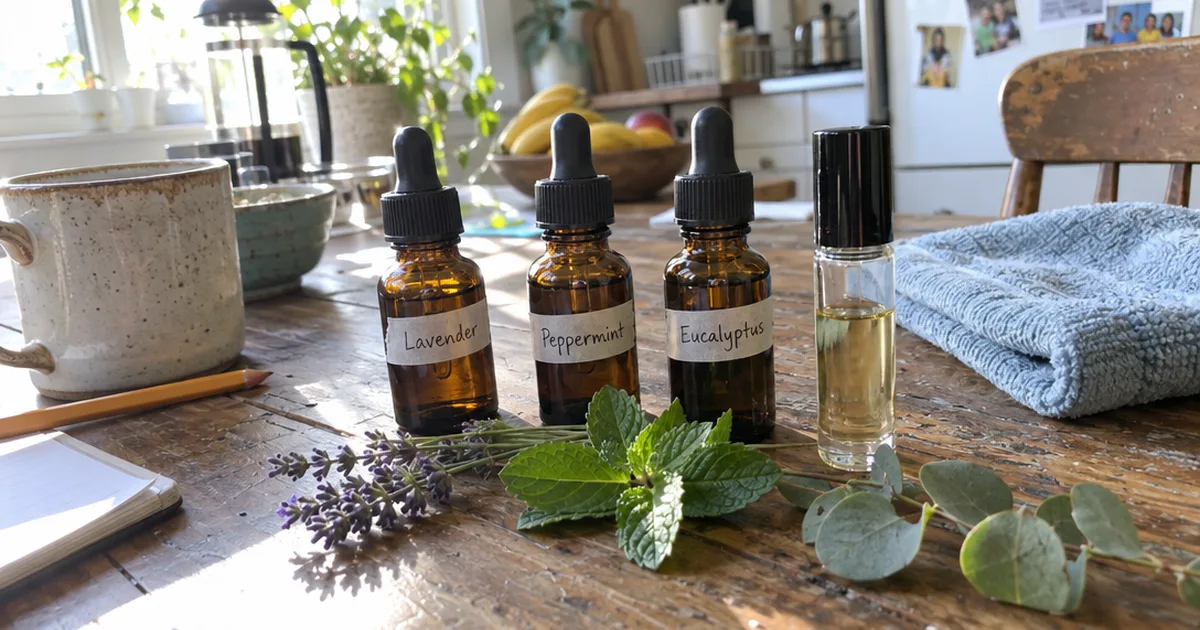
Lavender is one of 6 essential oils for headaches below, ranked by how directly a study in people tested each one on head pain.
- If a migraine is starting, lavender (#1) is the oil that was tested by breathing it in.
- A tight tension headache after a long day matches peppermint (#2), rubbed on your temples.
- Blocked nose with pressure across your forehead points to eucalyptus (#4).
Pregnant or nursing? Read the safety section before you open a bottle.
How These Oils Were Ranked
These essential oils are ranked by one rule: how directly a study in people tested each oil for headache or migraine pain.
Oils with their own headache study come first, then an oil tested in a blend, then oils backed only by pain or anxiety research.
The study details come from Healthline and Medical News Today, updated November 24, 2022. Both are medically reviewed and summarize the original studies, and prices are Medical News Today’s list prices at publication.
Small studies like these are a good reason to try an oil, not a promise that it will stop your headache.
The 6 Best Essential Oils for Headaches, Ranked by Evidence
The 6 best essential oils for headaches are lavender, peppermint, basil, eucalyptus, rosemary and chamomile, in that order.
1. Lavender
Lavender oil is the best-supported essential oil for headaches here, because more than one study tested it directly on migraine.
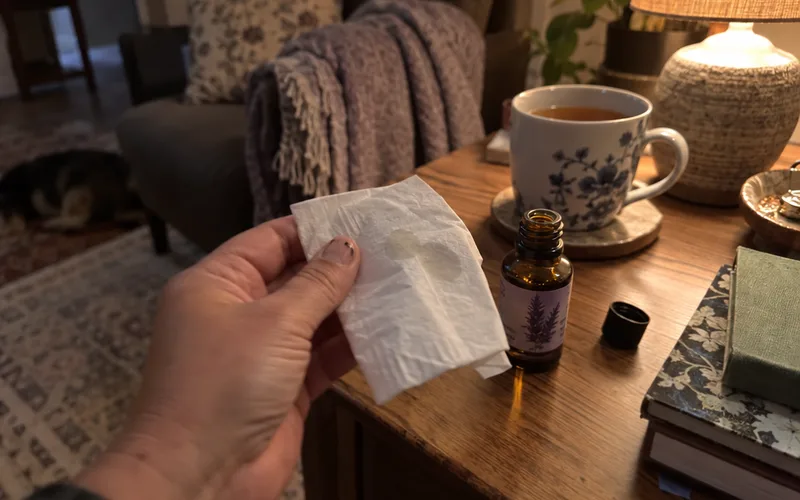
Best for: migraine and stress headaches. Skip it if you’re pregnant or nursing.
Cost: About $8 for a 0.51 fl oz bottle.
Payoff: A significant drop in pain after 15 minutes of inhaling it, in a 2013 study.
Time: Same day (15 minutes in that study).
First step: Put 2 drops on a tissue, hold it under your nose and breathe slowly for 15 minutes.
Here’s what the lavender research found:
- 2013 study: much less pain after 15 minutes of inhaling (Healthline)
- 2016 study: lower migraine disability scores after 3 months of lavender (Medical News Today)
- 2022 review: breathing lavender can be a safe, effective way to treat a migraine attack (Medical News Today)
People often use lavender for relaxation, sleep and low mood, so it also belongs among the oils for stress and anxiety.
Lavender is the first oil to reach for when a migraine starts, because breathing it in is how it was tested.
2. Peppermint
Peppermint essential oil is the top pick for tension headaches, and unlike lavender, it was tested rubbed on the skin.
Best for: tension headaches from stress or tight muscles. Skip it if you’re pregnant or breastfeeding, since its safety there is unclear.
Cost: About $20 for a 4 fl oz bottle.
Payoff: A 2015 review of published studies found peppermint on the temples and forehead eases tension headaches.
Time: Not reported, so judge it on your next tension headache.
First step: Stir 1 drop of peppermint into 1 teaspoon of carrier oil.
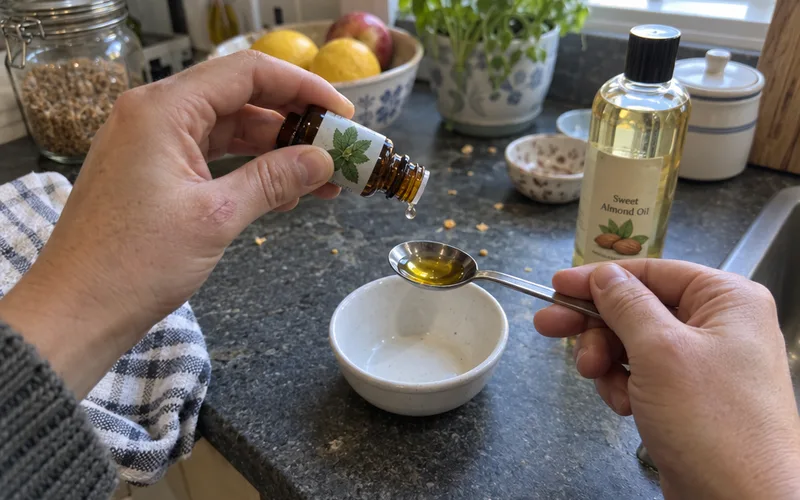
Peppermint contains menthol, which can help relax muscles and ease pain, Healthline explains.
Here’s how to apply it:
- Mix the drop into the carrier oil, so it won’t sting.
- Rub a pea-sized amount into both temples and across your forehead.
- Wash your hands right away, so no mint oil reaches your eyes.
That last step matters, because peppermint oil in the eye needs quick first aid.
The separate guide to peppermint oil for headaches covers each spot and dose in more detail.
Peppermint is the oil to rub in, not sniff, when a tension headache starts.
3. Basil
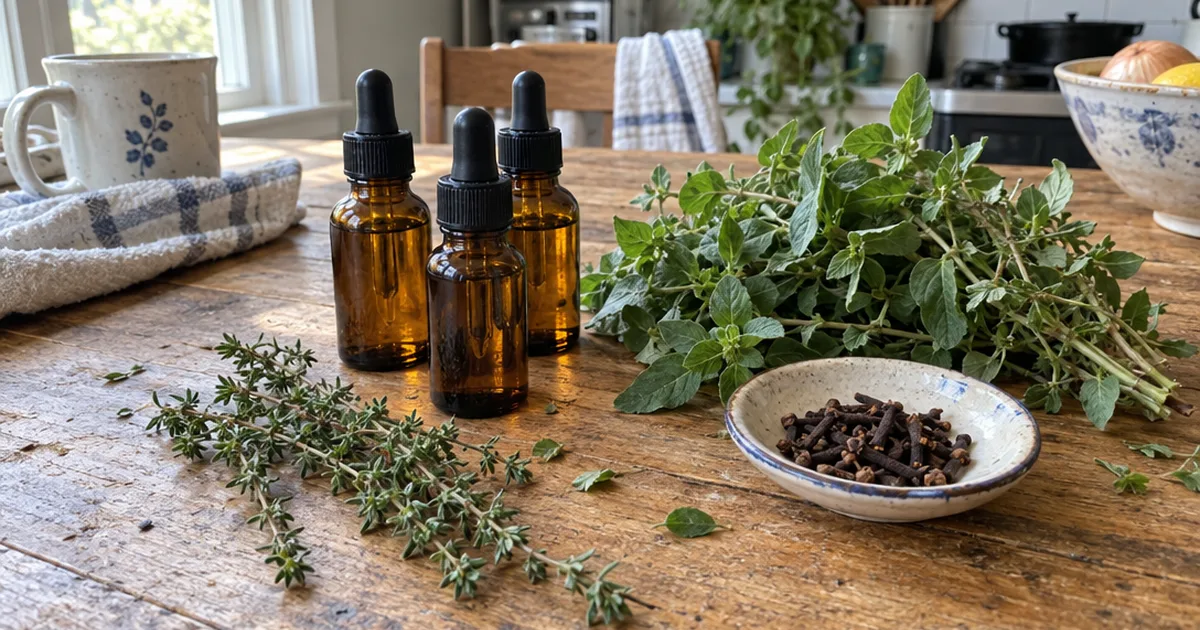
Basil essential oil is the surprise of this list: one study tested it on migraine for 3 months, and it helped.
Best for: frequent migraines you already treat with a pain reliever. Skip it if you want relief today.
Cost: No basil price in our sources; lavender, the cheapest here, is about $8.
Payoff: Lower migraine intensity and frequency over 3 months, in a study Medical News Today reports.
Time: 1-3 months.
First step: Ask your doctor whether basil oil fits with your current migraine medicine.
In that study, people applied basil oil topically every 8 hours and took acetaminophen every 12 hours.
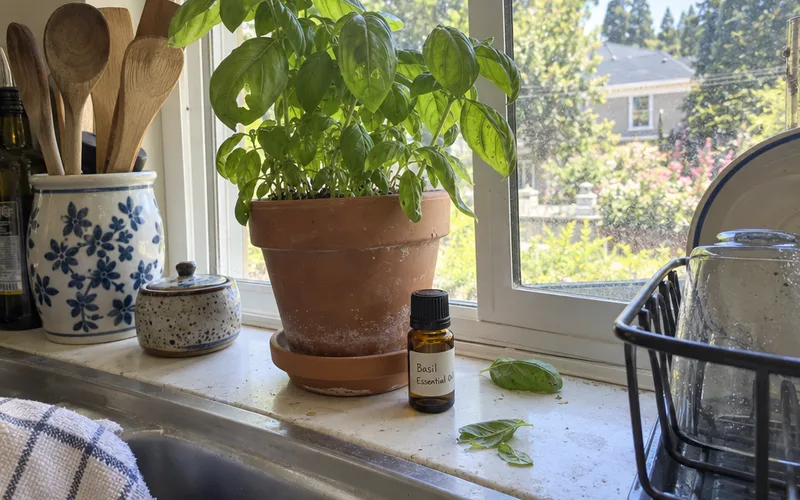
So basil wasn’t replacing the pain reliever. It was added to it.
In other words, basil is a long-term add-on for repeat migraines, not a quick fix.
4. Eucalyptus
Eucalyptus oil is the pick for sinus headaches, because it opens the nasal passages and relieves sinus pressure, Healthline reports.
Best for: sinus headaches with a stuffy nose. Skip it if your headache comes with no congestion.
Cost: About $9 to $15, depending on bottle size.
Payoff: An older study found a mix of peppermint oil, eucalyptus oil and ethanol relaxed both muscles and mind.
Time: Not reported, so judge it during your next sinus headache.
First step: Add a few drops to a bowl of hot water and breathe in the steam.
Healthline names Eucalyptus globulus, or blue gum eucalyptus, as the type that may help most.
The catch?
Eucalyptus has no headache study of its own, though a 2024 review Healthline cites says it eases mild inflammation of the airways.
Its best headache result came in that blend with peppermint.
So try the pair: 1 drop of each in 2 teaspoons of carrier oil, rubbed on your chest, plus the steam bowl.
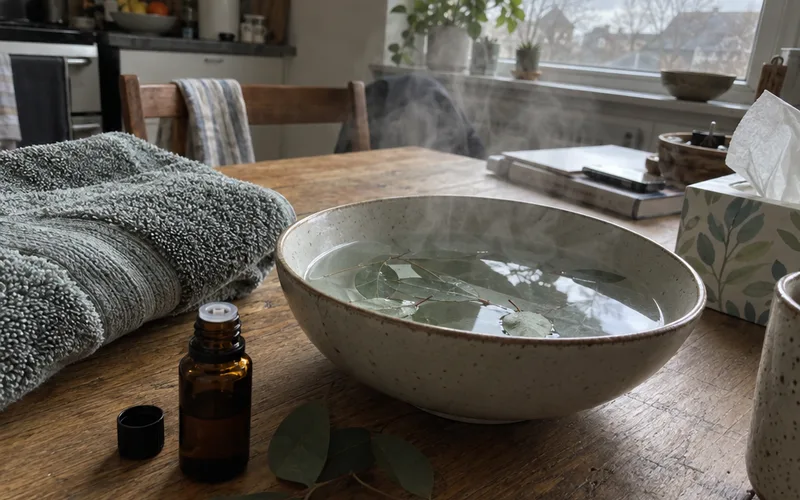
For stubborn stuffy-nose pain, these oils for sinus headaches go further than eucalyptus alone.
Save eucalyptus for headaches that come with congestion.
5. Rosemary
Rosemary oil has pain research but no headache study: a 2015 review only says it may be anti-inflammatory and analgesic, or pain-relieving.
Best for: a neck and shoulder massage during a headache. Skip it if you’re pregnant, nursing or have sensitive skin.
Cost: About $14 for a 2 fl oz bottle.
Payoff: Pain-relieving effects in that review, and one study suggests it works better alongside pain medicine.
Time: Not reported.
First step: Mix 1 drop into 1 teaspoon of sweet almond oil and massage the back of your neck.
Rosemary has been used in folk medicine for pain relief, stress and circulation for thousands of years, Healthline notes.
It can also cause contact dermatitis, a red, itchy skin reaction, in some people, so patch-test it first.
Rosemary works best as a neck-massage oil next to peppermint, not as a cure on its own.
6. Chamomile
German blue chamomile oil suits stress-driven tension headaches, but its evidence is indirect: research links it to less anxiety, not less head pain.
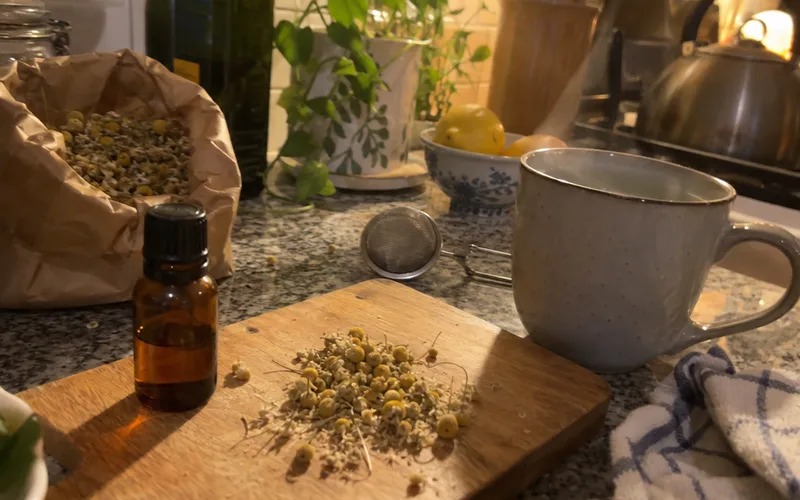
Best for: tension headaches that come with stress or poor sleep. Skip it if you’re pregnant or allergic to ragweed.
Cost: About $29 to $87 for Roman chamomile, the priciest oil here.
Payoff: Older research shows chamomile oil may ease some symptoms of anxiety and depression, Medical News Today reports.
Time: Not reported.
First step: Add a few drops, diluted in carrier oil, to a bowl of hot water and breathe the steam.
Healthline says blue chamomile gets its color from chamazulene, which also makes it anti-inflammatory.
Note: The price above is for Roman chamomile, a different plant from German blue chamomile, so check the Latin name.
Pick chamomile when worry or bad sleep is what sets off your headaches.
Essential Oils for Headaches Compared
The essential oils for headaches differ most in what each was tested on, so here they are side by side:
| Oil | Best for | Strongest evidence | Cost |
|---|---|---|---|
| Lavender | Migraine | 2013 and 2016 studies | About $8 |
| Peppermint | Tension headaches | 2015 review | About $20 |
| Basil | Repeat migraines | One 3-month study | Not listed |
| Eucalyptus | Sinus headaches | Blend study | $9 to $15 |
| Rosemary | Neck massage | Pain review | About $14 |
| Chamomile | Stress headaches | Anxiety research | $29 to $87 |
Only the top 3 were tested directly on headaches, and only lavender and peppermint more than once, so start with one of those 2.
Other lists name frankincense, marjoram and clary sage too, but neither health source here reports a headache study for them.
Which Essential Oil Is Best for Your Headache Type?
The best essential oil depends on your headache type: lavender for migraine, peppermint for tension headaches and eucalyptus for sinus headaches.
Cold and heat matter too: Healthline’s guide to headache oils says each type responds better to one of them.
Migraine
Lavender, breathed in, is the migraine oil, and cold generally helps migraine more than heat.
So pair a lavender tissue with a cold compress, then rest in a dark room, as the UK’s National Health Service suggests.
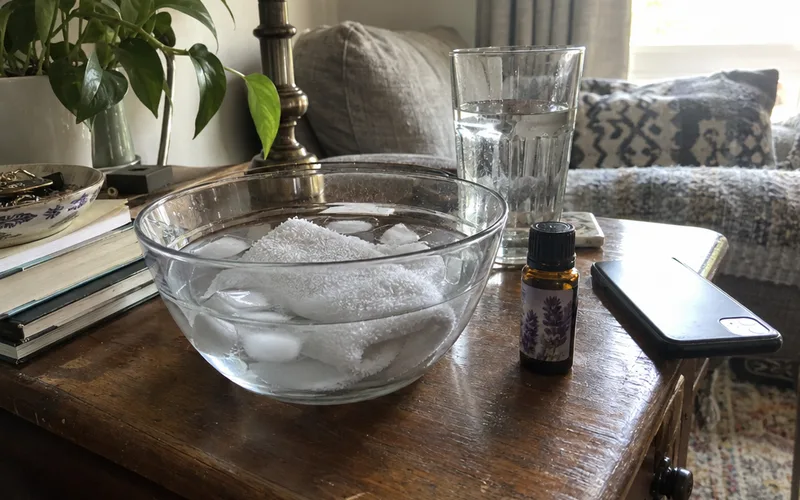
Once lavender works for you, try these migraine blend recipes.
Tension Headaches
Peppermint on the temples is the tension-headache oil, and heat tends to help tension headaches more than cold.
Try a warm towel on your neck after the peppermint.
Sinus Headaches
Eucalyptus steam is the sinus-headache option, and heat suits sinus headaches too, so hot steam gives you both.
How to Use Essential Oils for a Headache
You can use essential oils for a headache 4 ways: on your skin, from a tissue or diffuser, in a cold compress or in a hot bath.
Where to Put It
Put a diluted oil on your temples, forehead, back of your neck or behind your ears, the spots Healthline lists.
How Much to Dilute
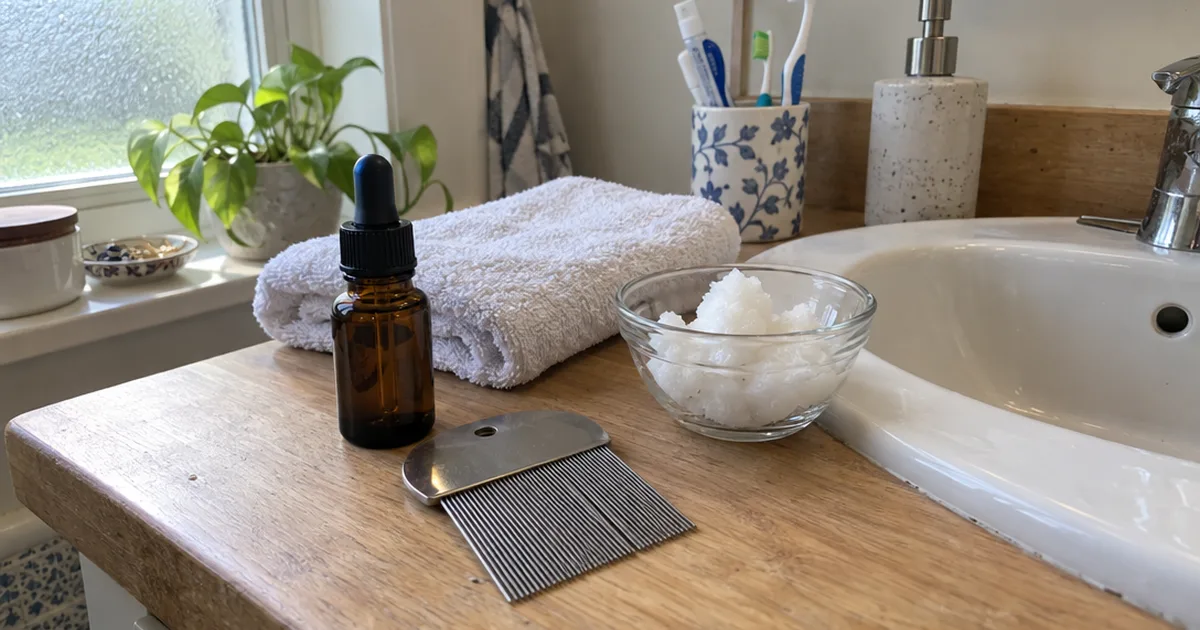
Healthline’s rule is 5 drops of essential oil to 1 ounce of carrier oil. Sweet almond oil, jojoba oil, coconut oil and olive oil all work.
That’s about a 1% blend, and here’s how it works out for smaller amounts:
| Carrier oil | Essential oil drops |
|---|---|
| 1 teaspoon (5 ml) | About 1 |
| 10 ml roller bottle | About 2 |
| 1 tablespoon (15 ml) | 2 to 3 |
| 1 ounce (30 ml) | 5 |
Never put oil on your skin undiluted, and never swallow it.
For other strengths, the steps for diluting essential oils cover every common amount.
In a Diffuser or on a Tissue
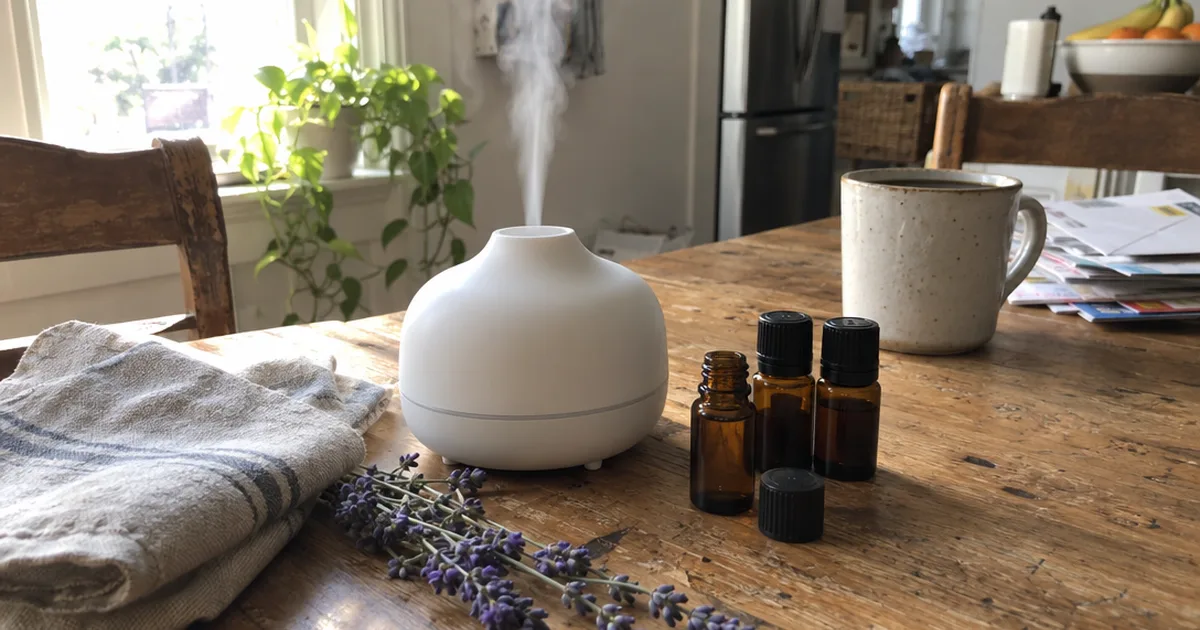
For inhalation, put a few drops on a tissue, hold it under your nose and breathe deeply, Medical News Today says.
A diffuser does the same job across a whole room, once you know how to use a diffuser.
In a Cold Compress
Soak a towel in cold water with a few drops of oil, then lay it on your forehead or neck. Healthline suggests leaving a cold compress on for 10 to 15 minutes.
Are Headache Roll-Ons Worth Buying?
A headache roll-on is worth buying for convenience: the MigreLief Comfort Stick listed at $12.95 on Amazon in October 2026.
That 10 ml peppermint and lavender roller had 4.4 stars from about 2,000 ratings. Its listing names jojoba, lavender and rosemary as active ingredients.
But reviews are mixed: Amazon’s summary says some buyers find it works for mild headaches, while others say it doesn’t work at all.
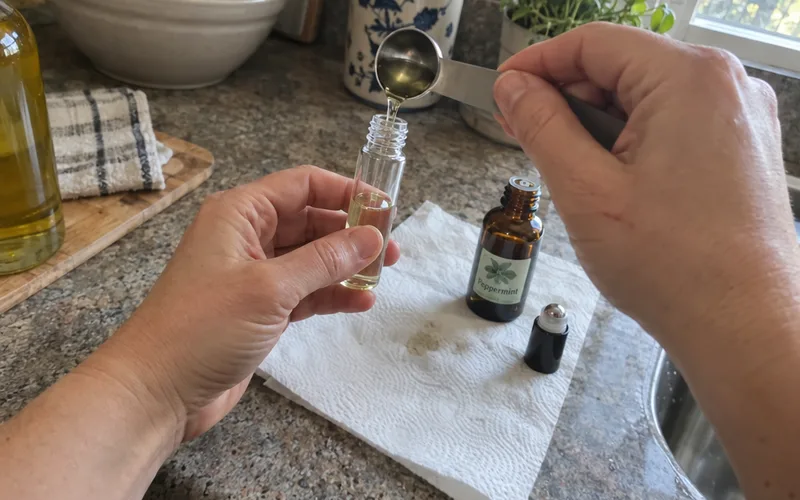
A 10 ml roller needs only about 2 drops of oil, and a 0.51 fl oz bottle of lavender listed at about $8 in 2022.
So 1 bottle fills many homemade rollers, and these essential oil roller recipes give you the ratios.
Buy a roll-on to carry, but make your own if you get headaches often.
Are Essential Oils Safe for Headaches?
Essential oils are generally safe for headaches when you dilute them, keep them out of your eyes and never swallow them, Healthline says.
But pregnancy, babies, allergies, asthma and heart problems change the rules.
Pregnancy, Babies and Allergies
Very few essential oils are recommended for babies under 1 year or for pregnant or nursing people, and Healthline names lavender and rosemary as risky.
Pregnant people should avoid chamomile because of a miscarriage risk, and so should anyone allergic to ragweed.
Before you try any oil while pregnant, read about aromatherapy in pregnancy and ask your doctor or midwife.
With asthma or a heart condition, check with your doctor first too, and keep every bottle out of reach of children and pets.
Patch Test First
Put a few drops of diluted oil on a small patch of skin, then wait 24 to 48 hours before you use more.
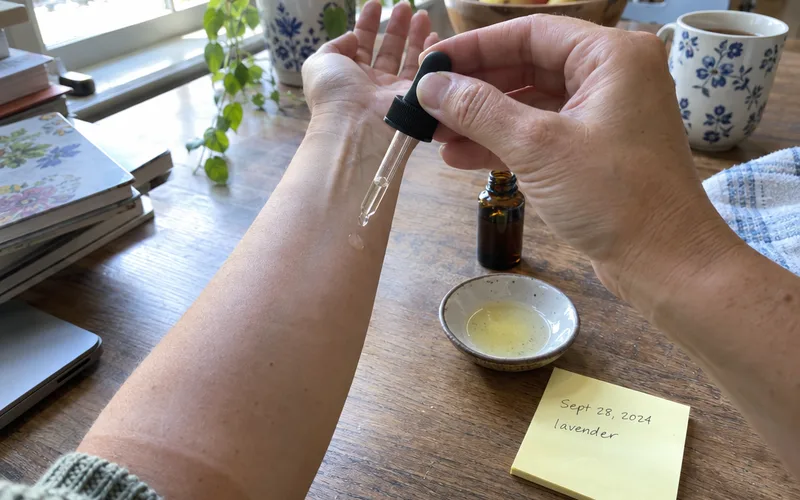
Stop if you see redness, hives, blisters or burning, and get help fast if breathing gets hard.
The FDA doesn’t check oils for purity, and fakes can hide added fragrance. That’s why these essential oil safety basics apply to every oil here.
When a Scent Makes It Worse
Strong scents can trigger headaches in some people, Healthline warns, and so can artificial scents from candles or lotions.
So start with 1 or 2 drops, and stop if the smell makes your head pound harder.
Do Essential Oils Really Work for Headaches?
Essential oils can ease some headaches, but the research is small: a 2021 review found they can help migraine symptoms, and Medical News Today says up-to-date research is lacking.
The 2021 review’s authors think oils may calm nerve inflammation, lower pain sensitivity and relax tense blood vessels.
For severe or frequent headaches, Healthline says oils may work best alongside prescription medications.
Headaches are just one kind of pain, and anti-inflammatory essential oils for muscles and joints have their own evidence.
The same goes for aromatherapy in general: real effects, small studies.
When to See a Doctor
See a doctor if you get headaches or migraine episodes 3 or more times a month, Healthline advises. A doctor can find the cause or refer you to a neurologist.
An oil can take the edge off a headache, but frequent headaches need a diagnosis, not another bottle.
Frequently Asked Questions
What scent gets rid of headaches?
Lavender is the scent with the most direct evidence against headache pain: people in a 2013 study reported much less pain after 15 minutes of inhaling it. Peppermint, rosemary and eucalyptus help too, though strong smells trigger headaches in some people.
Where do I put peppermint oil for a headache?
Put diluted peppermint oil on your temples and forehead, the spots a 2015 review found eased tension headaches. Keep it well away from your eyes.
What essential oil is good for headaches in a diffuser?
Lavender is the best essential oil for a diffuser during a headache, because its studies tested breathing it in. Add a few drops, and switch it off if the scent makes the pain worse.
Are essential oils safe for headaches during pregnancy?
Essential oils are a poor choice for headaches during pregnancy: Healthline says very few are recommended for pregnant or nursing people and says to avoid chamomile. Ask your doctor or midwife before you use any oil.
What is the fastest way to get rid of a headache naturally?
A cold compress is one of the fastest natural fixes: Healthline suggests leaving one on your forehead for 10 to 15 minutes. Add a few drops of lavender to the cold water to breathe at the same time.
Can I use doTERRA or Young Living oils for headaches?
doTERRA and Young Living single oils work like any other brand’s lavender or peppermint, because the plant and the dilution matter, not the logo. Look for 100% pure oil and the Latin plant name on the label.
Final Thoughts
Lavender for migraine and peppermint for tension headaches are the 2 oils with the most direct research behind them.
This week, patch-test both and keep a diluted peppermint roller ready.
If headaches come 3 or more times a month, see a doctor before you buy another bottle.