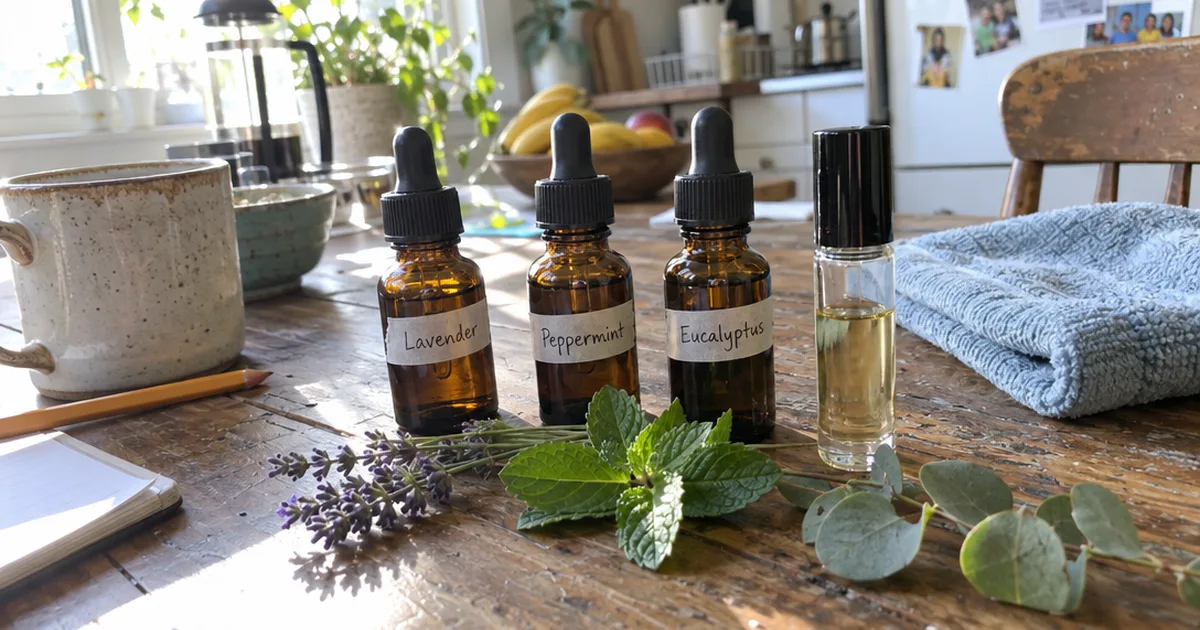

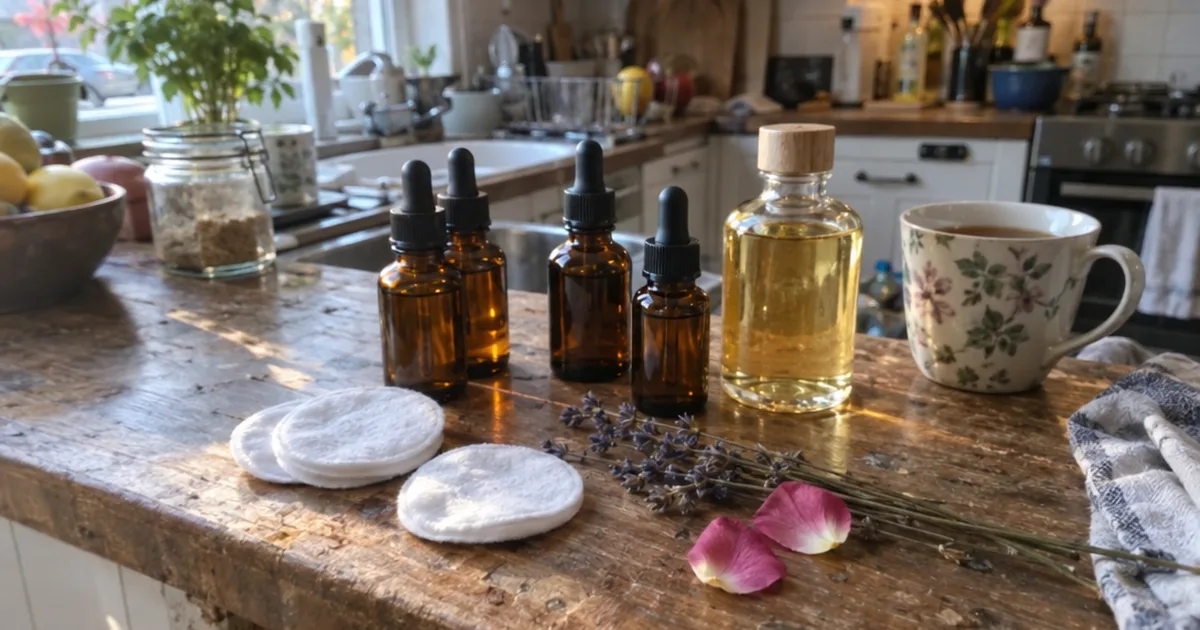
Five minutes of rose oil, twice a day, lowered PMS scores in a 2016 trial.
The 64 students in it had moderate premenstrual syndrome, and their mood, body and social symptoms all eased more than with plain almond oil.
Rose is one of 4 essential oils for PMS with trial evidence behind them, ranked here by how directly each was tested.
- If mood swings and aches hit in the same week, rose (#1) is the only oil here that helped both.
- Tearful, irritable days with no real pain match what neroli (#2) did in its trial.
- Cramps that start a day before you bleed call for lavender (#3), rubbed in.
How These Oils Were Ranked
These essential oils are ranked by one rule: how directly a human trial tested each oil for PMS or period cramps.
An oil with its own PMS trial ranks first, then an oil tested on cramps, then an oil tested only inside a blend.
The main source is a 2020 review of 8 randomized trials of aromatherapy for PMS. It pooled 295 people and found aromatherapy lowered total PMS scores.
The review also says PMS, which clears once menstruation starts, affects 20% to 40% of women of childbearing age worldwide.
The cramp studies come from WebMD, in an article a doctor reviewed in June 2025.
Like most benefits of essential oils, these results come from small studies, so treat them as a reason to try an oil, not a promise.
The 4 Best Essential Oils for PMS, Ranked by Evidence
The 4 best essential oils for PMS in the research are rose, neroli, lavender and clary sage, in that order, so match one to your worst symptom before you buy.
1. Rose
Rose oil is the best-supported essential oil for PMS here, because it’s the only one that eased both emotional and physical symptoms in a trial.
Best for: mood swings that come with bloating, headaches or sore breasts. Skip it if cramps are your only symptom.
Payoff: Lower total, mood, physical and social PMS scores than a placebo oil, in a 2016 trial of 64 students.
Time: 1-3 months (the trial ran 2 months).
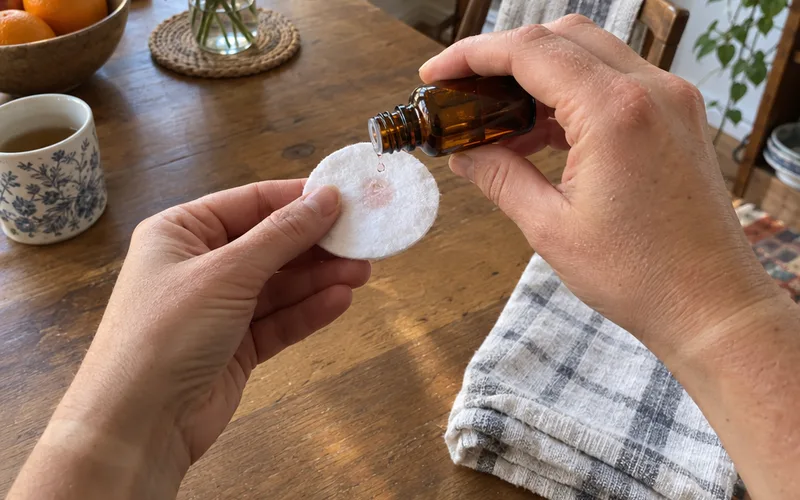
First step: Put 1 drop on a cotton pad, hold it under your nose and breathe for 5 minutes.
In that trial, students smelled 4% Rosa damascena oil from an eye pad for 5 minutes, twice a day for 5 days, says the 2020 aromatherapy review. A second group smelled odorless sweet almond oil.
Rose may ease period pain too: WebMD reports less pain in women given rose oil aromatherapy.
When you shop for rose essential oil, look for Rosa damascena on the label.
The trial only enrolled students with moderate PMS, so it says little about severe symptoms.
In other words, rose is the one oil here worth trying for the whole PMS week, not just the cramps.
2. Neroli (Bitter Orange Blossom)
Neroli, the oil from bitter orange blossoms, eased the emotional side of PMS in a 2016 trial but did nothing measurable for the body.
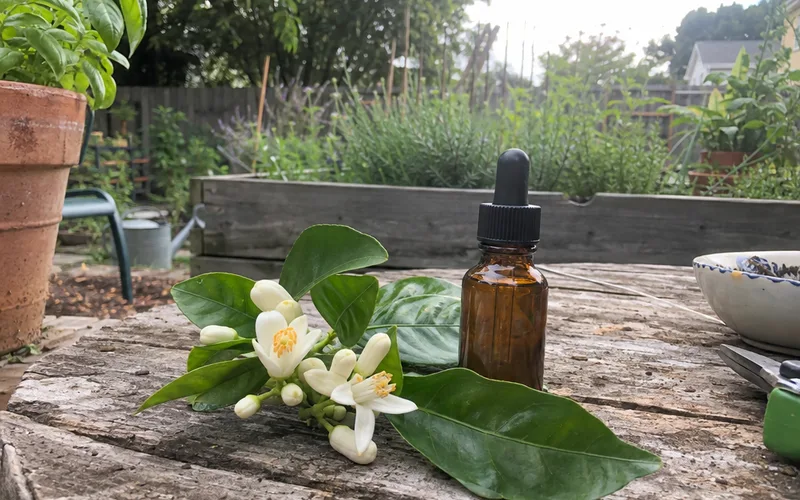
Best for: irritability, tearfulness and feeling overwhelmed. Skip it if bloating or cramps bother you most.
Payoff: Lower total and mood-related PMS scores than a placebo oil, in a 2016 trial of 66 students.
Time: 1-3 months (the same 2-month design as rose).
First step: Breathe 1 drop from a cotton pad for 5 minutes, morning and evening.
Here’s how neroli oil did in its trial, from the 2020 PMS review:
- Total PMS score: lower than placebo
- Mood symptoms: lower
- Physical symptoms: no real change
- Social symptoms: no real change
In a second comparison, 0.5% neroli also cut tearfulness and feeling out of control more than a placebo oil.
That split makes neroli the pick for PMS weeks when your emotions are the problem and your body feels fine.
If its scent isn’t for you, other essential oils for mood are worth a look.
3. Lavender
Lavender oil is the top pick here for period cramps, which WebMD says usually start 1 or 2 days before your period.
It’s also the one oil used in all 3 cramp massage trials behind this guide.
Best for: period pain before and during bleeding. Skip it if a patch test leaves your skin red.
Payoff: Less pain than a placebo-oil massage, in a study of 80 women with painful periods.
Time: Not reported, so judge it over your next period.
First step: Stir 1 drop of lavender into 1 teaspoon of carrier oil.
WebMD describes a study of 80 women with painful periods. An aromatherapy massage with lavender oil eased their pain more than one with a placebo oil.
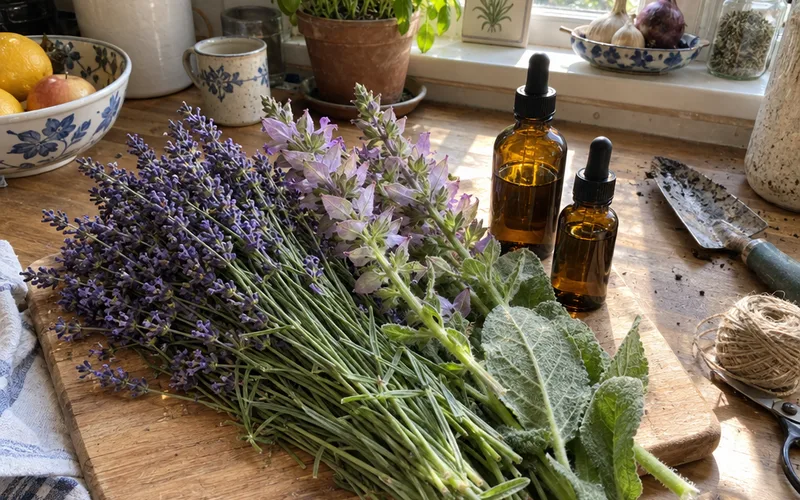
Key Takeaway: For cramps, rub diluted lavender into your abdomen rather than relying on its odor alone.
4. Clary Sage
Clary sage has only been tested for cramps as part of a blend, so it ranks last despite leading many PMS lists.
Best for: cramps, mixed with lavender and rose. Skip it if you want one oil on its own.
Payoff: Part of a 3-oil belly massage that eased period pain more than plain carrier oil.
Time: Not reported, so test it on your first painful day.
First step: Buy a bottle labeled Salvia sclarea, the plant’s Latin name.
In the trial WebMD describes, women got a belly massage with two drops of lavender, one drop of clary sage and one of rose. It was all mixed into 5 cc of almond oil, and their cramps eased more than with almond oil alone.
Hormone claims are the common trap here. Sellers call clary sage an antispasmodic and credit clary sage with balancing hormones, but no source here measured hormones such as estrogen.
So use it as 1 drop in a cramp blend, and give the rest of the bottle a job from clary sage’s other benefits.
Other Oils People Use for PMS
Geranium, bergamot and peppermint appear on many PMS lists, including Google’s AI Overview, but no source behind this guide tested them for PMS.
Chamomile, ylang ylang and frankincense show up on other lists, with no PMS trial here either.
Geranium
Geranium is mostly sold on claims that it balances hormones and emotions.
If you like the scent, add it to a blend, but let rose do the work.
Bergamot
Bergamot essential oil is a citrus oil sold for lifting mood and easing stress.
Treat it as a nice scent, not a PMS treatment, until a trial tests it.
Peppermint
Peppermint is pitched for muscle tension and mild pain.
With no cramp trial behind it here, lavender (#3) is the better choice.
Cinnamon and Clove
Cinnamon and clove were tested in a blend with rose and lavender. WebMD reports it cut cramp pain, how long it lasted and bleeding, compared with a placebo oil.
The same article lists clove and cinnamon bark among oils that can irritate skin, so leave this blend to a trained aromatherapist.
How to Make a PMS Massage Blend at 1%
A safe PMS massage blend uses the trial’s 2-1-1 mix of lavender, clary sage and rose at 1% strength: 4 drops in 4 teaspoons of carrier oil.
The trial packed those 4 drops into a single teaspoon, which works out to about 4%.
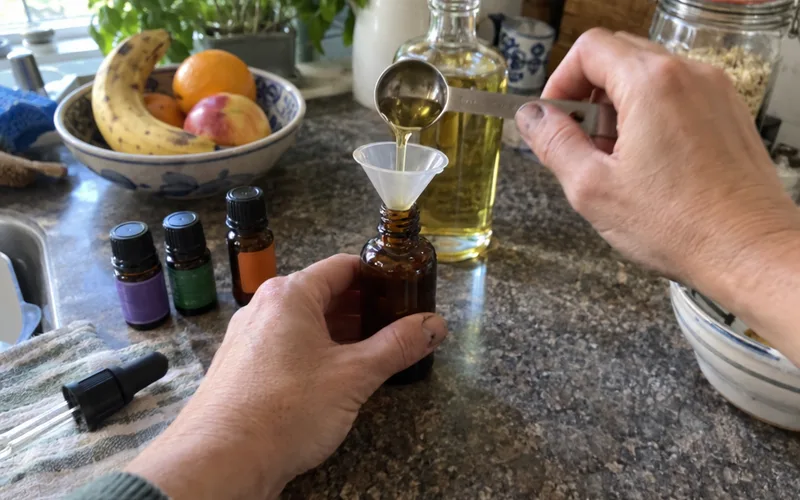
Here’s how to mix the gentler version:
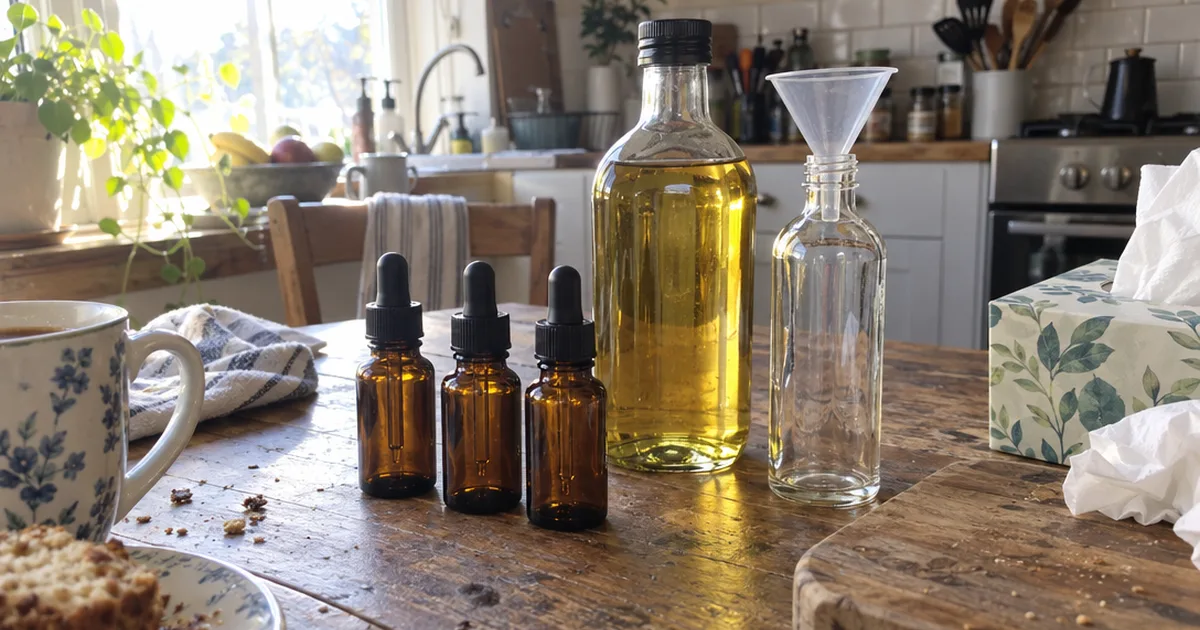
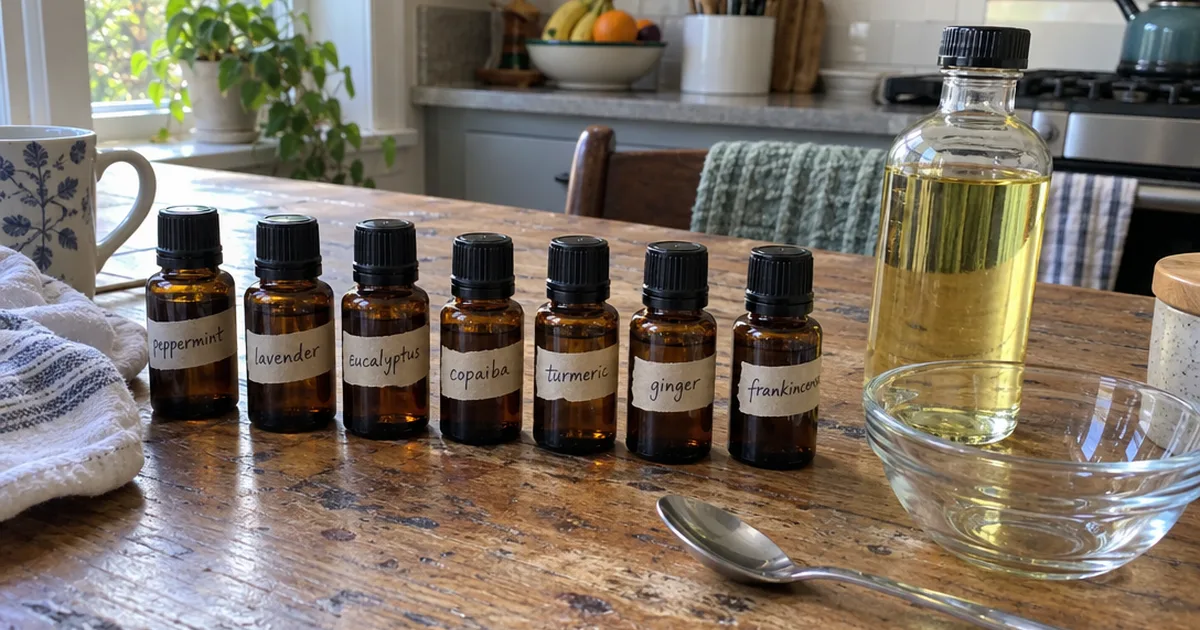
- Pour 4 teaspoons (20 ml) of sweet almond oil into a small dark glass bottle.
- Add 2 drops of lavender, 1 drop of clary sage and 1 drop of rose.
- Cap it and roll it between your hands for 30 seconds.
- Rub a little into your lower abdomen, over the uterus, in slow circles when the pain starts.
No almond oil? WebMD lists jojoba, avocado and grapeseed oil as mild-smelling carriers.
Some DIY recipes match 30 drops of essential oil with an equal amount of carrier, many times this strength.
Stick with 1 drop per teaspoon, and use the essential oil dilution math for other batch sizes or roller recipes.
Are Essential Oils Safe for PMS?
Essential oils for PMS need 3 precautions, according to WebMD: dilute them, patch-test them and ask your physician about interactions with medications, which few studies have checked.
Run a 48-Hour Patch Test
Mix the oil at twice your planned strength, put 1 or 2 drops on a bandage pad and stick it to your inner forearm.
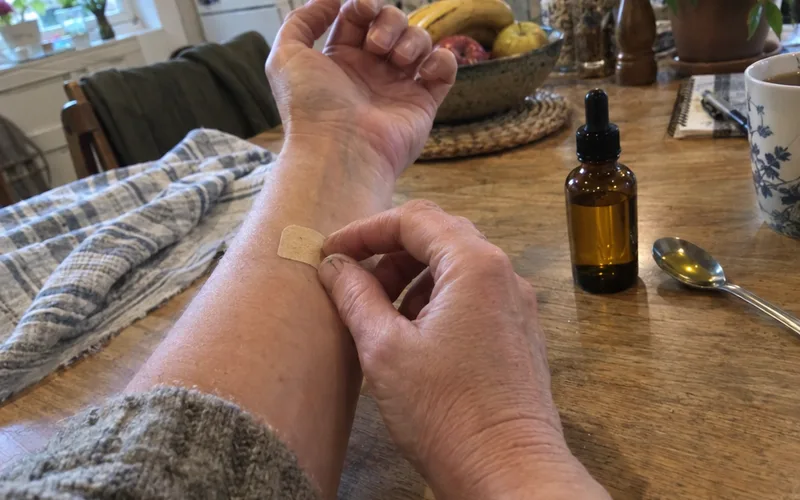
After 48 hours, skip that oil on your skin if the spot is itchy, swollen, red or blistered.
Buy Oils You Can Trust
Essential oils are mostly unregulated, so WebMD suggests 100% oils in dark glass bottles that give the plant’s Latin name.
Pregnant? Read up on aromatherapy in pregnancy and ask your midwife first.
The general essential oil safety rules for skin, air and baths apply to every oil on this list.
Do Essential Oils Really Work for PMS?
Essential oils help PMS in small trials: a 2020 review of 8 trials found aromatherapy lowered anxiety, depression and fatigue scores, not just total PMS scores.
But results varied a lot between trials, with a 94.5% heterogeneity score, far past the 50% the authors treat as a sign that trials disagree.
The trials also came from just 4 countries, Iran, Japan, India and Turkey, and the authors called for more.
So try one oil for 2 cycles and note your worst symptom each time.
When to See a Doctor Instead
See a doctor if your mood crashes for much of the second half of your cycle. Judith Wurtman, Ph.D., writing in Psychology Today, compares premenstrual dysphoric disorder (PMDD), a severe form of PMS, to clinical depression.
Painful periods can also come from fibroids, endometriosis or adenomyosis, WebMD notes, and no essential oil treats those.
A doctor can prescribe what the 2020 review lists for PMS: SSRI antidepressants, estradiol and progesterone hormone treatments, or nonsteroidal anti-inflammatory drugs.
Frequently Asked Questions
What is the best essential oil for PMS?
Rose oil is the best essential oil for PMS in this research, because it lowered total, psychological, physical and social symptom scores in a 2016 trial of 64 students. For cramps alone, lavender in a diluted massage fits better.
Can aromatherapy help with menstrual cramps?
Yes, aromatherapy massage can ease menstrual cramps: in a study of 80 women reported by WebMD, lavender oil massage eased pain more than a placebo oil. Dilute it to about 1 drop per teaspoon of carrier oil first.
What essential oils are good for the menstrual cycle?
Rose and neroli oils suit the PMS week before your period, since both lowered PMS scores in 2016 trials. Lavender and clary sage suit the cramps that follow, in a diluted belly massage.
When should you start using essential oils for PMS?
Start essential oils for PMS in the last week of your menstrual cycle, when PMS symptoms appear. For cramps, begin a day or two before your period, when WebMD says cramp pain usually starts.
What calms down PMS naturally?
Aromatherapy is one of the natural remedies that calm PMS: a 2020 review of 8 trials found it lowered anxiety, depression and fatigue scores. Judith Wurtman, Ph.D., also found in her MIT diet research that carbohydrates significantly relieved PMS symptoms.
Final Thoughts
Rose oil is the one essential oil here with trial evidence for both the mood and the physical side of PMS.
This week, patch-test a drop of rose, then breathe it for 5 minutes twice a day through your next PMS week.
If cramps hit harder, mix the 1% lavender, clary sage and rose blend and track your pain for 2 cycles.