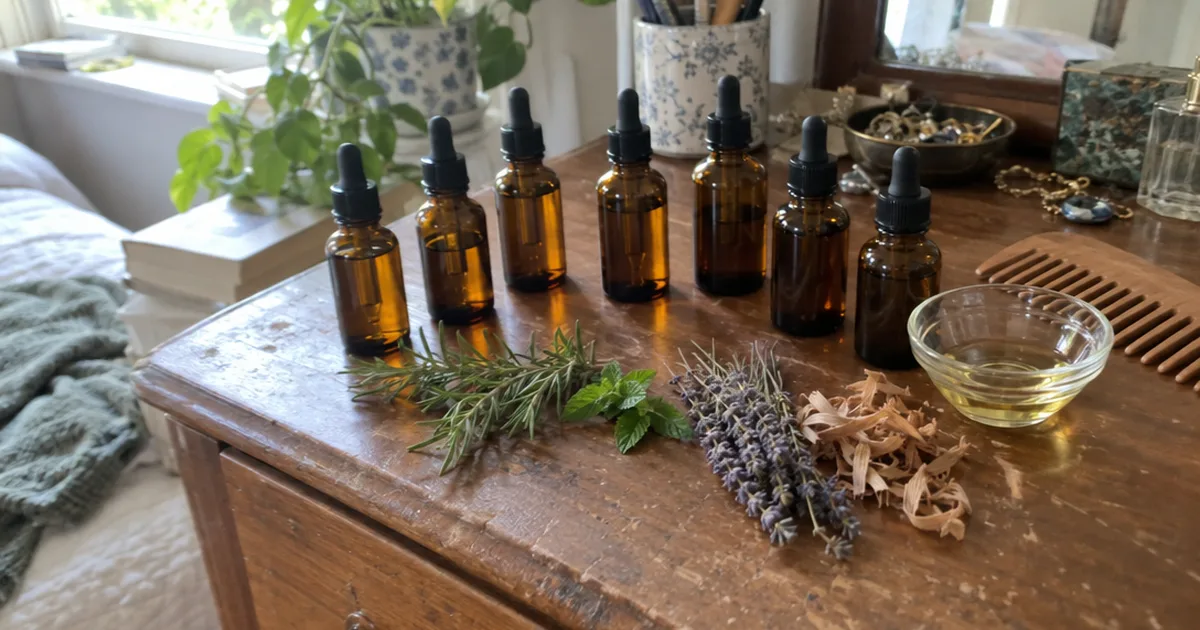

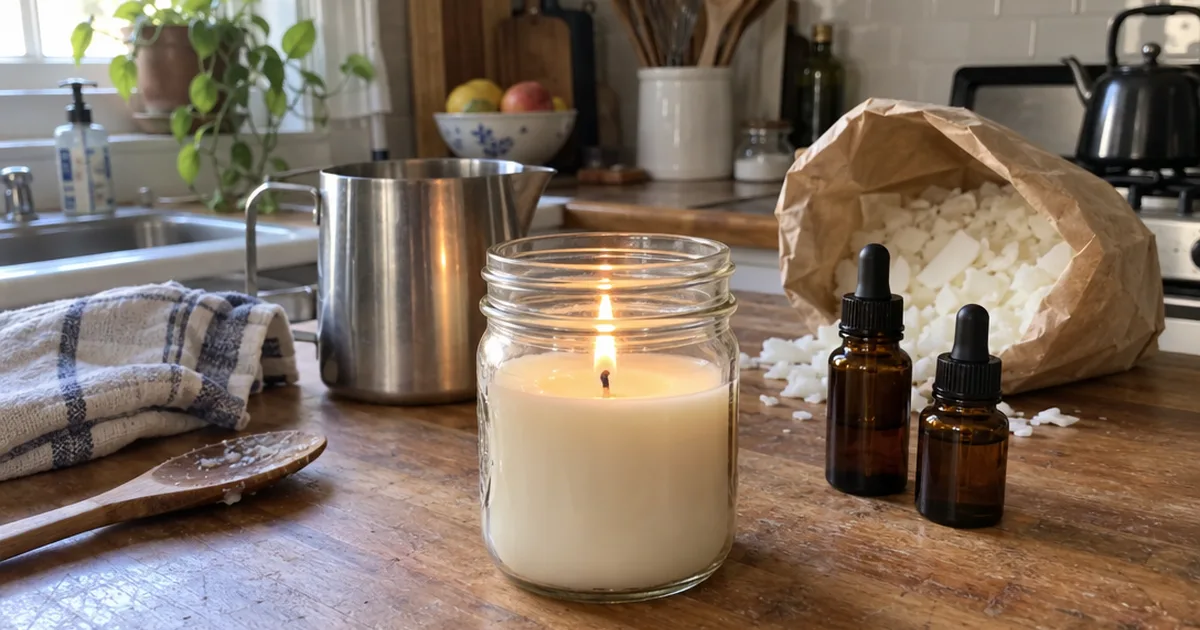
Lemon essential oil can give off enough vapor to ignite at just 127°F. Melted candle wax usually runs 140-176°F, according to essential oil supplier Landema.
Whether you can use essential oils in candles depends on the oil, as some give off flammable vapor in hot wax. Others can smell weak once lit, as heat ruins much of the aroma.
Get the oil, amount and heat right, and your candle will actually smell like something. A lavender test candle is the easiest start, and the steps show when to stir in the oil.
Can You Use Essential Oils in Candles?
Essential oils can scent a candle when the oil’s flash point is high enough to stay stable in hot wax.
For candle making, pick oils with a flash point above 65°C, about 149°F.
A flash point is the lowest temperature where an oil gives off enough vapor to catch fire from a flame.
Why does that matter? A lit candle keeps a pool of hot wax right under its flame for hours.
So the oil’s flash point, not its brand, decides whether it belongs in your candle.
That heat also makes candles the toughest way to scent a room with oils.
Why Essential Oil Candles Smell Weak When Lit
Essential oil candles often smell weak once lit because heat breaks down or burns off many plant oils before their aroma fills the room.
That lit scent is called hot throw, while cold throw is the smell before you light it.
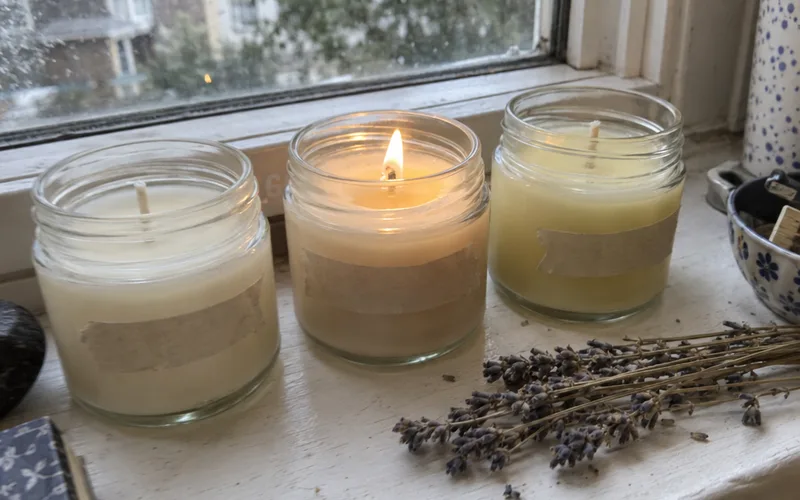
Some oils hold up, though. In candle supplier Makesy’s March 2024 test, French lavender at a 10% load in soy wax gave a very strong hot throw and cold throw.
In other words, make one test candle before you pour a whole batch.
Essential Oils vs. Fragrance Oils for Candles
Fragrance oils are the easier pick for a strong, steady candle scent, since they’re blended to handle heat.
Essential oils suit you if you want a plant-only candle and can live with a lighter throw.
If you’re unsure what’s in fragrance oils, check whether they’re toxic first, then compare essential oil vs. fragrance oil on cost and scent strength.
Which Essential Oils Work in Candles (and Which to Skip)
The essential oils that work best in candles have flash points above that 149°F cutoff, such as patchouli (241°F), cinnamon (190°F), ylang-ylang (172°F) and lavender (160°F).
Eucalyptus (111°F) and lemon (127°F) fall below that line.
Tea tree, at 136°F, sits in between, so test it before you trust it.
Makesy recommends avoiding all citrus oils and testing any oil with a flash point under 170°F.
That puts lavender in the test-first group, and it passed Makesy’s test. Once it burns cleanly, try more candle-friendly oils.
How Much Essential Oil to Add, and When
Use about 6% essential oil by weight, roughly 1 ounce per pound of wax, according to essential oil brand Edens Garden.
Stir the oil in once the melted wax cools to 131-140°F, always below the oil’s flash point.
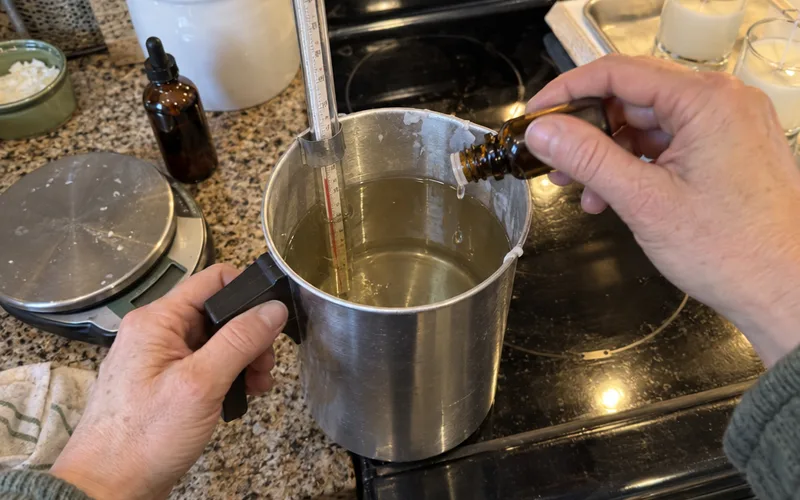
That cooler range keeps the wax below the flash point of candle-friendly oils like lavender (160°F) and ylang-ylang (172°F), so they stay stable while you stir.
Here’s how it works:
- Weigh your wax and multiply by 0.06 to get the oil weight.
- Melt the wax in a double boiler, then take it off the heat.
- Let it cool to 131-140°F on a thermometer.
- Stir the oil in gently, then pour.
Is It Safe to Burn Essential Oil Candles?
An essential oil candle is safest when its oil has a high flash point and you limit each burn to 3-4 hours.
Landema notes that children, pregnant women, people with asthma or epilepsy, and pets may be more sensitive to the oils.
So air out the room, and never leave a lit candle alone.
Check the oils that are risky for pets if you have a cat or dog, and read up on aromatherapy during pregnancy if you’re expecting.
When you handle the undiluted oil, follow the usual essential oil safety rules for your skin.
The Bottom Line
Essential oils work in candles when you choose them by flash point, not just by aroma.
This week, make one lavender test candle at 6% and burn it for an hour before you scale up.
Want scent without a flame? A DIY reed diffuser skips the heat problem entirely.
Frequently Asked Questions
Can I use regular essential oils for candle making?
Regular bottled essential oils can go in candles, as long as each oil’s flash point is higher than your melted wax.
Check the flash point on the seller’s Safety Data Sheet before you buy.