
A cream with only 3% tea tree oil beat an antibiotic cream at reducing acne. It mixed in propolis and aloe vera too, a 2022 review in Plants reports.
Tea tree ranks first for that, but not every popular oil belongs on a pimple: 4 can burn your face even diluted. The 3 other oils that earn a spot each suit a different blemish.
A fresh red spot calls for tea tree (#1). Marks from old pimples point to lavender (#2), and bergamot (#4) is for nights only.
The 4 Best Essential Oils for Pimples, Ranked
The 4 best essential oils for pimples run from tea tree to bergamot. They’re ranked by how directly research ties each one to acne.
Essential oils aren’t part of official acne treatment recommendations, the dermatology skincare lab Ducray notes, so use them as an add-on, not a cure.
1. Tea Tree Oil
Tea tree oil is the best essential oil for pimples, because it kills acne bacteria and has the strongest acne research of any oil here.
- Best for: Red, active pimples. Skip it if tea tree has stung your skin before.
- Payoff: A 3% tea tree cream with propolis and aloe cut acne more than the antibiotic erythromycin, the 2022 review reports.
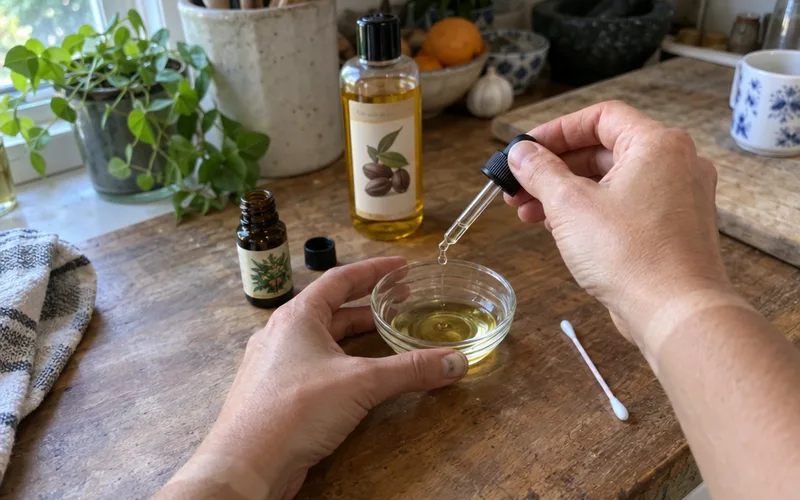
- First step: Mix 1 drop of tea tree with 20 drops of jojoba or another carrier for tea tree.
In lab tests, tea tree also killed 32 strains of acne bacteria from real pimples. Its main compound, terpinen-4-ol, does most of that work against Cutibacterium acnes.
Strength matters, though. The review found tea tree under 5% is safer for acne, and that 1-in-20 mix lands just under it.
Tea tree shows up in scalp care too, and our guide to tea tree oil for hair covers its use on dandruff and an oily scalp.
2. Lavender Oil
Lavender oil is the best essential oil for the marks pimples leave, more than for the pimple itself.
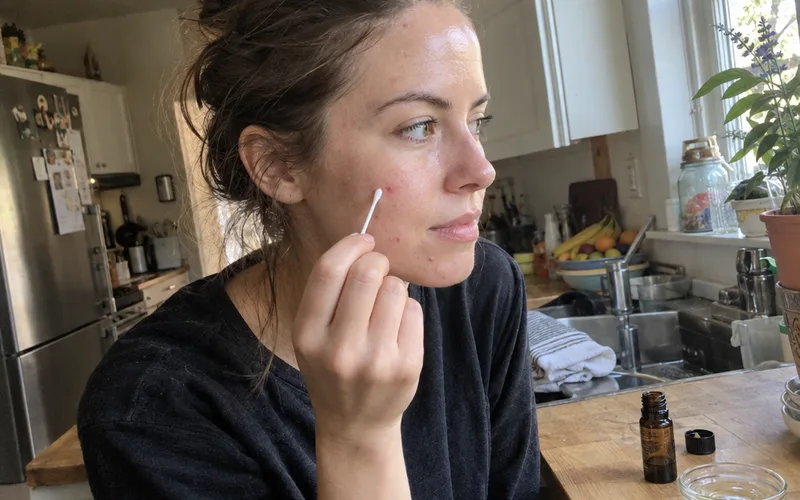
- Best for: Blemishes that have just started to heal. Skip it for a fresh breakout; tea tree fits that better.
- Payoff: More collagen and tissue regrowth in a 2016 study, Healthline’s medically reviewed guide reports.
- First step: Dab diluted lavender on a spot the day its redness starts to fade.
Timing is the trick: lavender worked best right after the blemish began to heal.
Healthline says lavender still needs more acne research, so treat it as a healing oil with other skin uses.
3. Rosemary Oil
Rosemary oil suits swollen, sore pimples, because it calms redness and kills acne bacteria in lab tests.
- Best for: Puffy, deep bumps. Skip it if you want proof from people, since its acne results come from the lab.
- Payoff: Can decrease redness and puffiness, which Healthline says helps cystic acne.
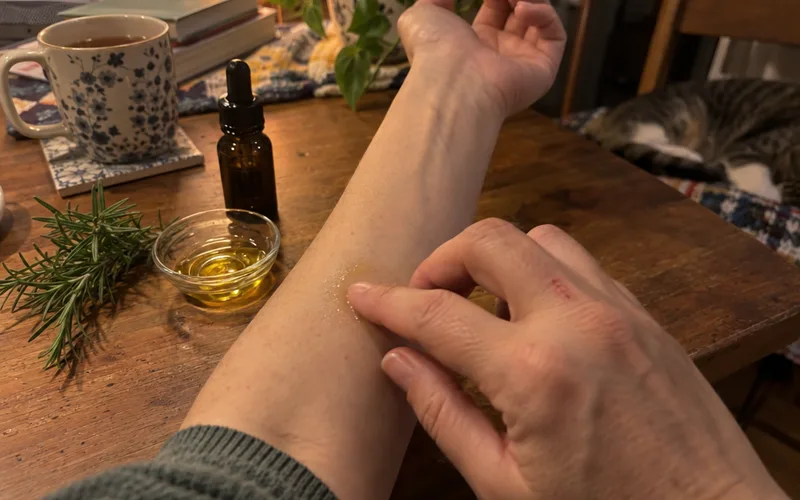
- First step: Patch-test 1 drop in 10 drops of carrier on your inner arm tonight.
The 2022 review backs the lab side: a study it cites found rosemary, tea tree and cinnamon oils all acted against the 2 main acne bacteria.
Give that patch test the full 24 hours the Healthline routine calls for. After that, dab the mix only on the swollen spot with a clean cotton swab.
4. Bergamot Oil
Bergamot oil is a night-only spot treatment, because Healthline warns it can make your skin sun-sensitive.
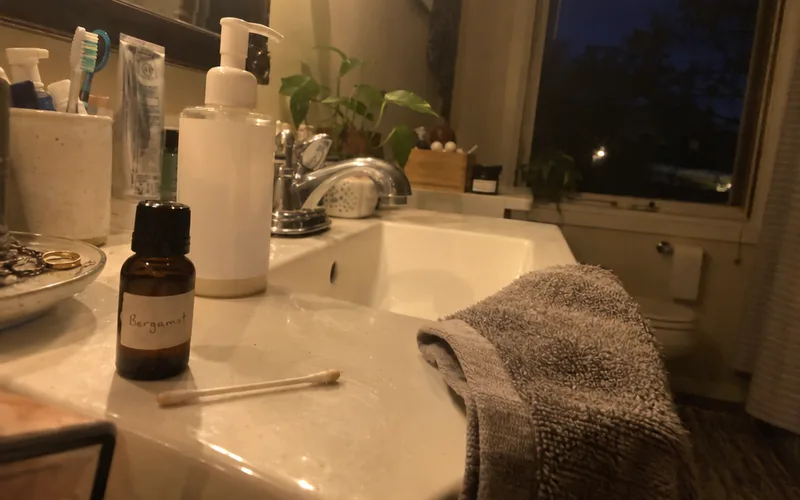
- Best for: Occasional pimples on skin that isn’t sensitive. Skip it if you can’t keep it out of the sun.
- Payoff: Suggested to reduce swelling and shrink pimples, per Healthline, with no study figure yet.
- First step: Apply it after your evening face wash, never in the morning.
Ducray adds that citrus oils can leave brown spots on skin that sees sunlight afterward, which is why its benefits for skin come with sun rules.
No study has put a figure on its pimple results yet, which is why it ranks last of the 4.
Oils to Keep Off a Pimple
Oregano, thyme, cinnamon bark and clove oils should stay off your face, even though oregano and thyme top some lab tests against acne bacteria.
Ducray calls these oils “dermocaustic”, harsh enough to burn skin even when diluted.
Key Takeaway: A strong lab result doesn’t make an oil safe for your face, so check where oregano oil fits on skin first.
Peppermint is another oil people put on their face, so read how to use peppermint oil on your face before you try it.
How to Use Essential Oils on a Pimple
To use an essential oil on a pimple, patch-test it, dilute it in a carrier oil, then dab it only on the spot with a clean cotton swab.
Here’s the routine Healthline describes:
- Patch-test a little on your inner arm and wait 24 hours.
- Mix 1 drop of essential oil with 10 drops of jojoba or almond oil.
- Wash your hands, then dab it on the blemish, never a popped one, and keep it away from your eyes.
The full patch-test steps and these dilution ratios go further, and the best oils for skin cover care beyond breakouts.
Once the spots fade and you want a brighter look, see these 5 oils for glowing skin.
When to See a Dermatologist
See a dermatologist if your pimples are painful, keep coming back as an adult, or haven’t improved with home remedies, Healthline advises.
Pregnant or breastfeeding? Ducray says most essential oils are off limits then, so ask your doctor first.
Frequently Asked Questions
Can you put tea tree oil directly on a pimple?
Tea tree oil can go on one pimple undiluted, Ducray says, but only as a single drop on a cotton bud, away from your eyes. A mix under 5% is the safer choice, the 2022 review finds.
Are essential oils safe for teenagers with acne?
Essential oils for teenage acne need diluting and a patch test first, and Healthline says children under 12 should use them only on a doctor’s advice.
What is the best essential oil for pimples and dark spots?
Lavender oil is the best-supported pick for marks pimples leave, because a 2016 study found it boosted collagen right after a blemish starts to heal.
None of our sources shows an oil that fades older dark spots.
Final Thoughts
Diluted tea tree oil, dabbed only on the spot, is the oil to try first.
Patch-test it on your inner arm this week.