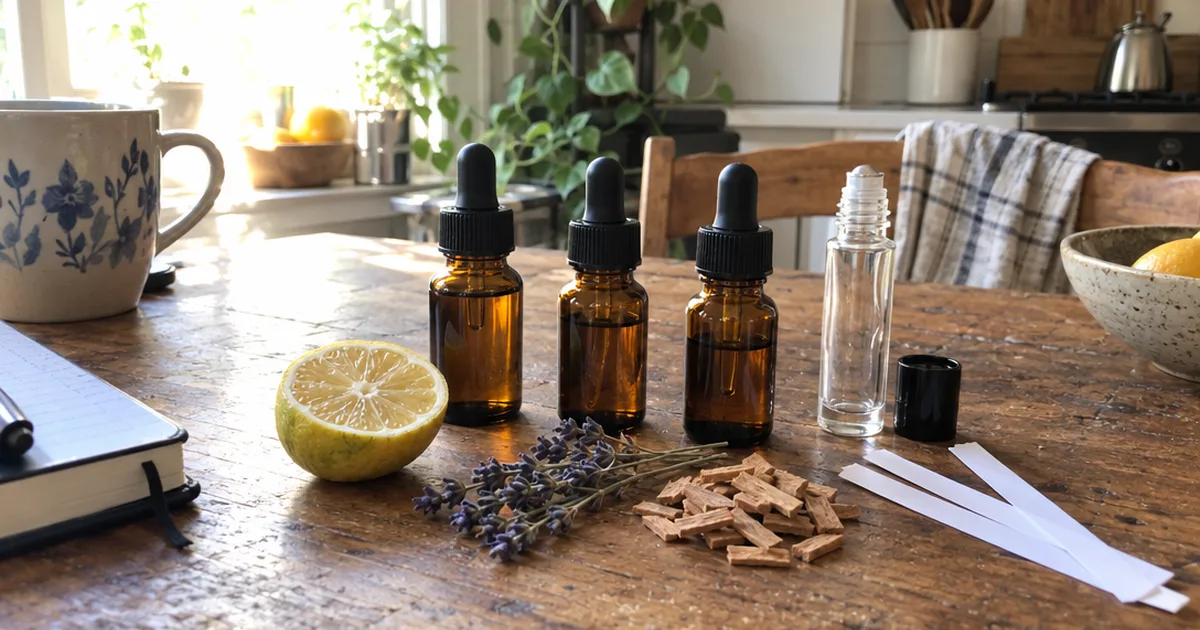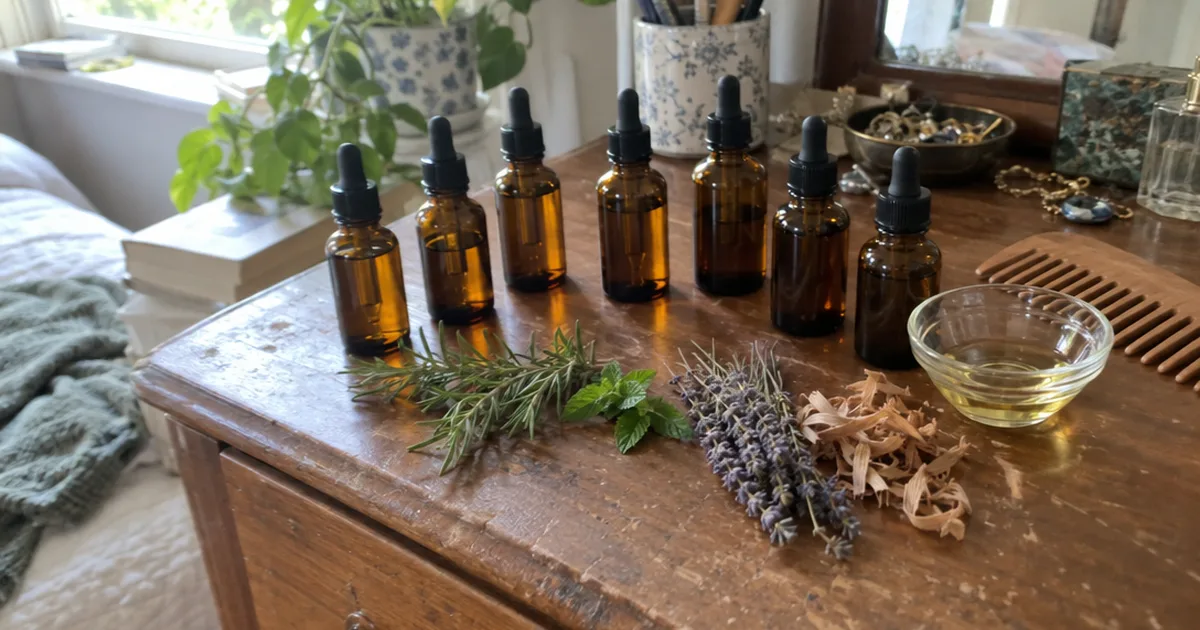

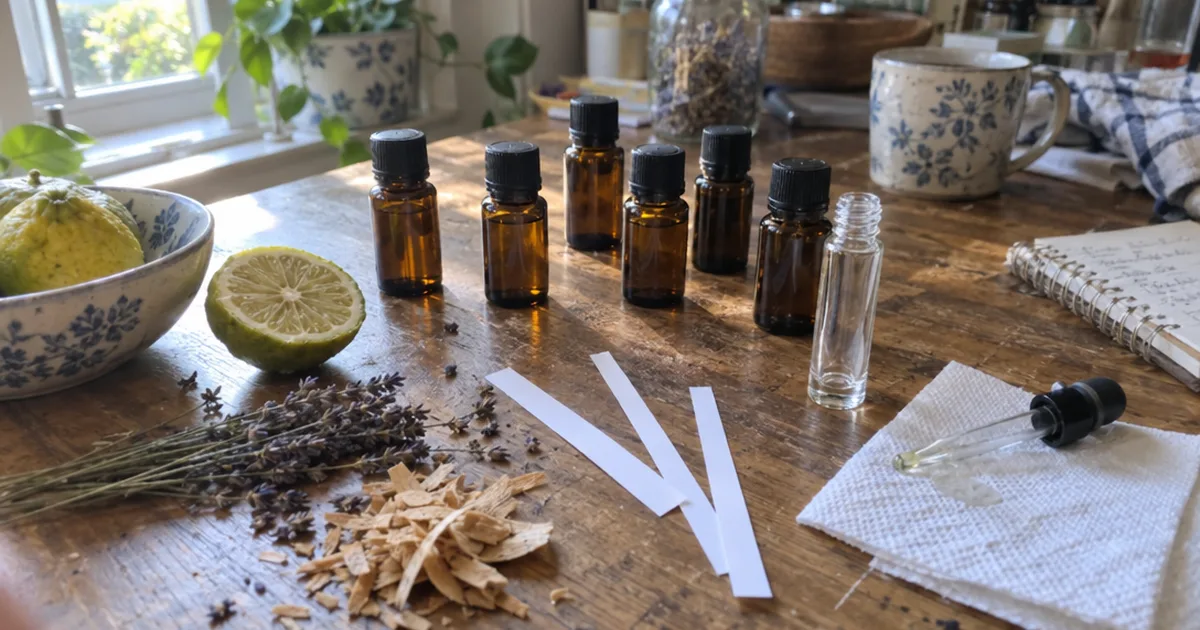
A 10 ml roll-on needs only 6 to 10 drops of essential oil. That’s the math for a 3-5% blend on the perfume page from Plant Therapy, so every oil in the bottle has to earn its drop.
With so few drops to spend, each oil has to play a clear part as a top, middle or base note. A popular split gives about half the drops to the middle notes, with the rest shared between a bright top and a lasting base.
Here are the 10 best essential oils for perfume making, ranked by how many of 6 perfume guides name each, with its note, partners and safety catch. One oil from each layer makes a simple first perfume, and the guide pairs them into trios that smell good together.
- First blend ever: #1, #3 and #5 give you one top, one middle and one base note.
- Deep, earthy scents come from building around #4 or #9.
- For a floral heart, pair #7 with a drop of #10.
The 10 Best Essential Oils for Perfume Making at a Glance
Tap a button to read the full scent profile for any oil on the list.
| # | Oil | Note | Guides naming it | Profile |
|---|---|---|---|---|
| 1 | Bergamot | Top | 6 of 6 | Read |
| 2 | Clary Sage | Middle | 6 of 6 | Read |
| 3 | Lavender | Middle | 6 of 6 | Read |
| 4 | Patchouli | Base | 5 of 6 | Read |
| 5 | Sandalwood | Base | 5 of 6 | Read |
| 6 | Cedarwood | Base | 4 of 6 | Read |
| 7 | Geranium | Middle | 4 of 6 | Read |
| 8 | Sweet Orange | Top | 4 of 6 | Read |
| 9 | Vetiver | Base | 4 of 6 | Read |
| 10 | Ylang Ylang | Middle | 4 of 6 | Read |
The 10 Best Essential Oils for Perfume Making, Reviewed
Each pick is judged on how many guides name it, the note it fills and how easily it blends, not on lab tests. Reviews follow the table’s order.
1. Bergamot [Best Top Note for Almost Any Blend]
Bergamot is the best top note for a first perfume, because its bright citrus suits florals, herbs and woods alike. It smells drier and more grown-up than sweet orange (#8).
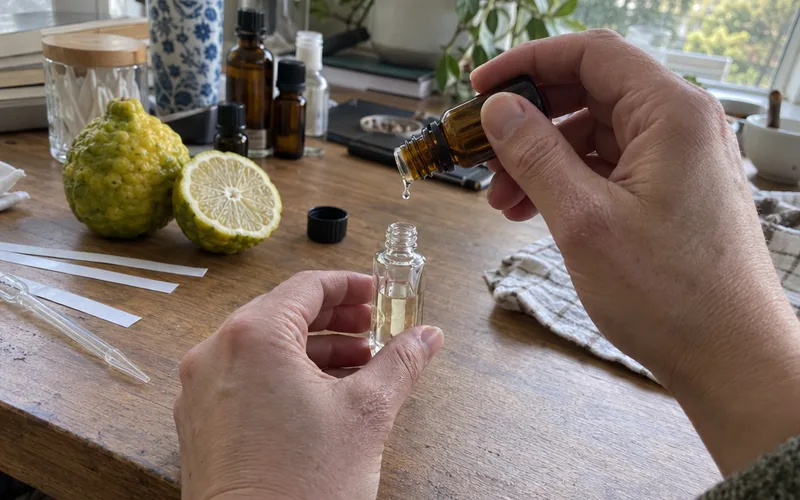
The oil comes from the peel of the bergamot orange, and regular cold-pressed bergamot can react with sunlight on skin. Buy the safe kind, like the “Organic Non-Phototoxic Bergamot Oil” in the product chart from Lively Living.
| Bergamot at a Glance | |
|---|---|
| 🎵 Note | Top |
| 👃 Scent | Fresh citrus with a soft floral edge |
| 🤝 Pairs With | Lavender, geranium, sandalwood |
| 🎯 Best For | Any first perfume |
| ⚠️ Watch Out | Buy FCF or bergapten-free for sunny days |
2. Clary Sage [Best Herbal Heart Note]
Clary sage is the best middle note for a fresh, herbal perfume, with a warm, musky edge that keeps citrus from smelling thin. It’s earthier than lavender (#3), so it suits unisex and woody blends.
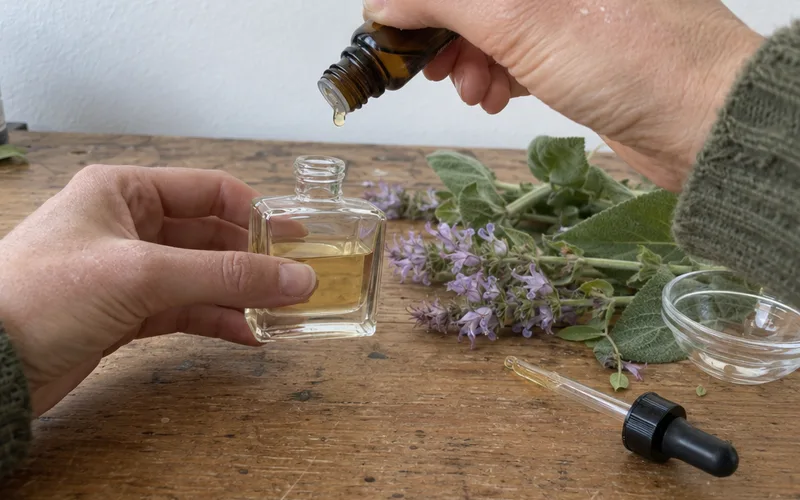
Use it as a supporting player, not the star: 1 drop can change the whole heart.
| Clary Sage at a Glance | |
|---|---|
| 🎵 Note | Middle |
| 👃 Scent | Herbal, warm and lightly musky |
| 🤝 Pairs With | Bergamot, cedarwood, sandalwood |
| 🎯 Best For | Unisex and herbal blends |
| ⚠️ Watch Out | A little goes a long way |
3. Lavender [Best Easy-Going Middle Note]
Lavender is the most forgiving middle note on this list, because its clean floral-herbal scent blends with nearly every top and base note. It’s softer than clary sage (#2) and less sweet than ylang ylang (#10).
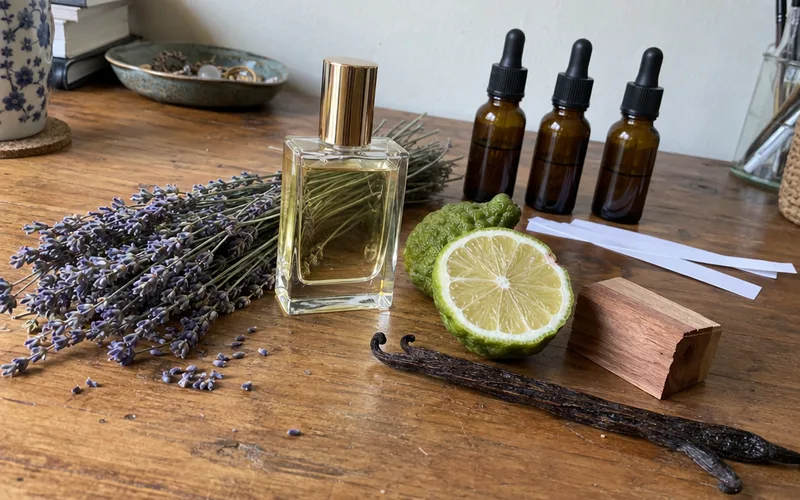
Much of that soft side comes from linalool, its main scent molecule, which makes lavender the safest second oil for any blend.
| Lavender at a Glance | |
|---|---|
| 🎵 Note | Middle |
| 👃 Scent | Clean, floral and herbal |
| 🤝 Pairs With | Bergamot, cedarwood, vanilla |
| 🎯 Best For | Beginners and calm, clean blends |
| ⚠️ Watch Out | Can smell flat as the only middle note |
4. Patchouli [Best Long-Lasting Earthy Base]
Patchouli is the best base note for a deep, earthy perfume that lasts, though its scent divides people. It’s darker and sweeter than vetiver (#9).
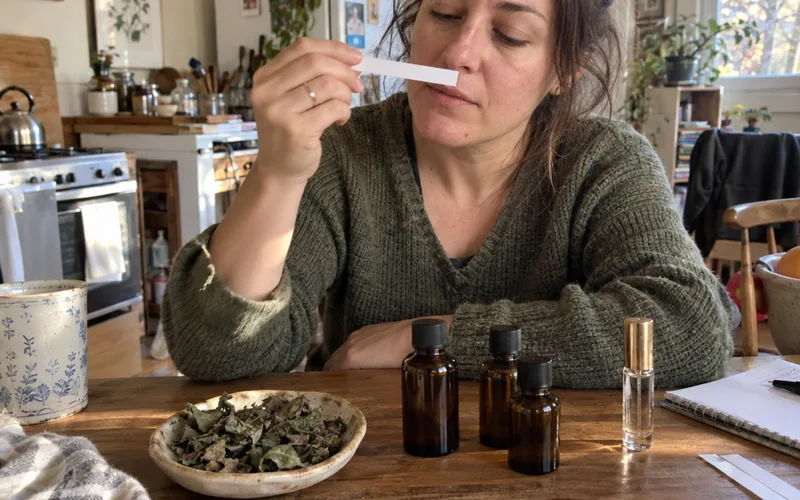
Add it 1 drop at a time: too much takes over, while a little gives florals and citrus staying power.
| Patchouli at a Glance | |
|---|---|
| 🎵 Note | Base |
| 👃 Scent | Dark, earthy and woody-sweet |
| 🤝 Pairs With | Bergamot, rose, sweet orange |
| 🎯 Best For | Bold, earthy perfumes |
| ⚠️ Watch Out | Easy to overdose; smell it before you buy |
5. Sandalwood [Best Soft, Creamy Base]
Sandalwood is the best base note for a soft perfume, because its creamy wood anchors lighter oils without shouting over them. It’s smoother and sweeter than cedarwood (#6), which makes it the easiest base for florals.
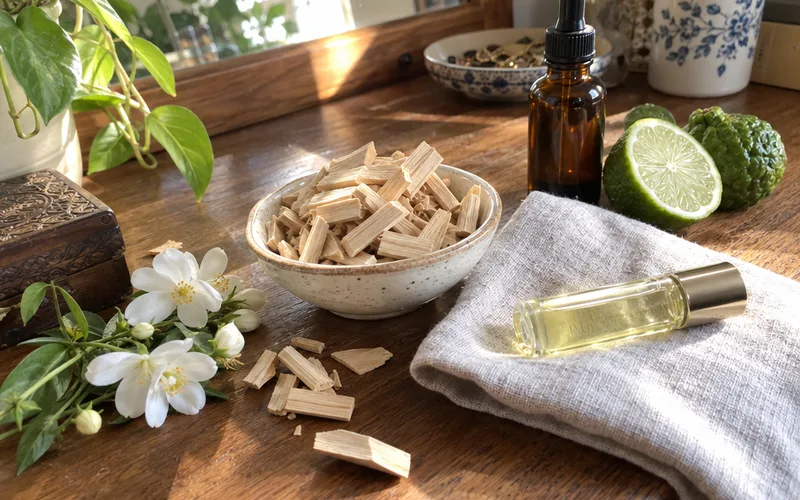
Torn between the two woods? The sandalwood and cedarwood comparison lays out the difference.
| Sandalwood at a Glance | |
|---|---|
| 🎵 Note | Base |
| 👃 Scent | Creamy, soft and warm wood |
| 🤝 Pairs With | Bergamot, ylang ylang, jasmine |
| 🎯 Best For | Soft floral and skin-scent perfumes |
| ⚠️ Watch Out | Check the Latin name on the label |
6. Cedarwood [Best Dry, Woody Base]
Cedarwood is the best base note for fresh, woody and masculine blends, with a dry pencil-shaving scent. It’s crisper than sandalwood (#5), so it suits citrus and herbs.
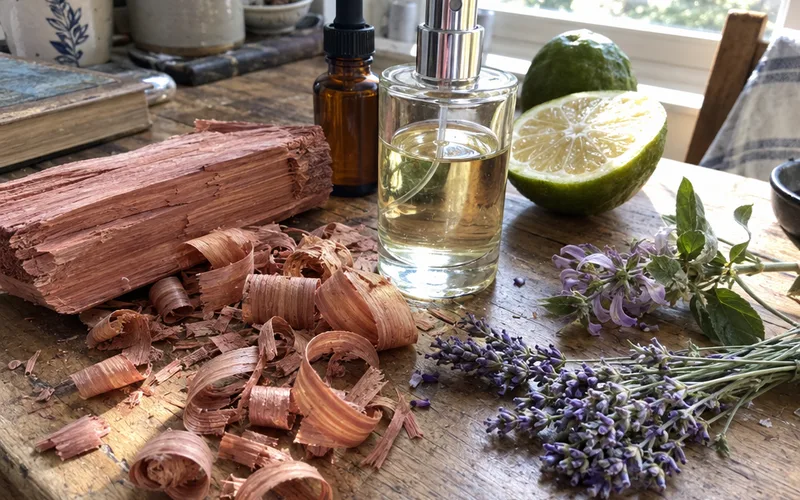
Atlas and Virginia are the 2 common types, and batches vary, so one bottle may act more like a middle note.
| Cedarwood at a Glance | |
|---|---|
| 🎵 Note | Base |
| 👃 Scent | Dry, warm wood |
| 🤝 Pairs With | Bergamot, lavender, clary sage |
| 🎯 Best For | Fresh woody and cologne-style blends |
| ⚠️ Watch Out | Batches vary, so smell before you scale up |
7. Geranium [Best Rosy Floral Heart]
Geranium is the best floral middle note when you want a rose-like scent with a green edge. It’s lighter and greener than ylang ylang (#10).
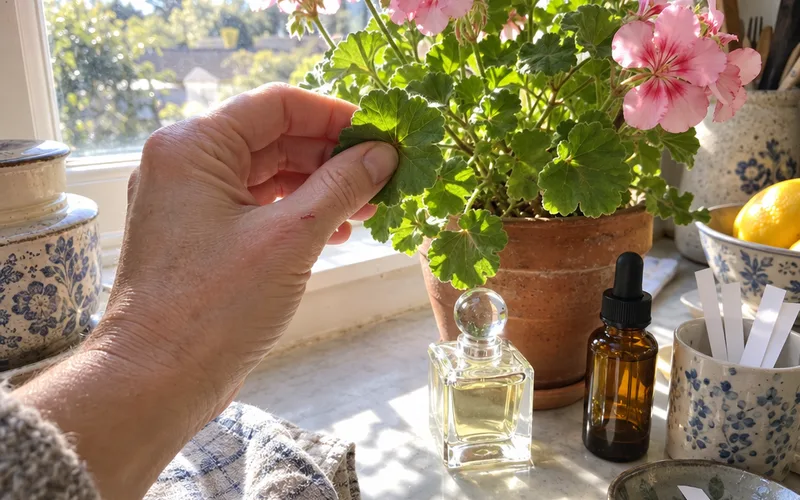
Look for geranium Bourbon or rose geranium on the label, since both lean rosy enough to stand in for rose.
| Geranium at a Glance | |
|---|---|
| 🎵 Note | Middle |
| 👃 Scent | Rosy, green and fresh |
| 🤝 Pairs With | Bergamot, sandalwood, patchouli |
| 🎯 Best For | Rose-style floral perfumes |
| ⚠️ Watch Out | Can smell sharp on its own; let it rest |
8. Sweet Orange [Best Sweet Citrus Opener]
Sweet orange is the best top note for a cheerful, sweet perfume, and it’s juicier and rounder than bergamot (#1). It fades fast, so pair it with a strong base.
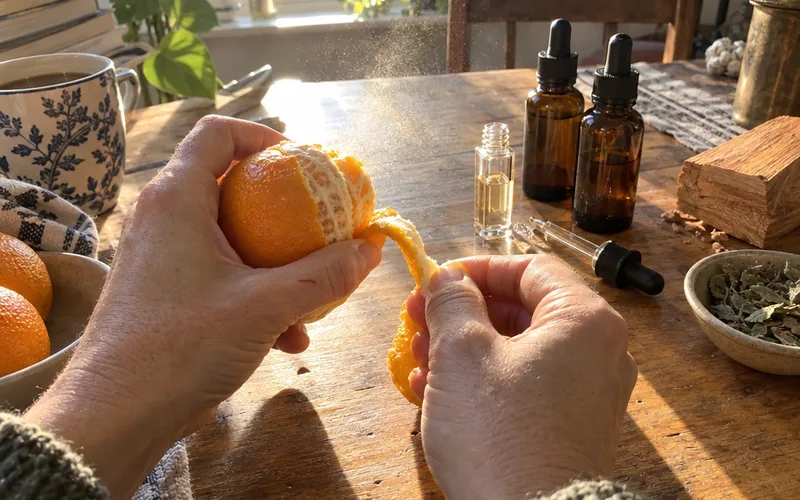
Lemon tied with sweet orange in our count and is the closest swap for a sharper opening.
| Sweet Orange at a Glance | |
|---|---|
| 🎵 Note | Top |
| 👃 Scent | Sweet, juicy citrus |
| 🤝 Pairs With | Patchouli, cedarwood, ylang ylang |
| 🎯 Best For | Sweet, sunny blends |
| ⚠️ Watch Out | Fades fast without a base note |
9. Vetiver [Best Smoky, Grounding Base]
Vetiver is the best base note for a smoky, grounding perfume, and it smells stronger than sandalwood (#5). Next to patchouli (#4), it’s drier and rootier.
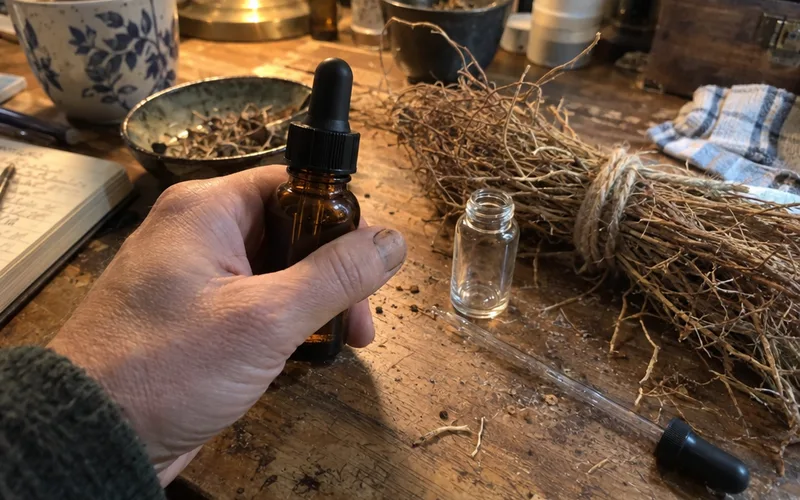
It’s thick, so warm the bottle in your hand before counting drops. Start with 1 drop, because vetiver can swallow lighter notes.
| Vetiver at a Glance | |
|---|---|
| 🎵 Note | Base |
| 👃 Scent | Smoky, rooty and earthy |
| 🤝 Pairs With | Bergamot, sweet orange, sandalwood |
| 🎯 Best For | Smoky and grounding blends |
| ⚠️ Watch Out | Very strong; start with 1 drop |
10. Ylang Ylang [Best Rich, Sweet Floral]
Ylang ylang is the best middle note for a rich, sweet floral perfume, and it’s heavier than geranium (#7). Some guides even treat it as a base note, since it lingers.
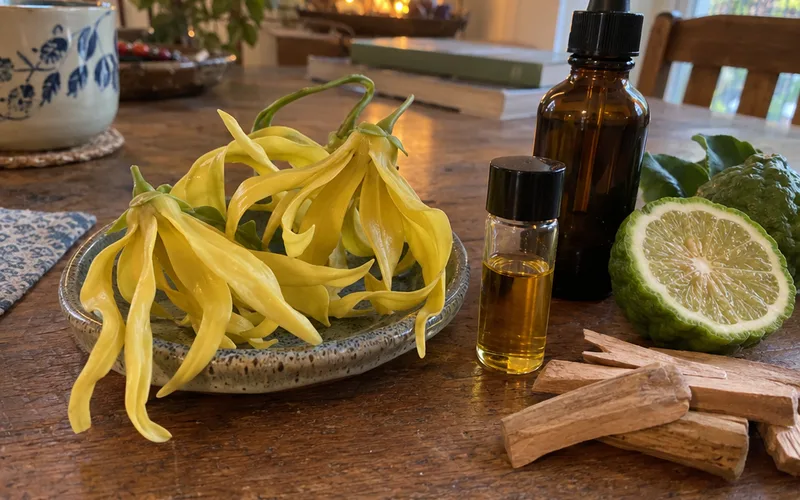
One drop is often plenty, and a citrus top keeps it from smelling heavy.
| Ylang Ylang at a Glance | |
|---|---|
| 🎵 Note | Middle (lingers like a base) |
| 👃 Scent | Rich, sweet and tropical floral |
| 🤝 Pairs With | Bergamot, sandalwood, sweet orange |
| 🎯 Best For | Sensual, evening florals |
| ⚠️ Watch Out | Easily overpowers; use 1 drop first |
How We Picked These Essential Oils
We ranked each oil by how many of 6 perfume-making guides name it, then kept the top 10:
- A commercial perfumery blog from HBNO
- A beginner recipe guide from Lively Living
- A botanical blending guide from Mountain Rose Herbs
- A DIY perfume list from Island Deodorant
- The perfume page from Plant Therapy
- A blending guide from Mockingbird Apothecary
Oils with the same count are listed alphabetically. Lemon also scored 4, but sweet orange got the spot because bergamot already gives a sharp citrus opening.
Frankincense (3 guides) and jasmine absolute (2) just missed the cut. Read the jasmine oil profile before you buy it, since it’s very strong.
Essential Oils That Smell Good Together
Essential oils smell good together when you pair one top, one middle and one base note from families that suit each other, like citrus with woods. These trios use only oils from this list:
- Fresh and clean: bergamot, lavender and cedarwood.
- Soft floral: bergamot, geranium and sandalwood.
- Sweet and rich: sweet orange, ylang ylang and sandalwood.
- Earthy: bergamot, clary sage and patchouli.
- Smoky: sweet orange, lavender and vetiver.
The 7 scent families show which ones clash, and the essential oil perfume recipes turn these trios into exact drops.
For pairings beyond perfume, browse the blend ideas by oil.
What Ratio of Top, Middle and Base Notes to Use
A balanced perfume blend uses about 30% top notes, 50% middle notes and 20% base notes, the popular 30/50/20 split.
That split sits inside the range on the perfume page from Plant Therapy, which puts middle notes at 50-60%, top notes at 20-30% and base notes at 10-25%.
In a 10-drop roll-on, it works out to 3 drops of a top note, 5 of a middle and 2 of a base. Then trust your nose: a woody blend often wants more base, while a cologne wants more top.
The guide to essential oil perfume notes sorts every oil by role.
For a fresh men’s scent, the essential oil cologne guide leans harder on citrus.
How Many Drops of Essential Oil Go in Homemade Perfume?
A 10 ml roll-on perfume takes about 6 to 10 drops of essential oil, which is a 3-5% blend, according to Plant Therapy. The brand recommends keeping leave-on perfume at or below 5% and checking each oil’s own maximum.
Some DIY formulas use a far higher concentration than that. Start at 6 drops instead, and only add more if the scent is too faint once it has rested.
Fill the rest with a carrier; jojoba oil for perfume is the easy default. The carrier oil guide compares others, and the perfumer’s alcohol method makes a spray.
How Long to Let Homemade Perfume Rest
Homemade essential oil perfume should rest sealed for 48 to 72 hours before you judge it, Plant Therapy advises. That rest lets the oils blend, so a sharp first sniff often softens.
Keep it in dark glass away from heat. Then smell it on your wrist, adjust 1 drop at a time and rest it again.
Is Essential Oil Perfume Safe on Skin?
Essential oil perfume is safe on skin for most people when it’s patch-tested and diluted to 5% or less, the ceiling Plant Therapy recommends. Never apply the oils neat.
The International Fragrance Association (IFRA) bans some fragrance ingredients and limits how much of others can be used. It also warns that essential oils may contain constituents subject to those limits, so “natural” doesn’t mean limit-free.
Bergamot needs the most care: use an FCF or non-phototoxic bottle for any perfume you’ll wear in the sun. The essential oil safety guide has the full rules, and this look at oils as perfume on skin covers patch tests.
Essential Oils vs Fragrance Oils for Perfume
Essential oils are better for a natural perfume, while fragrance oils give you scents plants can’t, like a beach or a bakery. Neither is automatically safer.
The IFRA Standards are compulsory for IFRA members, who make around 80 per cent of the world’s fragrance. So a skin-safe fragrance oil from an IFRA-following supplier works in perfume, but a candle-only oil doesn’t.
The essential oil vs fragrance oil breakdown covers the rest.
Quality matters for essential oils too. Good sellers post a GC/MS lab report, a test that lists what’s in each batch.
The Bottom Line
Bergamot, clary sage and lavender are the 3 oils every guide agrees on, so start there.
This week, buy one top, one middle and one base note from this list, then mix a 6-drop test in a 10 ml roller. When you want a spritz instead, the essential oil body spray recipe uses the same oils.
Frequently Asked Questions
What oil makes your perfume last longer?
Sandalwood, patchouli and vetiver make an essential oil perfume last longer, because base notes evaporate slowest. Give the base at least 2 drops of every blend.
What do you mix with fragrance oil to make perfume?
You mix fragrance oil with a carrier like jojoba for a roll-on, or with perfumer’s alcohol for a spray. Use only a fragrance oil labeled skin-safe.
How do I smell like my perfume all day?
You smell like your perfume all day by giving it a strong base note, such as sandalwood, and applying it to warm pulse points. Reapply at midday instead of making it stronger.
What is the best carrier oil for essential oil perfume?
Jojoba oil is the best all-round carrier for an essential oil perfume, since it barely smells and keeps well. Fractionated coconut oil is the lighter, odorless alternative.
Which essential oils are top, middle and base notes?
Citrus oils like bergamot and sweet orange are top notes, lavender, geranium, clary sage and ylang ylang are middle notes, and sandalwood, cedarwood, patchouli and vetiver are base notes.
Is bergamot oil safe in perfume if you'll be in the sun?
Bergamot oil is safe in a sun-exposed perfume only when it’s labeled bergapten-free, FCF or non-phototoxic. Regular cold-pressed bergamot can react with sunlight on skin.
Where should you buy essential oils for perfume making?
Buy essential oils for perfume making from a seller that prints each oil’s Latin name and posts a GC/MS batch report. For bergamot, check for FCF on the label.