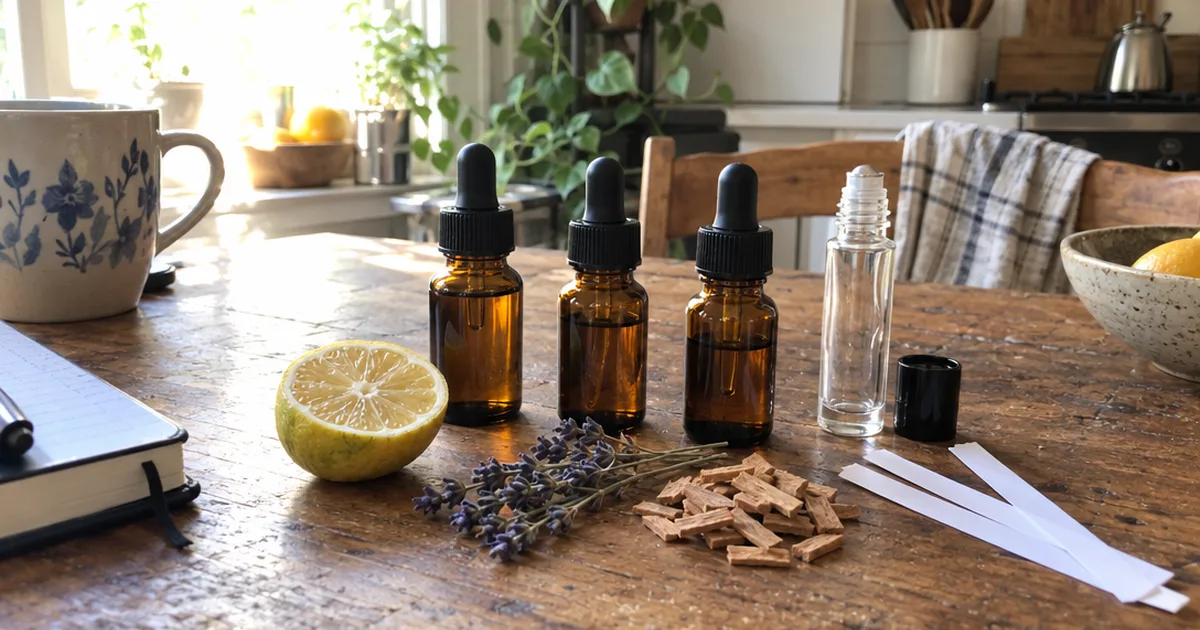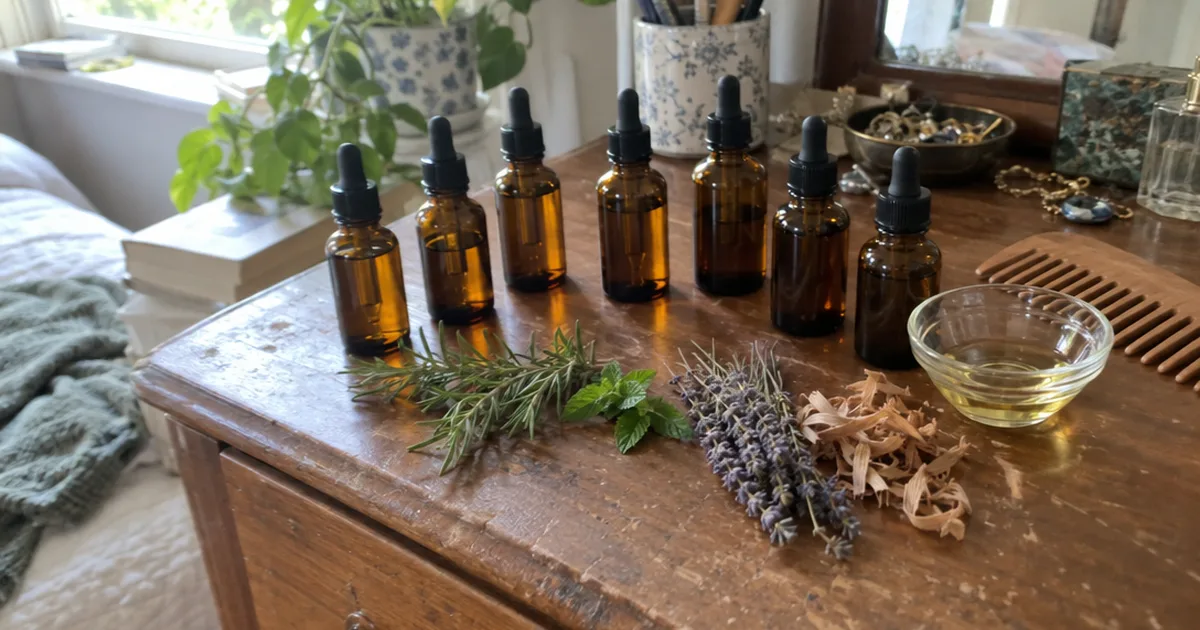

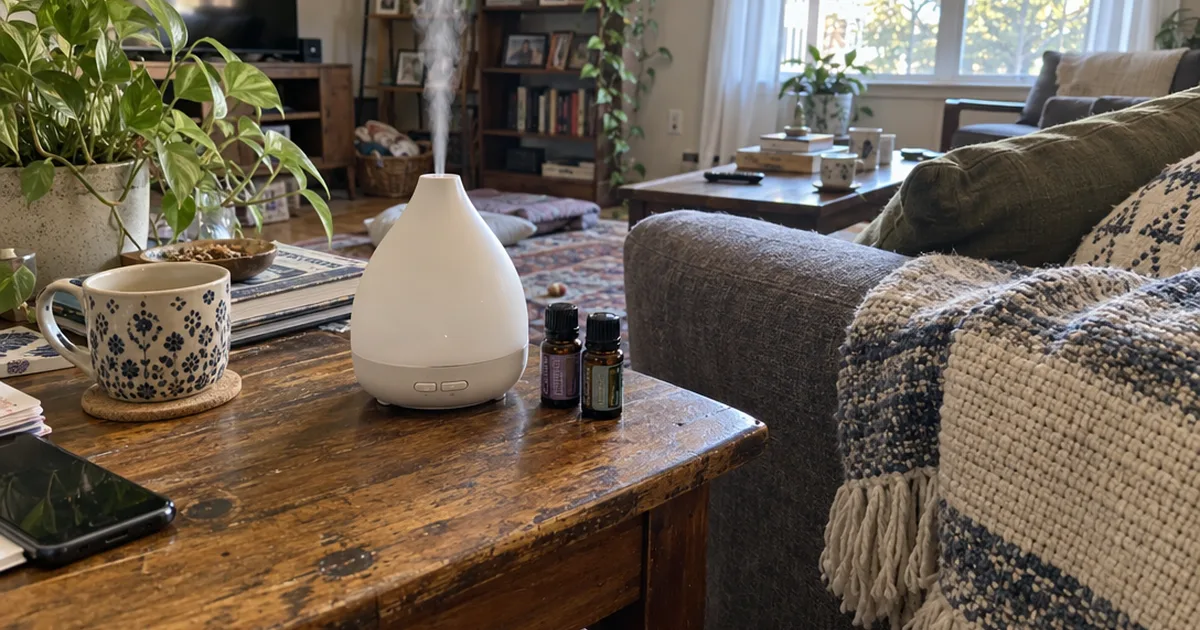
10 drops of essential oil and 1 cup of baking soda can freshen a whole rug. The baking soda pulls stale smells out of the fibers, and the oil leaves a clean scent behind.
Most home-scent guides stop at the diffuser, so the closet, bathroom and bin smell the same. It can’t reach a far bathroom, and scent sprayed over a stale smell just adds another.
These 7 steps show how to use essential oils to make your house smell good, from rug to reed jar, each with drop counts. Safety limits cover kids, pets and anyone with asthma.
How to Use Essential Oils to Make Your House Smell Good, Step by Step
Using essential oils to make your house smell good starts with clearing odors at their source and ends with a few drops on fabrics, vents and the vacuum.
Each step below gives the drops and the one mistake to avoid.
Step 1: Remove the Odor Before You Add Scent
Scent sitting on top of a bad smell just makes a new bad smell.
So start with the source: the carpet, the trash can and anything damp.
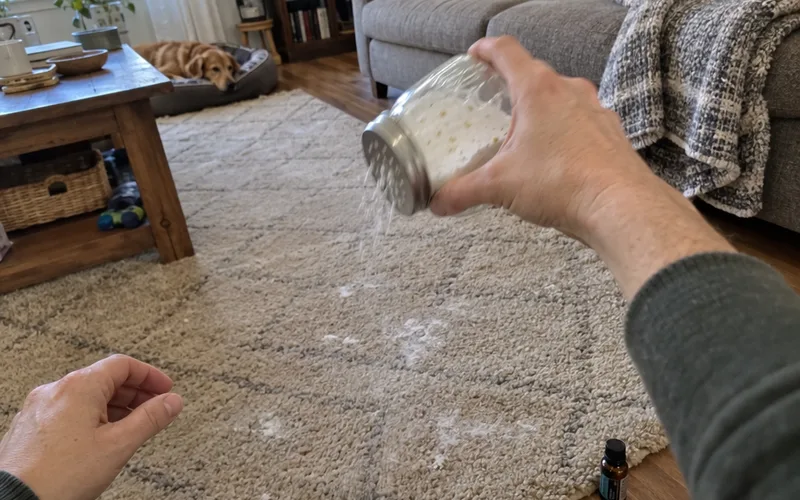
For carpets and rugs, mix about 10 drops of essential oil into 1 cup of baking soda in a jar or bag and shake it well.
Sprinkle it over a dry carpet, wait 20 to 30 minutes, then vacuum it all up.
Lemon and lavender both work well here.
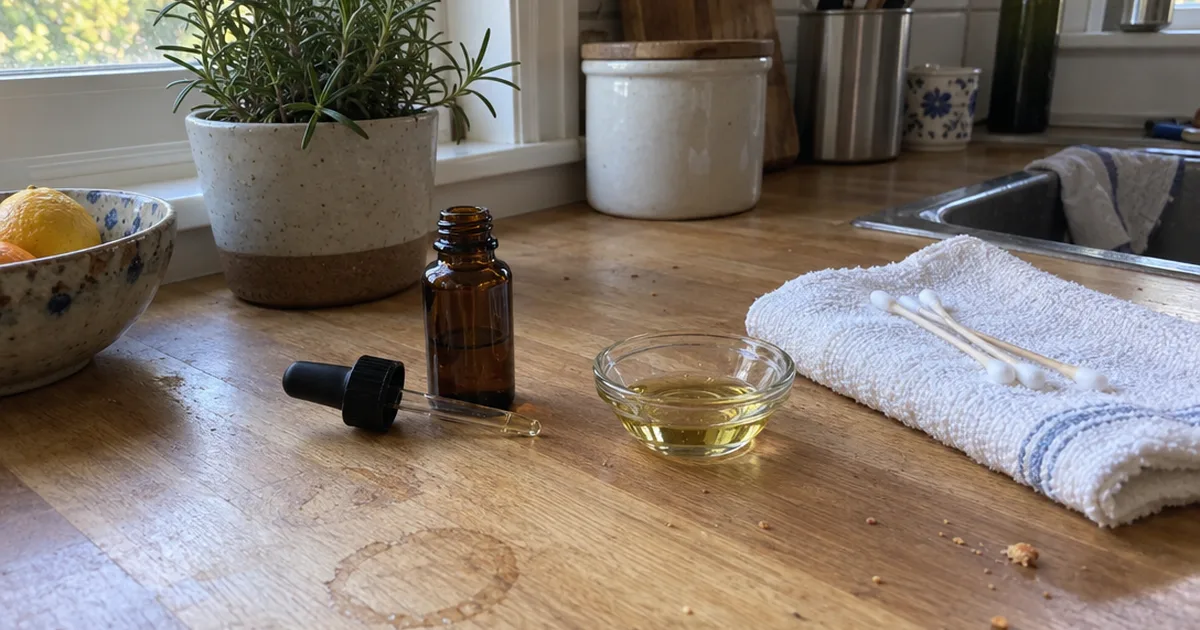
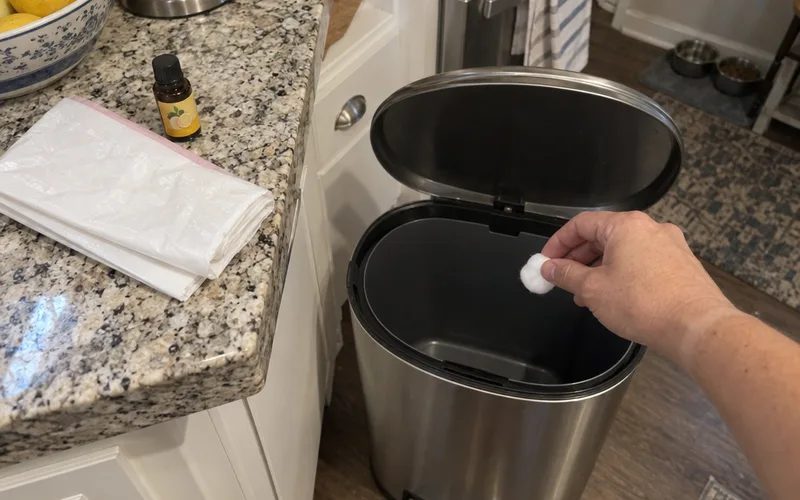
For the trash can, put a few drops of lemon or tea tree on a cotton ball and drop it under the new liner. The scent rises every time you open the lid.
Clean the bin itself first, or the oil just masks what’s stuck to the bottom.
Step 2: Run a Diffuser in the Room You Use Most
A diffuser is the fastest way to scent a whole room, because it turns water and oil into a fine mist that drifts through the air.
How many drops? Most guides land on 5 to 10 drops for a standard ultrasonic diffuser, but your diffuser’s manual wins if it says otherwise.
Start at the low end in a small room. You can always add 2 more drops on the next fill.
Put it in the room where you spend the most time, usually the living room or kitchen, on a stable surface where it won’t get knocked over.
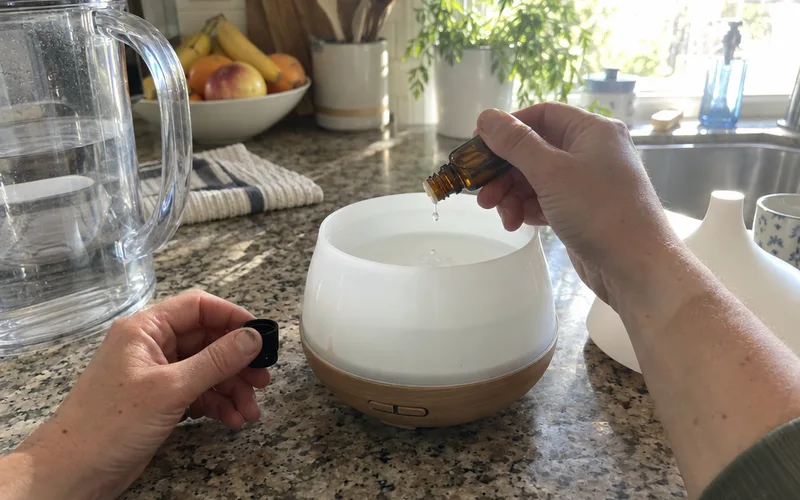
Clean it often, because oil builds up inside and stops it misting properly.
Once one oil works, move on to 2- and 3-oil diffuser blend recipes with exact drops for each fill.
Step 3: Make a Room Spray That Actually Mixes
A room spray gives you instant scent, but only if the oil stays mixed with the water.
That’s the part most recipes rush past.
Essential oils don’t dissolve in water unless a dispersant is mixed in first, according to the Better Health Channel, the Victorian government’s health information service.
Without one, the oil floats on top and you spray plain water, then a blast of oil.
Here’s a simple ratio to start with:
- Pour 1 to 2 tablespoons of witch hazel or rubbing alcohol into a spray bottle.
- Add 10 to 15 drops of essential oil and swirl.
- Top up with 1 cup of distilled water.
- Shake hard before every spray.
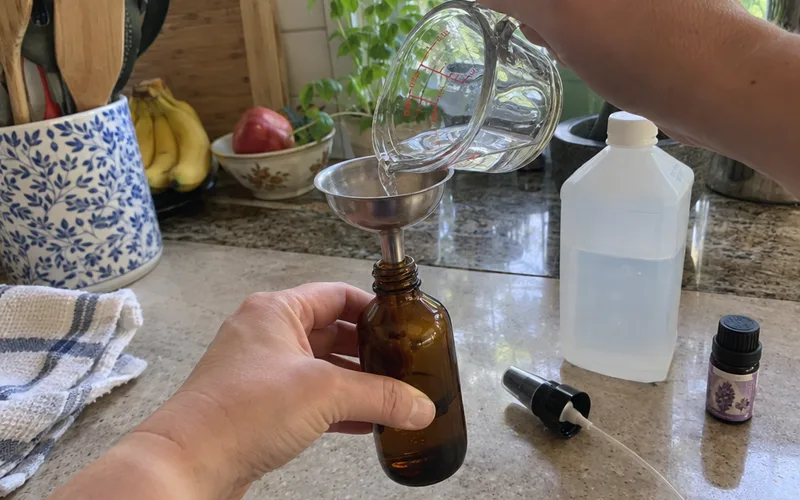
Mist the air, not wood finishes or leather, and test a hidden spot on fabric before you spray a couch.
For more mixes, try this essential oil room spray recipe or a lavender linen spray made for sheets and pillows.
Step 4: Scent Small Spaces Without a Diffuser
You don’t need a diffuser for closets, bathrooms or drawers.
Anything absorbent will hold oil and release it slowly.
Any of these works:
- Cotton balls: add 2 or 3 drops and tuck them in a closet, shoe rack or bathroom cabinet.
- Toilet paper roll: add a few drops inside the cardboard tube, so each pull releases a little scent.
- Baking soda sachet: spoon baking soda into a coffee filter, add about 5 drops and tie it shut for the closet.
- Unfinished wood or terracotta: a few drops on a wooden bead or clay pot soak in and fade slowly.
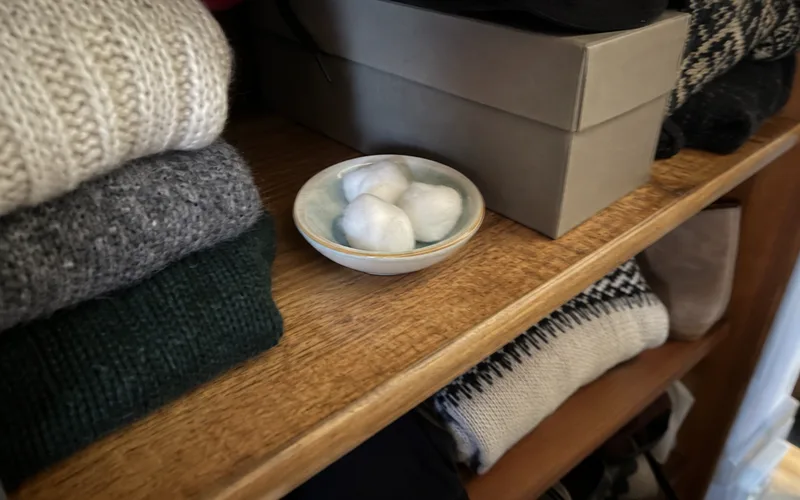
Refresh each one every few days, when you can’t smell it anymore.
These tricks pair well with a homemade air freshener for the rooms that need a stronger fix.
Step 5: Add a Reed Diffuser for All-Day Scent
A reed diffuser keeps a room scented all day with no power, because the reeds wick oil up and release it into the air.
It’s the best fit for an entryway or a guest bathroom.
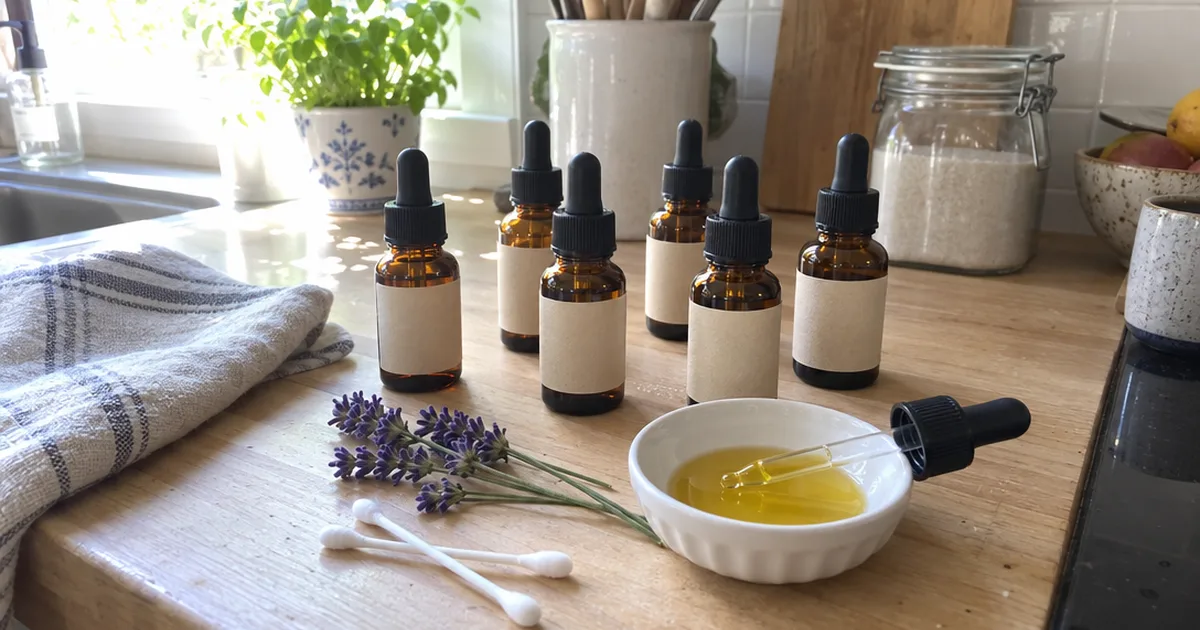
One common recipe fills a narrow-necked jar with a light carrier oil, such as safflower, and 25 to 30 drops of essential oil.
Another mixes equal parts alcohol and dipropylene glycol, a clear solvent used in home fragrance, with 20 to 25 drops of oil per ounce.
Flip the reeds whenever the scent fades to give it a boost.
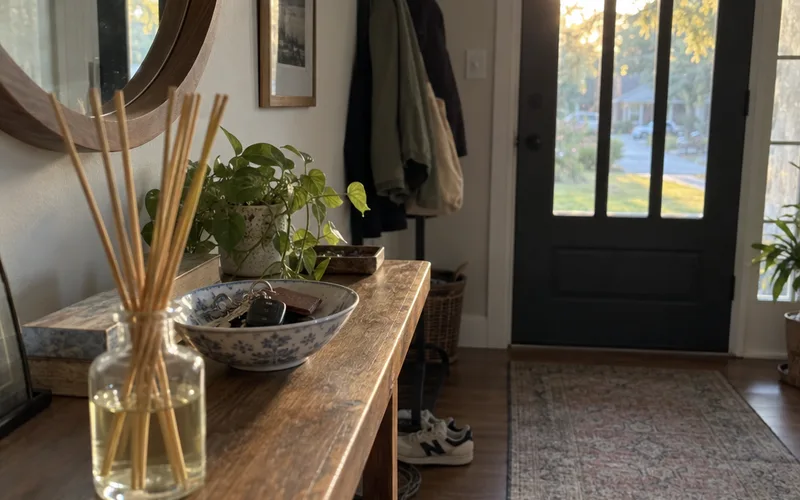
Store-bought reeds work fine, but a reed diffuser DIY lets you pick the jar, the reeds and the blend yourself.
Keep reed jars up high: the oil is concentrated and easy for a toddler to tip and taste.
Step 6: Use a Simmer Pot When You Want Scent Fast
A simmer pot spreads warm, steamy scent through the room fast, which makes it a great choice before guests arrive.
Fill a small pan with water, bring it to a gentle simmer and add a few drops of oil, plus citrus peels or cinnamon sticks if you have them.
No stove? Pour boiled water from the kettle into a heat-safe bowl and add about 10 drops.
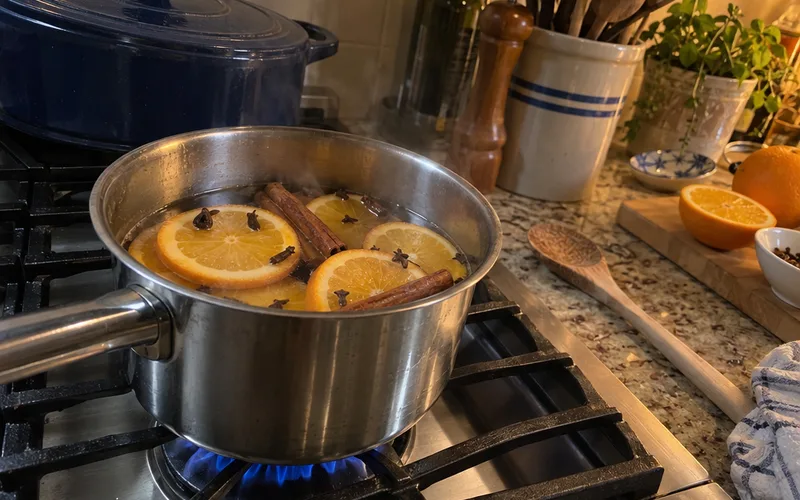
Watch it the whole time. A pot can boil dry, and a bowl of hot water is a scald risk for kids and pets.
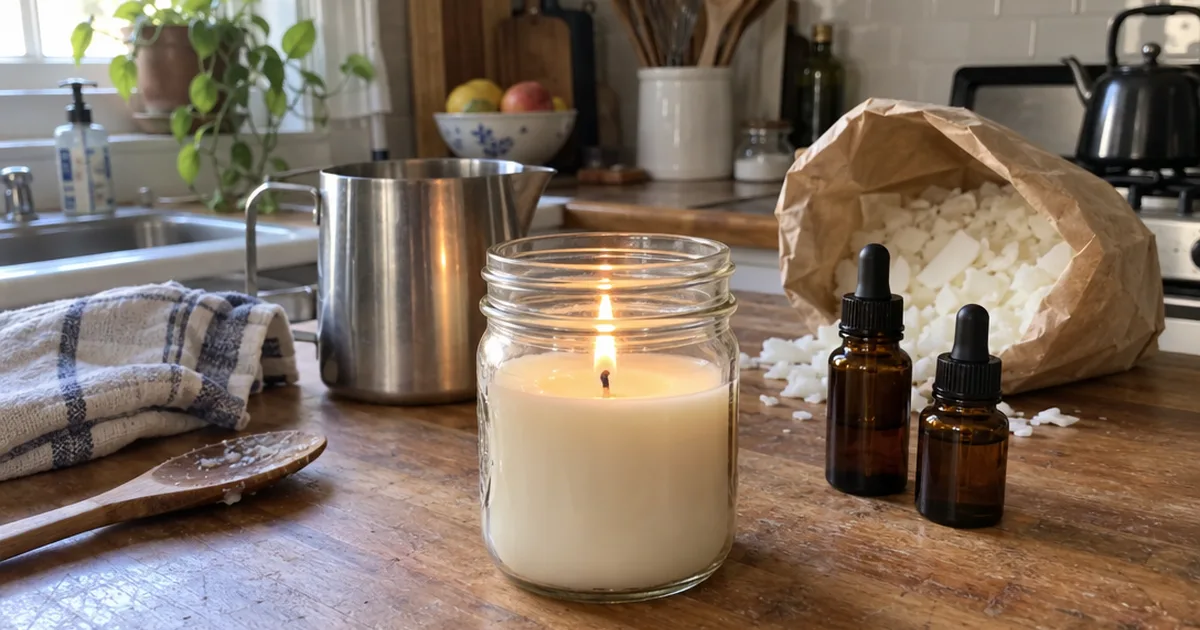
Candles are another heat-based option, but not every oil handles a flame well.
Before you add oil to wax, check whether essential oils work in candles and essential oil vs fragrance oil for candle making.
Step 7: Freshen Fabrics, Vents and the Vacuum
Fabrics, vents and the vacuum all move air or touch skin every day, so a small dose on each spreads scent without any extra effort.
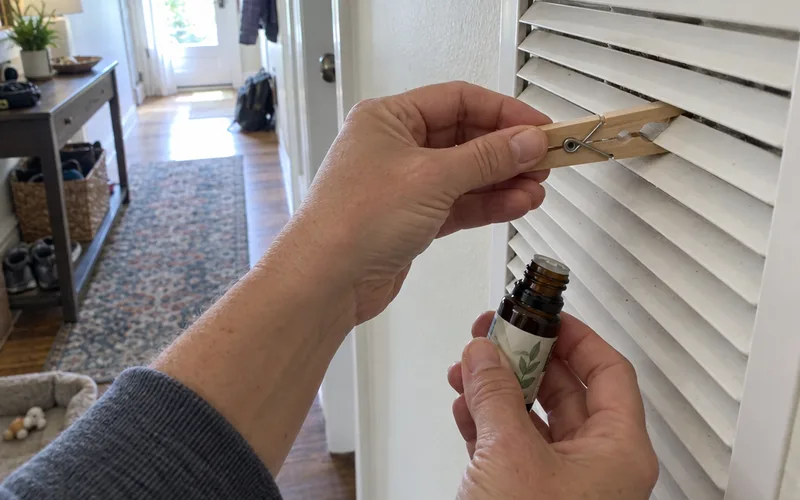
For vents, put a couple of drops on a wooden clothespin and clip it to the vent slats. The moving air carries the scent into the room.
Never drip oil inside the duct, on a hot bulb or on any electrical part.
For the vacuum, put a cotton ball with a few drops in the canister or bag. Every time you vacuum, the exhaust air smells clean.
For bedding, 1 or 2 drops of lavender on a pillowcase is plenty.
Towels and clothes can get the same treatment when you use essential oils for laundry, such as a few drops on wool dryer balls.
A eucalyptus shower spray keeps the bathroom just as fresh.
Which Essential Oils Make a House Smell Good?
Lemon, sweet orange, grapefruit, peppermint, lavender, eucalyptus and cedarwood are the oils home-scent guides reach for most to make a house smell clean and fresh.
Citrus reads as clean, mint as crisp, florals as soft and woods as warm.
You can see that logic in store-bought blends.
The Lively Living product chart lists its Fresh Home blend as sweet orange, pine, lemon, cinnamon, grapefruit, spearmint, peppermint and cinnamon cassia.
It’s sold as a strong, zesty scent to keep a home smelling clean.
In other words, a citrus base plus one mint or spice note gets you most of the way there.
Not sure which single scent to buy first? Compare the best diffuser scents for home, ranked by owner reviews.
How to Make Your House Smell Like Cedar
To make your house smell like cedar, run cedarwood oil in a diffuser in the main room and add a few drops to unfinished wood in closets and drawers.
Cedarwood gives a warm, woody smell that reads like a freshly opened cedar chest.
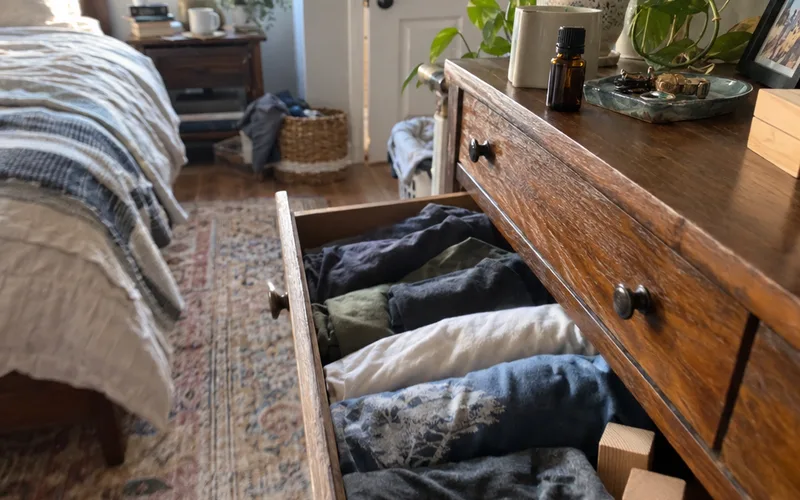
Unfinished wood soaks oil up and lets it out slowly, so a wooden clothespin, a plain wooden bead or an untreated drawer liner all work.
Let the wood dry fully before clothes touch it, because wet oil can stain fabric.
Cedarwood also anchors citrus well, so pair it with sweet orange in the diffuser when straight cedar feels too heavy.
Best Essential Oils for Each Room of the House
The best essential oil for each room matches what the room is for: citrus where you cook, florals where you sleep and fresh, sharp scents where moisture lingers.
Use this map as a starting point:
- Kitchen: lemon, sweet orange or grapefruit to cut cooking smells.
- Living room: sweet orange, bergamot or cedarwood for a warm, welcoming feel.
- Bedroom: lavender or cedarwood, kept light.
- Bathroom: eucalyptus, tea tree or lemongrass for a fresh, clean smell.
- Entryway: cedarwood or a citrus reed diffuser, the first thing guests notice.
- Home office: peppermint, rosemary or lemon.
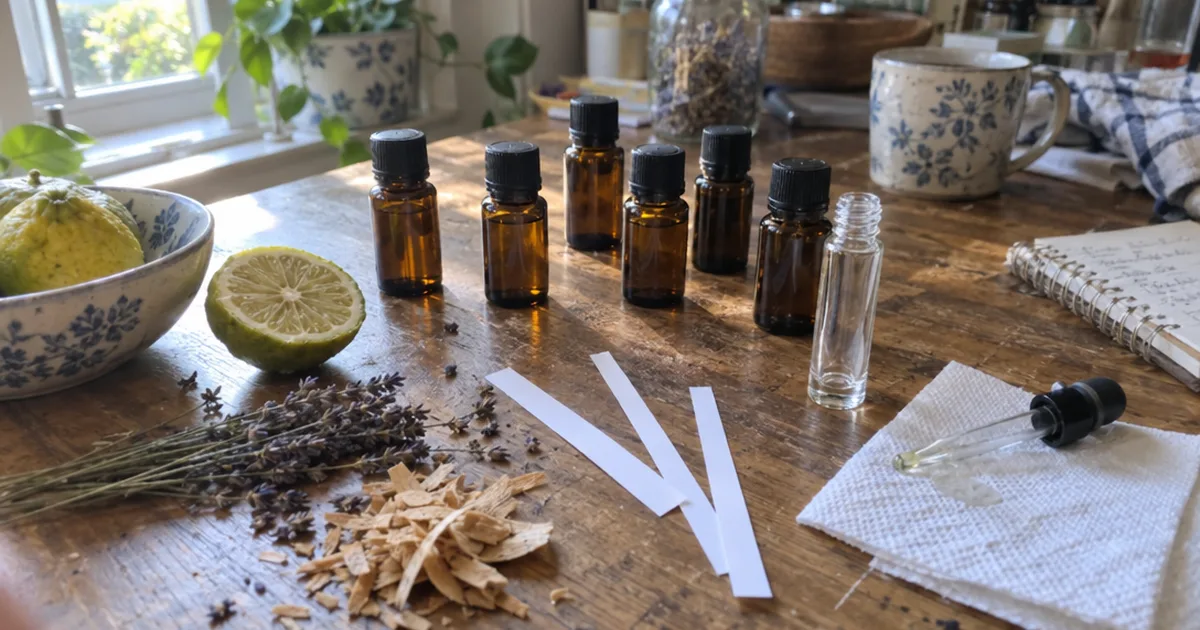
Pick 1 oil per room and repeat it across methods, so the spray and the diffuser smell like they belong together.
For more ideas room by room, see these ways to use essential oils around the house.
How to Make Your Whole House Smell Good All the Time
Making your whole house smell good all the time takes 3 layers: odor control in every room and a passive source running 24/7 in small rooms.
The third is a diffuser or simmer pot in the main room when you’re home.
One diffuser in the living room can’t reach the bathroom down the hall.
So spread the work out.
Here’s what that looks like in practice:
- Deodorize rugs and bins weekly with baking soda and oil.
- Keep a reed diffuser in the entryway and cotton balls in closets and bathrooms.
- Run the diffuser in short sessions in the room you’re using.
- Mist a room spray before guests or after cooking.
Use the same 2 or 3 oils throughout, and the whole house reads as one scent instead of six.
Key Takeaway: Layers beat strength. More drops in one spot just gives you one loud room.
Essential Oil Safety Around Kids, Pets and Sensitive Lungs
Essential oils are safe for home scent only when you skip the toxic ones, keep bottles out of children’s reach, keep diffusing light and give pets a way out of the room.
The Better Health Channel says camphor, pennyroyal and wintergreen oils are toxic and should never be used at all.
The same health service adds 2 more limits worth knowing:
- People with asthma or frequent nosebleeds should be careful breathing in vaporized oils.
- Pregnant women and people with epilepsy or high blood pressure should ask a doctor before using any oils.
Store every bottle out of reach, too, because swallowing essential oils is an increasing cause of poisoning in children, Better Health warns.
Is It Safe to Diffuse Essential Oils Around Kids?
Diffusing essential oils around kids is safest in short sessions, in a ventilated room, with the diffuser, reed jars, cotton balls and every bottle out of reach.
A child who swallows a scented cotton ball gets a strong dose of concentrated oil, so place passive scent up high.
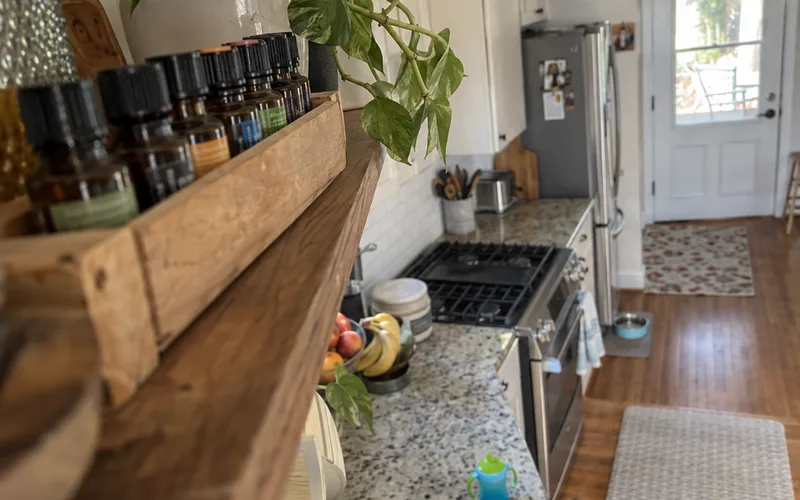
If your child has asthma, talk to their doctor before you diffuse at all.
A simmer pot needs a close eye too, because a bowl of hot water is a scald risk for kids.
Are Essential Oil Diffusers Safe for Pets?
Essential oil diffusers are not automatically safe for pets, because not every essential oil is safe for animals, so run a diffuser only in a room your pet can leave.
Keep cotton balls and sachets where pets can’t chew them, since swallowing the contents could harm them.
Before diffusing around a dog or cat, check which essential oils are safe for pets and which to avoid, plus the broader essential oil safety rules for skin, air and swallowing.
Common Mistakes That Make Your House Smell Worse
The most common essential oil mistake is using too much: a heavy dose smells harsh, wastes oil and leaves residue inside your diffuser.
Watch for these too:
- Mixing scents that clash. A citrus kitchen, a floral bedroom and a spicy living room can fight each other in an open-plan home.
- Forgetting ventilation. Open a window for a few minutes a day so the scent doesn’t build up into something stale.
- Letting oil touch fabric. Oil can stain clothes and textiles, so let oiled wood or cotton dry before anything rests on it.
- Running a diffuser all day. The Better Health Channel says oils should be used sparingly, only a few drops at a time, so run short sessions instead.
That said, most mistakes come down to one thing: start at the low end, such as 5 drops in a diffuser, and build from there.
Once your basics are set, the best essential oil blends give you more pairings by mood. And if candle making is next, start with the best essential oils for candles.
Frequently Asked Questions
What three ingredients make your house smell good?
Baking soda, distilled water and witch hazel, plus a few drops of essential oil, cover most homemade scent jobs.
Baking soda deodorizes carpets and bins, while water and witch hazel turn oil into a room spray that actually mixes.
What kind of diffuser can I use to make my house smell good?
An ultrasonic diffuser is the strongest everyday choice for a living room, because it mists oil and water into the air.
For small rooms, a reed diffuser or a stone or ceramic diffuser that takes 2 to 5 drops gives a softer scent with no power.
What are some good combinations of essential oils for a diffuser?
Citrus with mint or spice is a reliable clean-house combination: Lively Living builds its Fresh Home blend from sweet orange, lemon, grapefruit, pine, spearmint, peppermint and cinnamon.
Start with 2 oils, such as sweet orange and peppermint, before you add a third.
What essential oils should you not mix together?
Camphor, pennyroyal and wintergreen should stay out of every mix, because the Better Health Channel says they are toxic and should never be used at all.
Beyond those, mixing is mostly about scent, so test 2 oils together before adding more.
Can you put essential oils on air vents or in a simmer pot?
Yes, essential oils work near an air vent or in a simmer pot if you keep the oil off hot and mechanical parts.
Put drops on a cotton ball or a wooden clothespin clipped to the vent, and never leave a simmer pot alone on the stove.
How long does an essential oil scent last in a room?
An essential oil scent lasts only while its source keeps releasing it, so a spray fades fastest and a diffuser or reed diffuser keeps a room scented longest.
Open windows and fans clear it sooner, so refresh passive sources every few days.
Final Thoughts
The biggest win is doing it in order: clear the smell, then add the scent.
This week, deodorize your main rug with baking soda and run a diffuser in the room you use most, then add one passive source to the bathroom.